Seeing “150 grams of protein” in a tracking app is one thing. Figuring out what to put on your plate is another. Does it mean chicken at every meal? Three shakes? A dinner you can barely finish?
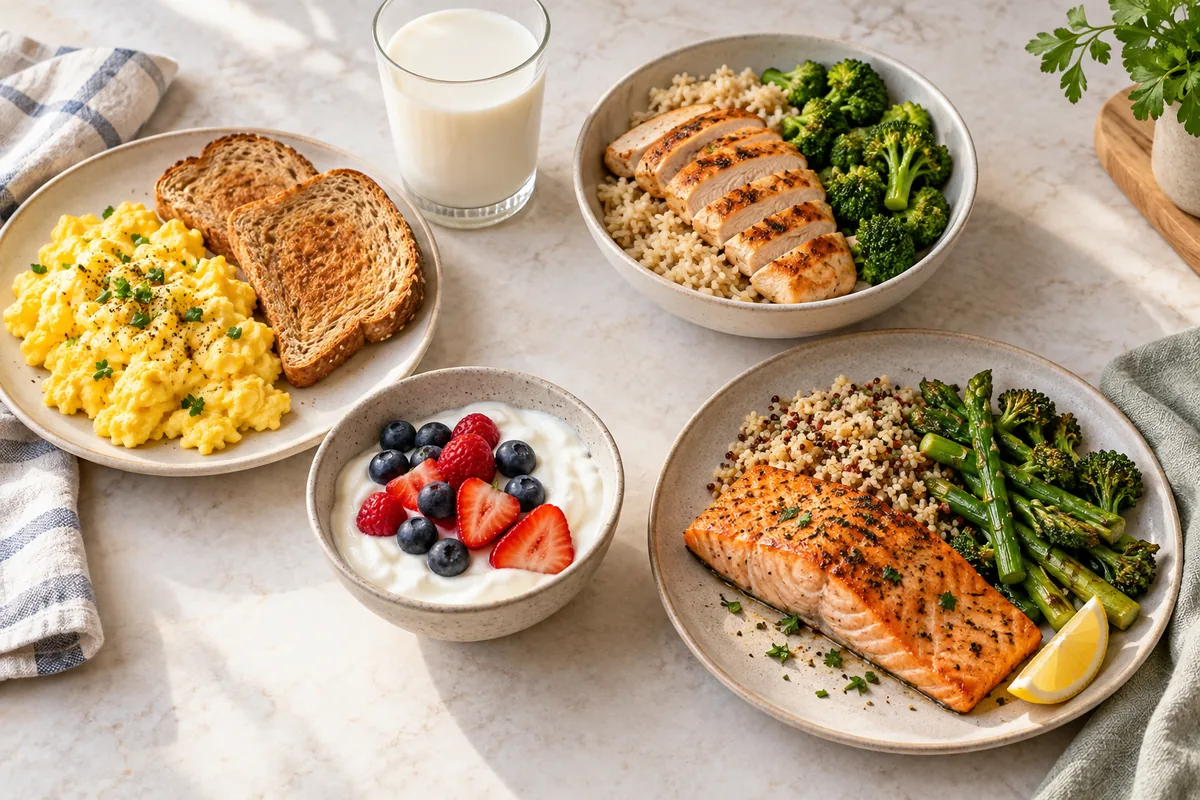
It can be much more ordinary than that: eggs and toast in the morning, a chicken bowl at lunch, Greek yogurt in the afternoon, and salmon with quinoa for dinner.
Quick answer: One example day provides about 35 g at breakfast, 48 g at lunch, 21 g from a snack, and 46 g at dinner. That adds up to approximately 150 grams of protein, using regular grocery foods and no protein powder.
The important distinction is that 150 grams of protein describes the nutrient, not the weight of the food. A 5-ounce piece of cooked chicken weighs about 142 grams but provides roughly 44 grams of protein.
150 grams of protein, pictured across a day
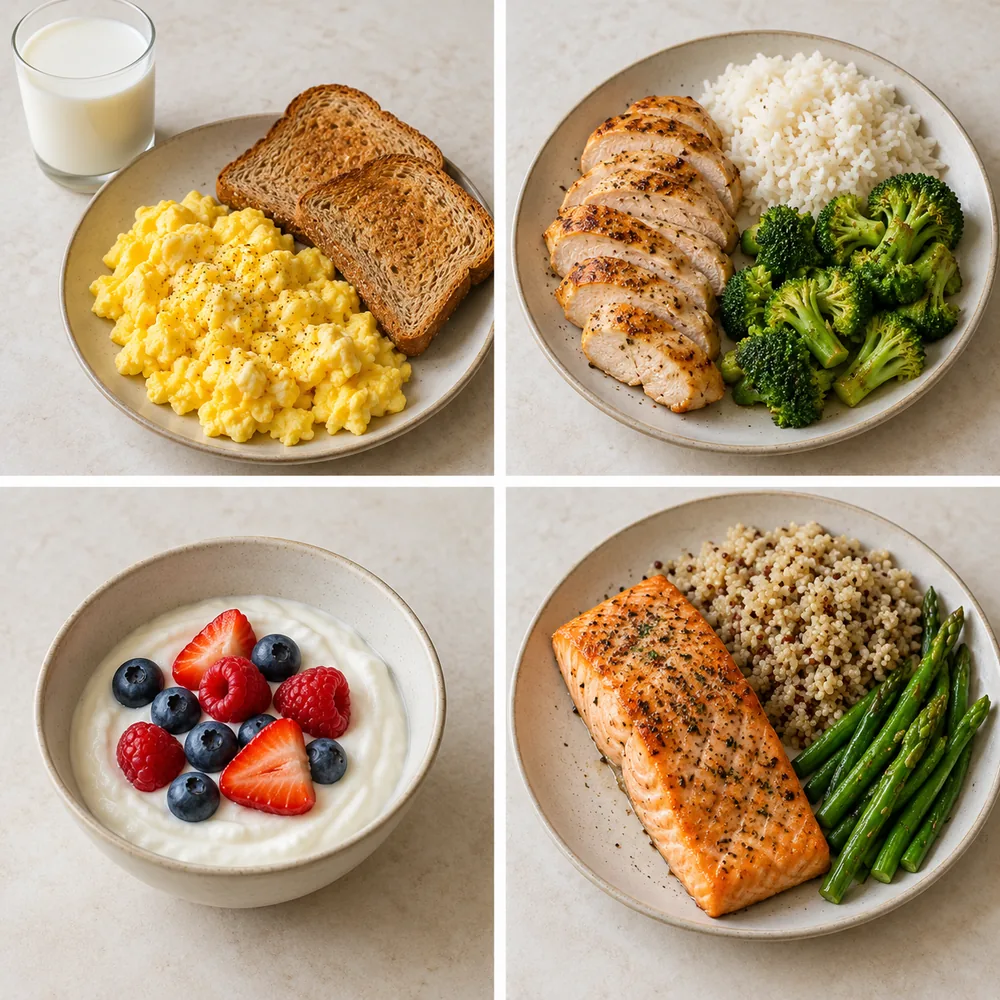
The day’s rounded total: 35 + 48 + 21 + 46 = 150 g. Fruit, vegetables, sauces, and cooking ingredients may add small amounts beyond the foods counted here.
What does 150 grams of protein look like in real meals?
This example uses foods you can find in most US grocery stores. All chicken and salmon portions are cooked, edible weights, without bones. Rice and quinoa are measured after cooking. Yogurt is weighed as served.
These are rounded protein estimates, not an exact prescription. Your bread, yogurt, and meat preparation can change the total. Add fruit, vegetables, fats, and other foods to meet your own energy and nutrition needs; this is a protein example rather than a complete personalized meal plan.
Breakfast: Eggs, toast, and milk — about 35 g
| Food | Portion | Approximate protein |
|---|---|---|
| Large eggs | 3 eggs | 19 g |
| Whole-wheat bread | 2 slices, labeled 4 g protein each | 8 g |
| Milk | 1 cup (8 fl oz) | 8 g |
| Breakfast total | 35 g | |
Scramble the eggs, toast the bread, and have the milk alongside them. You can also use some of that measured milk in your coffee. Just count it once.
If you normally eat two eggs and stop there, this shows why your breakfast may be lower in protein than you expect. The bread and milk contribute too, but the portion and label matter.
Lunch: Chicken and rice bowl — about 48 g
| Food | Portion | Approximate protein |
|---|---|---|
| Skinless chicken breast, cooked | 5 oz (about 142 g) | 44 g |
| White rice, cooked | 1 cup | 4 g |
| Lunch total from these foods | 48 g | |
Add broccoli, carrots, peppers, or whatever vegetables you enjoy. Season the chicken so lunch tastes like something you want to eat again. A little sauce can help, although it changes the calories and sometimes the protein.
For a different flavor, try our high-protein chicken curry. Recalculate the serving if you follow that recipe instead of this plain chicken example.
Running total after lunch: about 83 g.
Afternoon snack: Greek yogurt — about 21 g
| Food | Portion | Approximate protein |
|---|---|---|
| Plain nonfat Greek yogurt | 200 g (about 7 oz), using a product with 18 g protein per 170 g | 21 g |
| Snack total | 21 g | |
Put it in a bowl and add fruit or cinnamon if you like. For this calculation, the yogurt label provides 18 grams per 170-gram serving. A 200-gram portion works out to about 21 grams.
Regular yogurt, flavored Greek yogurt, and dairy-free yogurt can have very different protein amounts. Check the container instead of assuming they all match.
Running total after the snack: about 104 g.
Dinner: Salmon and quinoa — about 46 g
| Food | Portion | Approximate protein |
|---|---|---|
| Farmed Atlantic salmon, cooked with dry heat | 6 oz (about 170 g) | 38 g |
| Quinoa, cooked | 1 cup (about 185 g) | 8 g |
| Dinner total from these foods | 46 g | |
Bake the salmon with lemon, pepper, and your favorite seasoning. Serve it with quinoa and vegetables. Salmon species and preparation affect the numbers; this estimate uses cooked farmed Atlantic salmon.
If you buy fish in different sizes, our salmon protein guide explains how portions change the amount you get.
The full day at a glance
| Meal | Protein counted | Running total |
|---|---|---|
| Breakfast | 35 g | 35 g |
| Lunch | 48 g | 83 g |
| Snack | 21 g | 104 g |
| Dinner | 46 g | 150 g |
How much food is 150 grams of protein?
There is no single plate size that represents 150 grams. Chicken, yogurt, eggs, and grains contain different amounts of protein relative to their weight.
For perspective, cooked skinless chicken breast provides roughly 31 grams per 100 grams of food. Getting 150 grams of protein from that food alone would take about 484 grams, or 17 ounces, of cooked chicken. That is a comparison to help explain the number, not a recommendation to eat only chicken.
The mixed-food day above is more useful in real life. It spreads the total across different meals, tastes, and textures instead of asking one food to do everything.
Do you actually need 150 grams a day?
150 grams is a possible target, not a rule everyone needs to follow. Your body weight, training, goals, and health help determine an appropriate amount.
The International Society of Sports Nutrition’s protein position stand gives a range of about 1.4–2.0 grams per kilogram of body weight per day for most exercising people. Here is how a 150-gram day compares with that range:
| Body weight | 150 g expressed per kilogram | Compared with the exercise range above |
|---|---|---|
| 132 lb (60 kg) | 2.50 g/kg | Above the range |
| 165 lb (75 kg) | 2.00 g/kg | At the upper end |
| 198 lb (90 kg) | 1.67 g/kg | Within the range |
| 220 lb (100 kg) | 1.50 g/kg | Within the range |
These comparisons are not personalized advice, and being above this range does not automatically mean an intake is unsafe. They show why a popular round number can suit one person better than another.
Find your own daily protein range
Use your weight, activity level, and goal to estimate a starting target before choosing a meal example.
If your target is lower, see what 100 grams looks like in a day or our 120-gram meal guide.
Can you get 150 grams without protein powder?
Yes. The example above reaches approximately 150 grams without a shake.
Protein powder can make a busy day easier, especially when you have a gap to fill. It is optional. If you replace a food with a shake, compare the protein per serving on its label and adjust the rest of the day.
Practical tip: Plan your lunch before the day gets busy. Having cooked chicken and rice ready makes this example much easier to follow than trying to find another 60 grams of protein at bedtime.
What if you don’t eat chicken or fish?
You can build a vegetarian day with eggs, dairy, soy foods, beans, and lentils. The portions will change, so a swap is not automatically equal just because it fills the same space on your plate.
| Instead of | A possible swap | How to use it |
|---|---|---|
| The chicken at lunch | High-protein super-firm tofu labeled 14 g protein per 3 oz (85 g) | About 9.5 oz (269 g) supplies roughly 44 g before adding rice. |
| The salmon at dinner | The same high-protein super-firm tofu | About 8 oz (227 g) supplies roughly 37 g; quinoa adds about 8 g. |
| Milk at breakfast | A fortified soy drink with a similar protein amount | Choose a product labeled about 8 g protein per cup. |
The two tofu swaps put the rounded day near 149 grams. They refer to a specific high-protein label, not all tofu. Silken and ordinary firm tofu may provide much less protein per ounce. Measure the tofu as packaged and follow its label.
This is a vegetarian variation, not a vegan one: it still includes eggs and dairy. A fully vegan day needs additional changes and a fresh calculation.
Three mistakes that can throw off your total
- Mixing raw and cooked weights. Chicken loses water during cooking. Weighing 5 ounces raw and logging it as 5 ounces cooked can overestimate the protein. Match the database entry to the state you measured.
- Ignoring the label. Two slices of bread or a bowl of yogurt can vary substantially by brand and portion. Use the information on the product you buy.
- Building the whole diet around one number. Keep room for vegetables, fruit, fiber, and enough overall food. Protein does not replace the rest of your nutrition.
Frequently asked questions
What does 150 grams of protein look like over three meals?
Mathematically, it is about 50 grams per meal. You can reach that with different combinations of meat, fish, dairy, soy, and other foods. If those meals feel too large, use three meals and a snack, like the example above.
Is 150 grams of protein good for muscle building?
It can be an appropriate amount for some people who lift weights, depending on body weight and other factors. It is not a guarantee of muscle growth. Training consistently and eating enough overall still matter.
Will eating 150 grams make me lose fat?
No single protein amount guarantees fat loss. Protein can be part of a fat-loss eating plan, but your overall calorie intake matters. Changing portions, oils, sauces, and snacks can change the energy intake even when protein stays similar.
How many calories are in 150 grams of protein?
Protein itself contributes about 4 calories per gram, so 150 grams contributes about 600 calories. The foods providing it also contain fat and carbohydrates, so the day’s total calories will be higher. This guide does not prescribe a calorie target.
Is 150 grams of protein too much?
It depends on the person. If you have chronic kidney disease or have been given a protein restriction, get a personal target from your clinician or registered dietitian before increasing your intake.
A useful way to start
If 150 grams fits your needs, start with meals you already like. Pick a protein source for breakfast, prepare lunch ahead, and keep an easy snack available. You can change the seasonings and sides without rebuilding the whole routine.
The goal is a day you can repeat comfortably, not a perfect 150.0 on your screen.
Sources and notes on the numbers
- USDA FoodData Central for representative food values. Reference records include roasted chicken breast (171477), cooked farmed Atlantic salmon (175168), and cooked quinoa (168917). Household values for eggs, milk, and rice are also supported by the USDA protein reference.
- FAGE nutrition information for the yogurt calculation: 18 g protein per 170 g of the plain nonfat product. This is an example label, not a requirement to buy this brand.
- Nasoya high-protein super-firm tofu for the vegetarian swaps. Check the current package label because products can change.
- ISSN: Protein and Exercise (2017) for the exercise protein range.
- NIDDK: Healthy Eating for Adults with Chronic Kidney Disease for individualizing protein intake in kidney disease.
Calculation note: Rounded foods counted: eggs 19 g + bread 8 g + milk 8 g + chicken 44 g + rice 4 g + yogurt 21 g + salmon 38 g + quinoa 8 g = 150 g. The underlying unrounded values will not total exactly 150. Bread assumes 4 g per slice. Produce and extra ingredients are excluded from the simple tally. Food photos are illustrative. This article provides general education, not a personalized diet prescription.