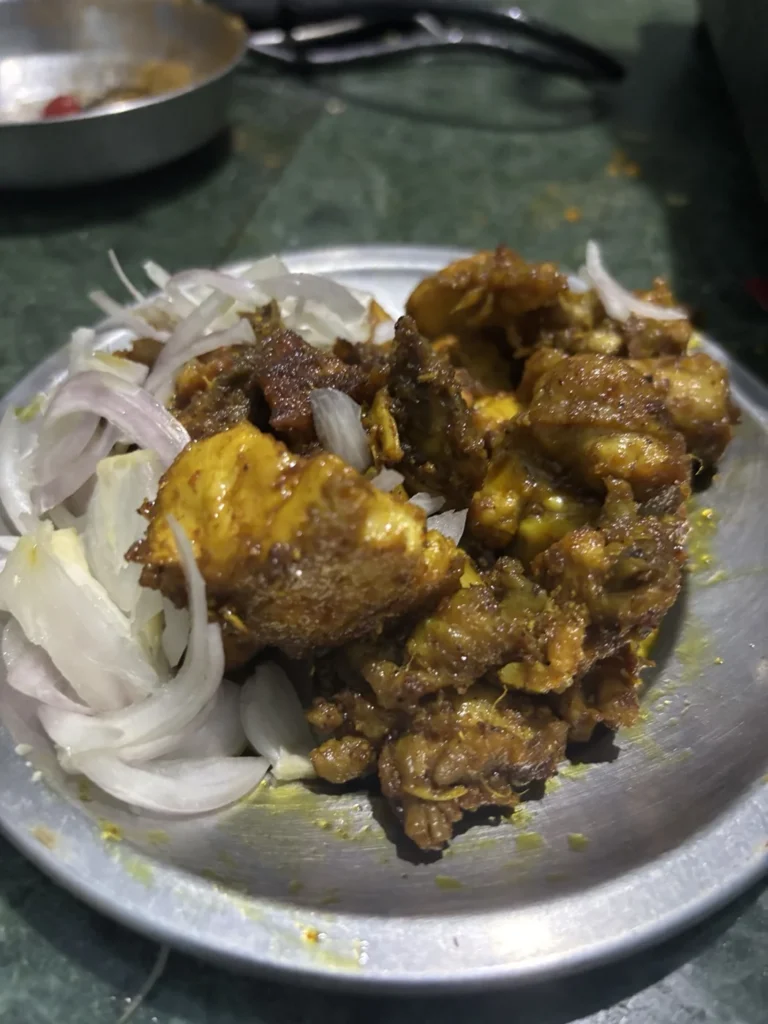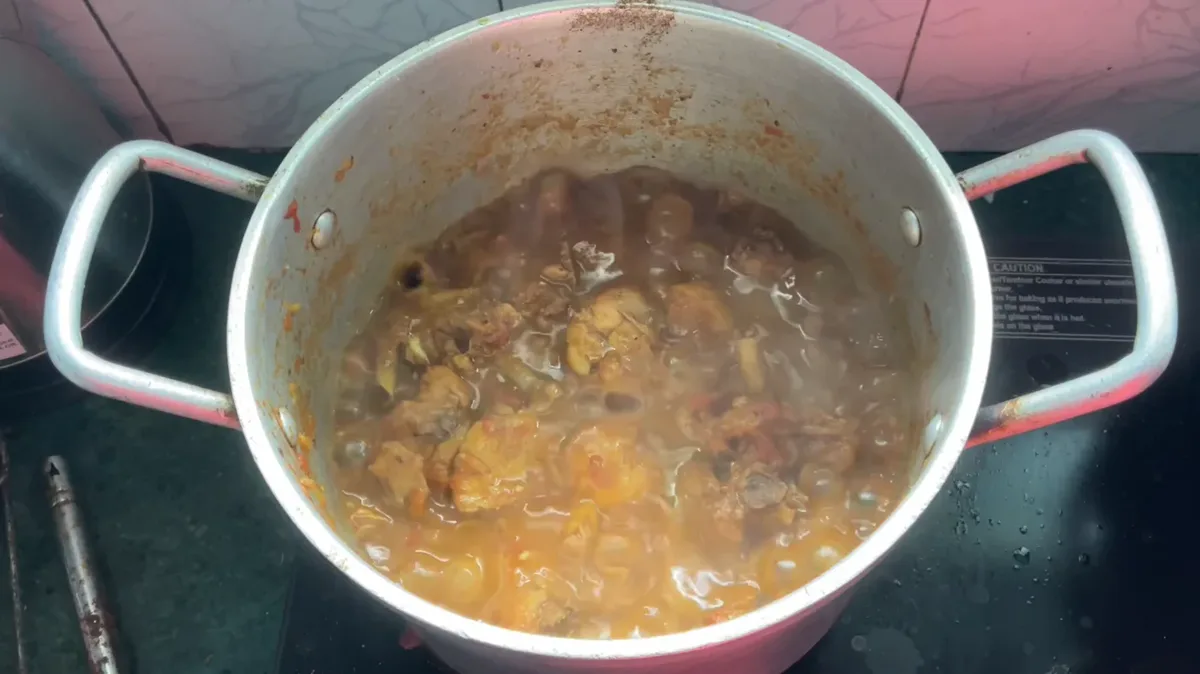
This high-protein chicken curry came together without a long ingredient list, heavy cream, or a large amount of oil. I made it with bone-in chicken, onions, fresh tomatoes, ginger, garlic, turmeric, meat masala, oregano, salt, and just a little vegetable oil.
The onions created the base of the curry, while five or six tomatoes cooked down into a light, flavorful gravy. The result was comforting, delicious, and rich in protein from the chicken.
Quick answer: Chicken curry can be a high-protein meal, but the protein content depends mainly on how much edible chicken is in each serving. The tomatoes, onions, and spices add flavor and nutrients, but very little protein.
Why This Simple Chicken Curry Works
Many chicken curry recipes use cream, butter, coconut milk, or a large amount of oil. Those ingredients can taste good, but they are not required to make a flavorful curry.
- Chicken provides almost all the protein.
- Fresh tomatoes create the gravy and add acidity.
- Golden-brown onions add sweetness and body.
- Ginger, garlic, turmeric, oregano, and meat masala build the flavor.
- A small amount of oil helps the onions cook and brown.
Ingredients I Used
I did not measure every ingredient while cooking, so this is an honest cooking guide rather than a precisely measured recipe card.
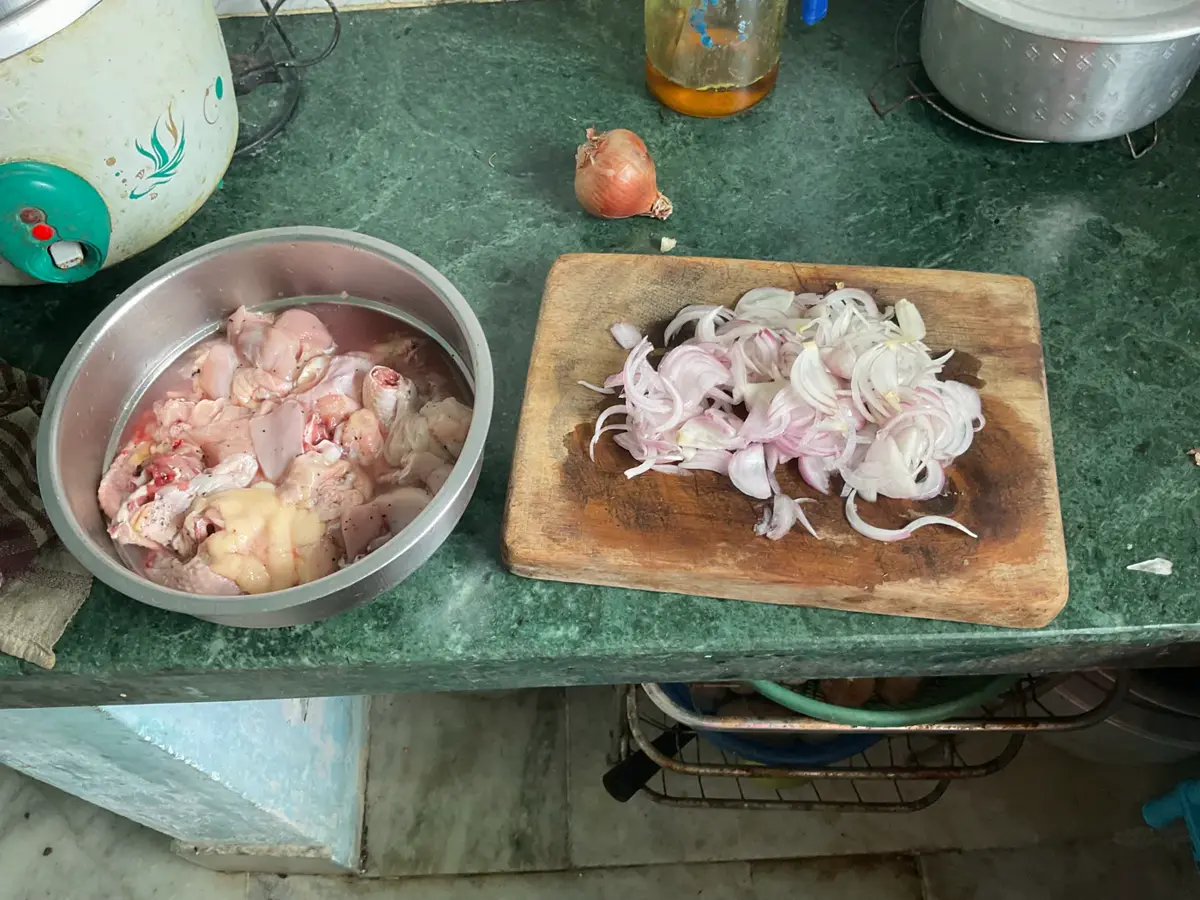
- Bone-in chicken, cut into pieces
- Chopped or thinly sliced onions
- 5–6 medium tomatoes, halved or roughly chopped
- A small amount of vegetable oil
- Fresh ginger and garlic, minced or crushed
- Turmeric, meat masala, oregano, and salt
Measure the chicken and oil the next time you cook this dish if you want a more accurate calorie and protein estimate.
How I Made This High-Protein Chicken Curry
-
Heat a small amount of oil
I heated a little vegetable oil in a large pot—only enough to coat the bottom and help the onions cook.
-
Cook the onions until golden brown
I added the onions and cooked them until golden, stirring regularly so they cooked evenly without burning.
-
Add the chicken
Once the onions were ready, I added the chicken pieces and cooked them with the onions for about 15 minutes, turning the pieces as they cooked.
-
Add the ginger, garlic, salt, and spices
I added salt, ginger, garlic, turmeric, meat masala, and oregano, then mixed everything so the chicken was coated.
-
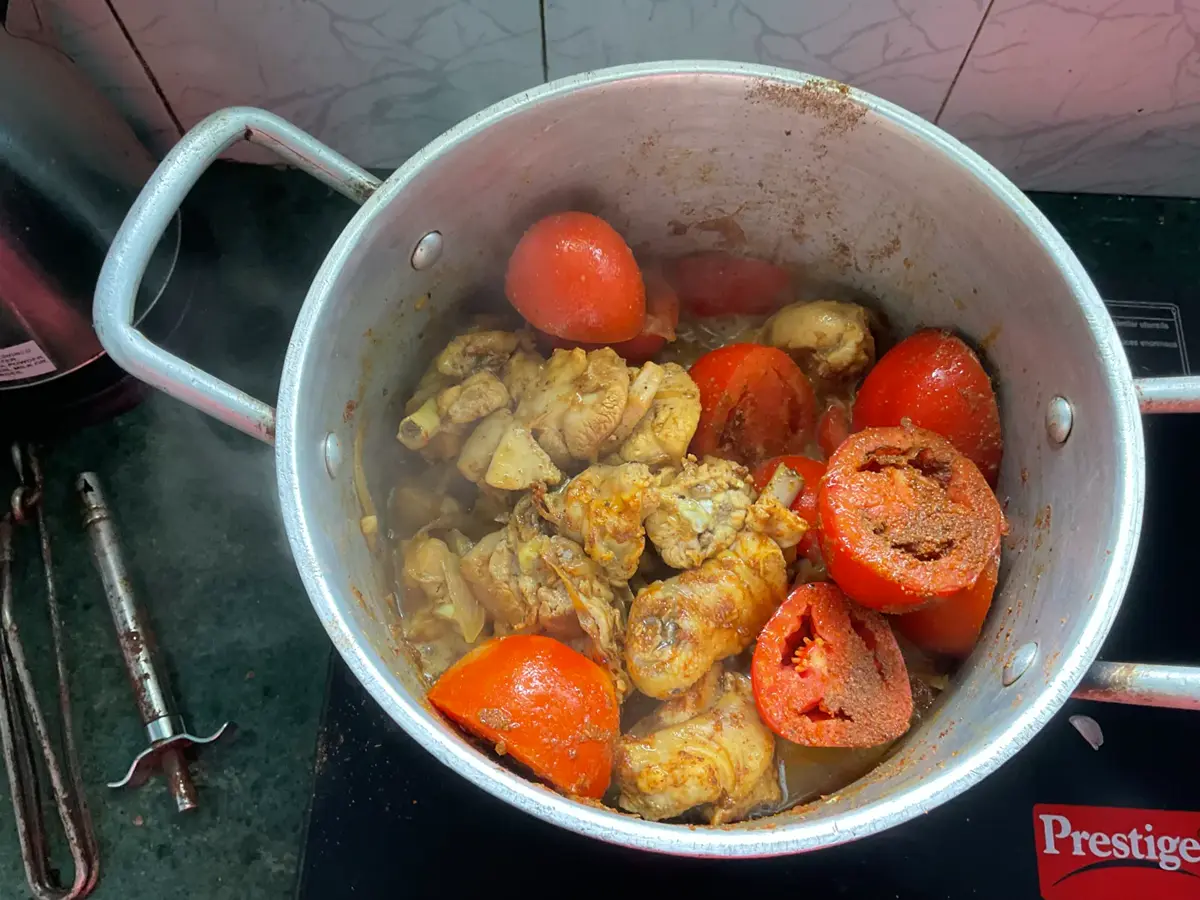
Add five or six tomatoes
The tomatoes looked chunky at first, but they softened and released their juices, creating the sauce without cream or coconut milk.
-
Cook for about 20 more minutes
I continued cooking until the tomatoes broke down, the sauce thickened, and the chicken was fully cooked.
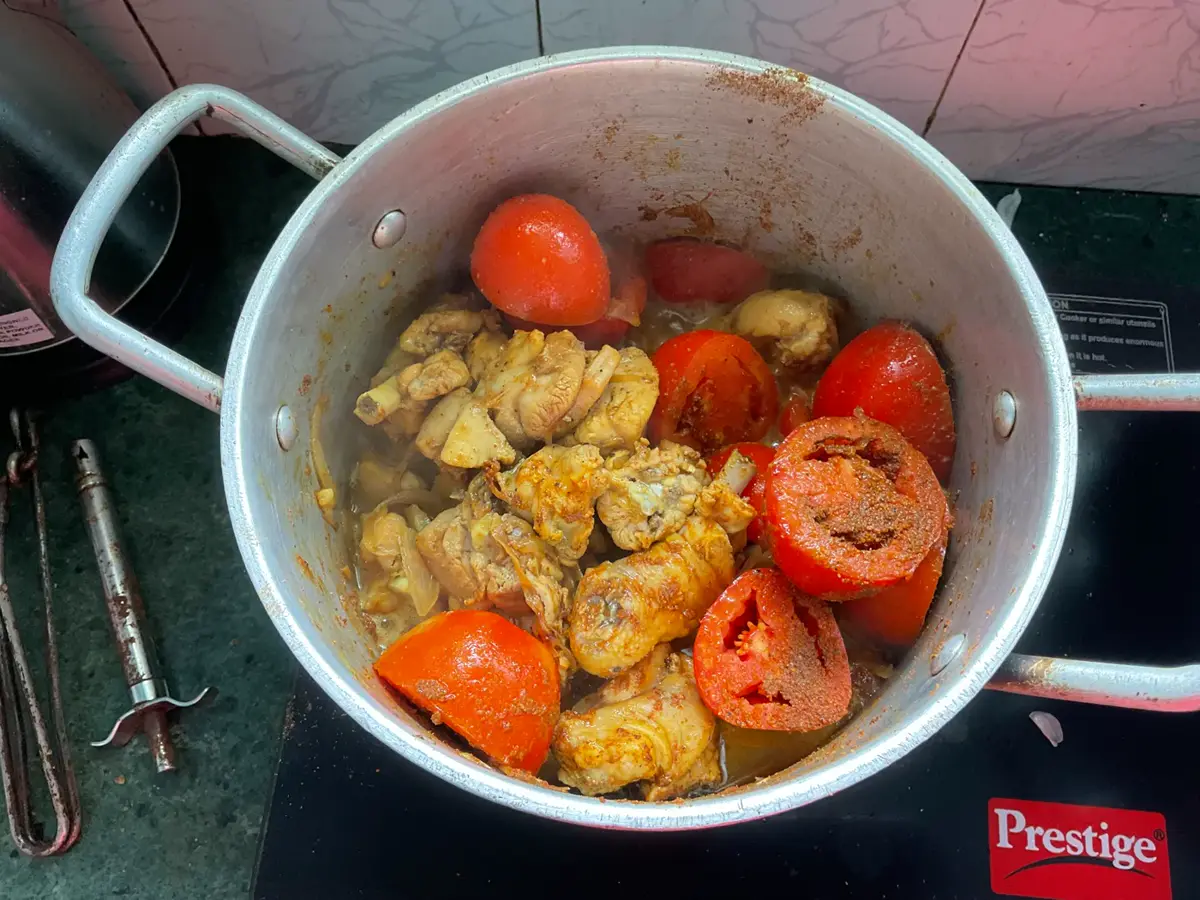
Food-safety check: Cooking time varies with the size and cut of the pieces. Check the thickest part with a food thermometer, away from the bone. Chicken should reach 165°F (74°C).
How Much Protein Is in This Chicken Curry?
Chicken supplies almost all the protein in this recipe. USDA FoodData Central entries for cooked chicken indicate roughly 24–30 grams of protein per 100 grams of edible cooked meat, depending on the cut and whether skin is included.
| Cooked edible chicken | Estimated protein |
|---|---|
| 3 ounces (85 g) | 20–25 g |
| 4 ounces (113 g) | 27–34 g |
| 5 ounces (142 g) | 34–43 g |
These values refer to edible cooked chicken, not the total weight of bone-in pieces. Because I did not weigh the edible meat in this batch, claiming an exact amount per serving would not be accurate.
How to estimate the protein more accurately
- Remove the bones after cooking.
- Weigh the edible chicken in grams.
- Multiply that weight by 0.24 to 0.30.
- Divide the result by the number of servings.
If a pot contains 600 grams of cooked edible chicken, it may contain approximately 144–180 grams of protein in total. Divided into four equal servings, that is roughly 36–45 grams per serving. This is an example—not the calculation for the batch shown here.
Not sure how this meal fits your day? Use our free protein calculator to estimate a personalized daily protein range.
What Each Ingredient Adds
| Ingredient | Job in the curry | Nutrition contribution |
|---|---|---|
| Chicken | Main texture and substance | The primary source of protein |
| Tomatoes | Create the light sauce and add acidity | Vitamin C, potassium, lycopene, and some fiber |
| Onions | Add sweetness and body | Fiber, vitamin C, potassium, and flavor |
| Vegetable oil | Helps the onions cook and brown | Adds fat and calories, but no protein |
| Ginger, garlic, and spices | Add aroma and depth | Used mainly for flavor in this recipe |
USDA data show that 100 grams of raw tomato contains about 0.9 grams of protein, while 100 grams of raw onion contains about 1.1 grams. They are useful ingredients, but they should not be counted as meaningful protein sources in this dish.
How to Make Chicken Curry Higher in Protein
- Use enough chicken per serving. Adding extra gravy without more chicken will not significantly increase the protein.
- Use boneless chicken for easier tracking. Bone-in chicken tastes excellent, but the bones make nutrition calculations harder.
- Weigh the cooked chicken. The chicken pieces—not the tomato gravy—contain most of the protein.
- Add a protein-rich side. Plain Greek yogurt, lentils, chickpeas, or green peas can raise the meal’s protein.
- Measure the oil. Oil does not reduce protein, but it adds calories without adding any protein.
Frequently Asked Questions
Is chicken curry good for protein?
Yes. Chicken curry can be an excellent protein source when each serving contains enough edible chicken. A plate with one small piece and a large amount of gravy may provide less protein than expected.
How do you make curry higher in protein?
Increase the amount of the main protein source, divide the dish into sensible servings, or add ingredients such as lentils, chickpeas, Greek yogurt, tofu, fish, or lean meat.
How should you cook chicken for a high-protein meal?
The cooking method does not create extra protein. The cut, edible portion, and serving size determine how much protein you eat. Grill, roast, or simmer it safely, and limit extra oil if you are watching calories.
How long can leftover chicken curry stay in the refrigerator?
Cooked poultry leftovers can generally be refrigerated for 3–4 days. Reheat leftovers to 165°F (74°C).
Final Thoughts
This chicken curry shows that a satisfying meal does not need a long ingredient list. The golden onions, tomatoes, ginger, garlic, and spices created plenty of flavor, while the chicken supplied the protein.
Next time I make it, I will weigh the chicken, measure the oil and seasonings, and record the number of servings. That will make a more exact nutrition estimate possible while keeping the recipe just as simple.
Nutrition note: Protein and calorie amounts vary with the chicken cut, edible-meat weight, skin, oil, serving size, and side dishes.
Sources
- USDA FoodData Central — chicken, tomato, and onion nutrient data.
- FoodSafety.gov Safe Minimum Internal Temperatures — poultry temperature guidance.
- FoodSafety.gov Cold Food Storage Chart — leftover storage guidance.