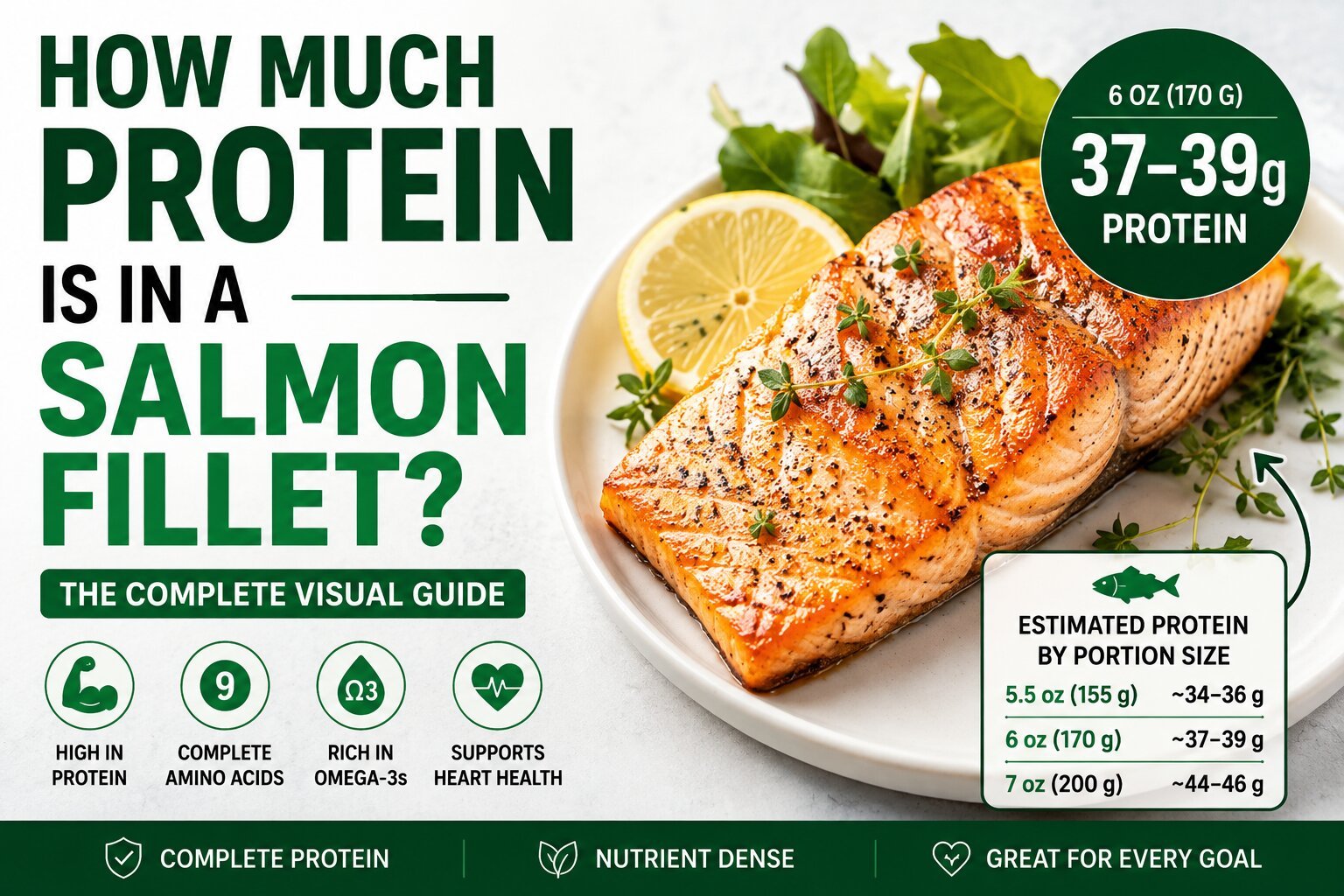
An average salmon fillet contains between 25 and 39 grams of protein. It depends on its size and whether it’s Atlantic, Sockeye, or another variety. A standard 6-ounce (170-gram) cooked salmon fillet provides around 37–39 grams of high-quality complete protein. It makes salmon one of the best protein-rich foods you can include in your diet.
| Salmon Fillet Size | Weight | Protein |
|---|---|---|
| Small | 4 oz (113 g) | ~25 g |
| Medium | 5 oz (142 g) | ~31 g |
| Standard | 6 oz (170 g) | ~37–39 g |
| Large | 8 oz (227 g) | ~50 g |
What You’ll Learn in This Guide
- How much protein is in different salmon fillet sizes.
- Protein content of Atlantic, Sockeye, Coho, King, and Pink salmon.
- The difference between raw and cooked salmon protein values.
- How salmon compares with chicken, tuna, and other high-protein foods.
- Easy visual portion guides so you can estimate protein without using a kitchen scale.
Salmon Fillet Protein by Portion Size
Not every salmon fillet is the same size. A small fillet served at home may weigh around 4 ounces (113 grams), while a restaurant portion is often 6 to 8 ounces (170–227 grams) or even larger.
The larger the fillet, the more protein it contains. Use the chart below to estimate the protein content of your salmon, even if you don’t have a kitchen scale.
| Portion Size | Weight | Approx. Protein | Calories* |
|---|---|---|---|
| ½ Fillet | 3 oz (85 g) | 19 g | 175 |
| Small Fillet | 4 oz (113 g) | 25 g | 233 |
| Medium Fillet | 5 oz (142 g) | 31 g | 292 |
| Standard Fillet | 6 oz (170 g) | 37–39 g | 350 |
| Large Fillet | 8 oz (227 g) | 50 g | 467 |
If you’re tracking your daily protein intake, estimating the size of your salmon fillet can help you stay on target. For example, if your goal is 120 grams of protein per day, one standard 6-ounce salmon fillet provides nearly one-third of your daily target before adding protein from other meals.
Does the Type of Salmon Affect Protein Content?
Yes—but only slightly. While all salmon varieties are excellent sources of complete protein. Some species naturally contain a little more protein than others. The difference isn’t dramatic. But if you’re tracking your macros closely, it’s worth knowing.
It does not matter that you choose Atlantic salmon, Sockeye, Coho, or Pink salmon. You’ll still get a protein-rich meal packed with essential amino acids, vitamins, and heart-healthy omega-3 fatty acids
| Salmon Type | Protein (Per 100 g) | Calories (Per 100 g) | Best For |
|---|---|---|---|
| Atlantic Salmon | 22 g | 206 | Everyday meals |
| Sockeye Salmon | 25 g | 153 | Higher protein, leaner option |
| Coho Salmon | 24 g | 168 | Balanced protein and healthy fats |
| Pink Salmon | 24 g | 127 | Lower-calorie meals |
| King (Chinook) Salmon | 21 g | 250 | Rich flavor and healthy fats |
Although the protein differences between salmon species are relatively small. The calorie content can vary much more because of differences in fat. Leaner varieties like Sockeye and Pink salmon provide more protein for fewer calories. While King salmon is prized for its rich, buttery texture and higher omega-3 fat content.
For most people, the joy of eating a salmon is much more than the protein intake. Also protein is much better source of protein that the regular chicken people eat.
And this is coming from experience
Does Cooking Change the Protein Content of Salmon?
| Estimated Cooked Weight | Estimated Protein |
|---|---|
| 5.5 oz (155 g) | ~34–36 g |
| 6 oz (170 g) | ~37–39 g |
| 7 oz (200 g) | ~44–46 g |
Cooking salmon doesn’t destroy its protein. Instead, it removes water from the fish, making the protein more concentrated by weight. This is why 100 grams of cooked salmon usually contains slightly more protein than 100 grams of raw salmon.
If you’re eating the same fillet before and after cooking, the total amount of protein stays nearly the same. The fillet simply weighs less after losing moisture during cooking.
For example, a raw salmon fillet weighing 200 grams may weigh only 170 grams after cooking, but it still contains almost the same total grams of protein.
| Preparation | Serving Size | Protein | Calories |
|---|---|---|---|
| Raw Salmon | 100 g | 20–22 g | 208 |
| Baked Salmon | 100 g | 25–26 g | 232 |
| Grilled Salmon | 100 g | 25–26 g | 230 |
| Pan-Seared Salmon | 100 g | 24–25 g | 240* |
| Smoked Salmon | 100 g | 22–25 g | 117–180 |
If you log your meals in a calorie-tracking app, make sure you select the correct version of salmon—raw or cooked. Using the wrong entry can slightly affect your protein and calorie totals, especially if you regularly weigh your food before cooking.
Which Cooking Method Is Best for Protein?
From a protein standpoint, baking, grilling, steaming, and air frying all provide virtually the same amount of protein. The main differences come from the amount of fat or oil used during cooking.
If your goal is to maximize protein while keeping calories under control, baked or grilled salmon is usually the best choice. These methods preserve the fish’s natural nutrients while requiring little or no added fat.
How Does Salmon Compare to Other High-Protein Foods?
Salmon is one of the best natural sources of protein, but how does it compare to other popular protein-rich foods like chicken breast, eggs, tuna, or Greek yogurt?
The table below compares the approximate protein content per 100 grams of each food.
| Food | Serving | Protein | Calories |
|---|---|---|---|
| Chicken Breast (Cooked) | 100 g | 31 g | 165 |
| Tuna | 100 g | 29 g | 132 |
| Salmon (Cooked) | 100 g | 25–26 g | 232 |
| Lean Beef | 100 g | 26 g | 217 |
| Shrimp | 100 g | 24 g | 99 |
| Greek Yogurt (Plain) | 100 g | 10 g | 59 |
| Eggs | 2 Large Eggs | 12–13 g | 144 |
While chicken breast contains slightly more protein per 100 grams, salmon offers a unique nutritional advantage thanks to its high levels of omega-3 fatty acids, vitamin D, vitamin B12, and selenium. These nutrients support heart health, brain function, and overall well-being, making salmon much more than just a protein source.
If your goal is simply to maximize protein intake, chicken breast and tuna are excellent choices. However, if you’re looking for a balance of protein and healthy fats, salmon remains one of the healthiest foods you can eat.
- Highest Protein: Chicken breast (31 g per 100 g)
- Best Balance of Protein & Healthy Fats: Salmon
- Lowest Calories: Shrimp
- Best Budget Option: Eggs
- Great Dairy Choice: Plain Greek yogurt