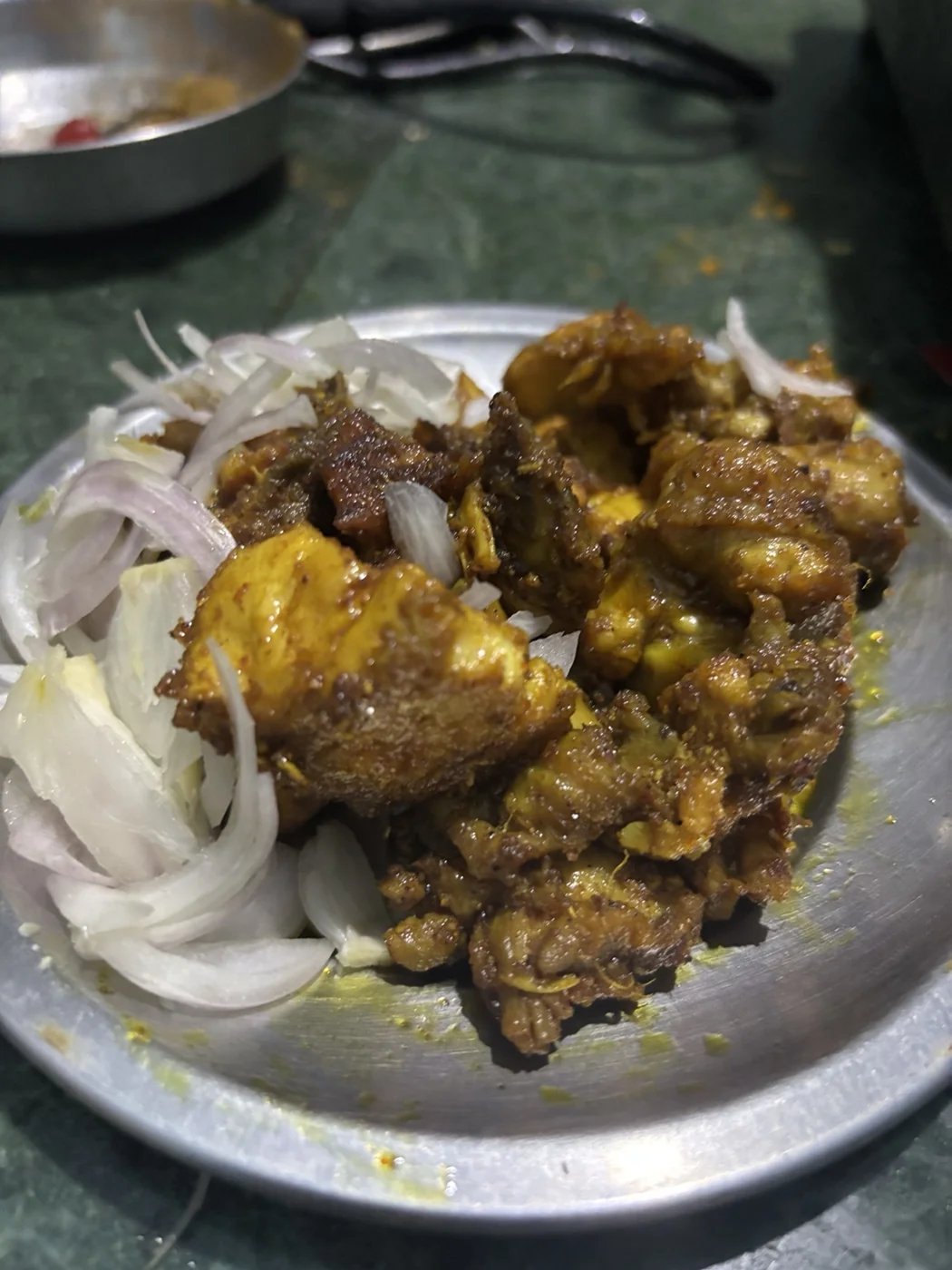
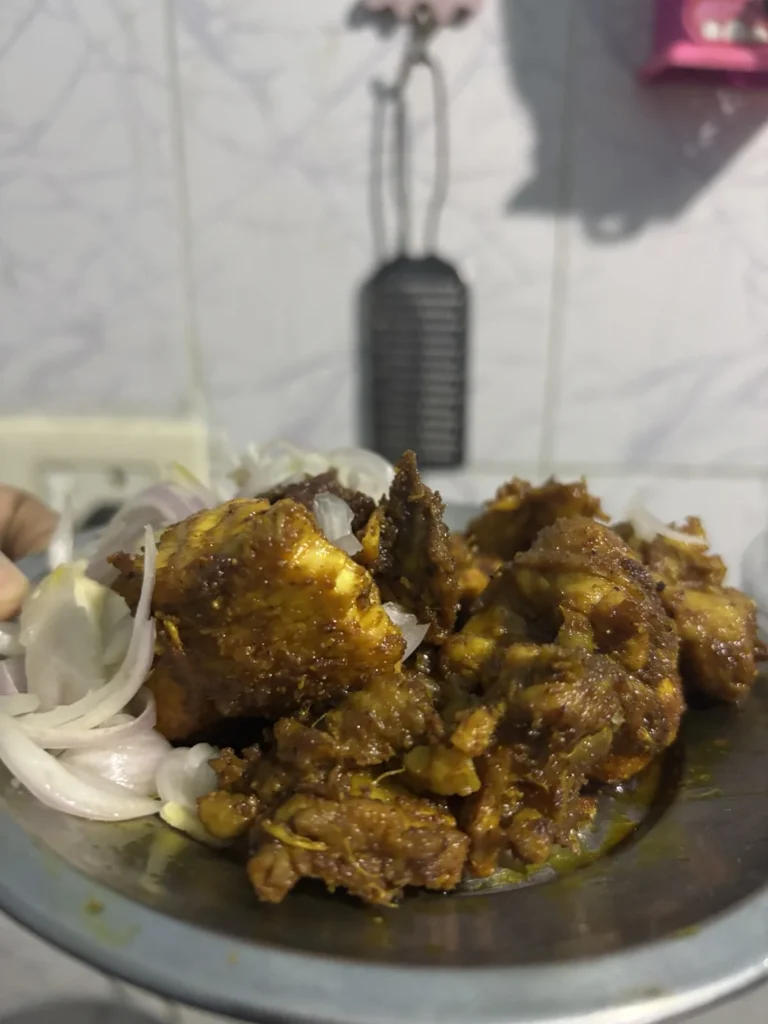
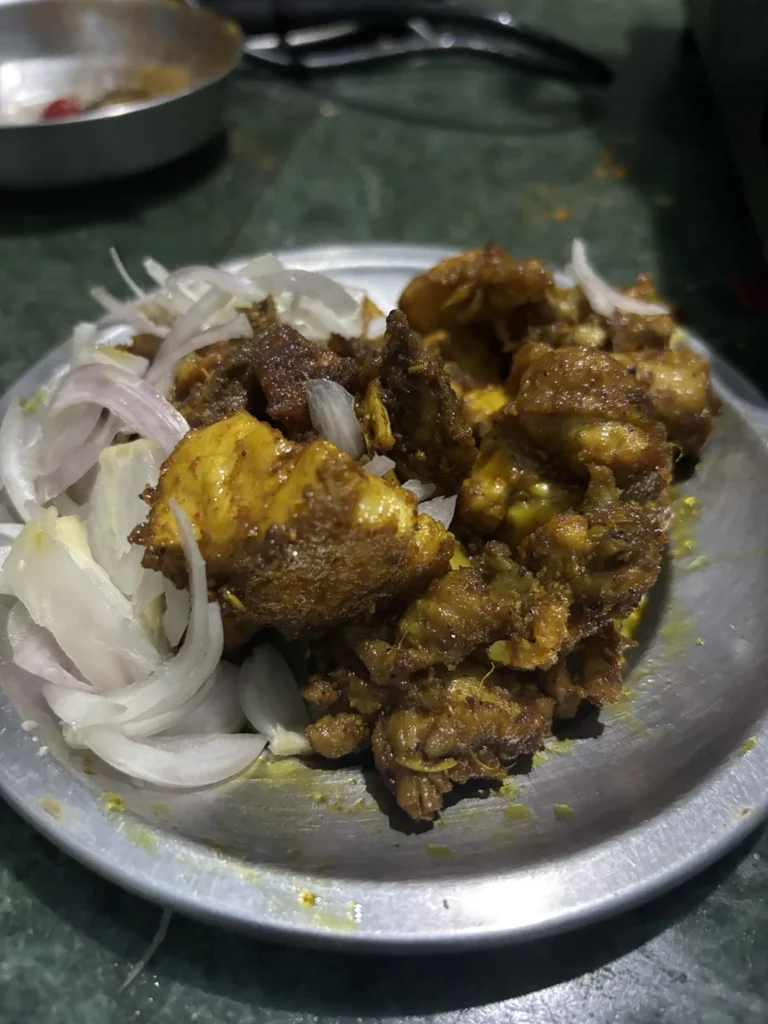
I made this chicken dry fry for dinner with half a kilo of skin-on chicken, a mix of breast and thigh, and about four teaspoons of vegetable oil. Turmeric and freshly crushed ginger and garlic were the main flavors, with a little garam masala and red chili powder toward the end.
I served it with fresh chopped onions. There was no tomato gravy, cream, flour coating, or long ingredient list—just chicken cooked until the spices clung to the pieces.
Protein takeaway: Chicken supplies almost all the protein. The exact amount in my batch cannot be calculated from the starting weight alone because the bone weight, breast-to-thigh ratio, and number of servings were not recorded.
Ingredients I Used
- 500 g (about 1.1 lb or 17.6 oz) raw chicken: mixed breast and thigh, skin on
- About 4 teaspoons vegetable oil (1 tablespoon plus 1 teaspoon)
- Salt and black pepper, to taste
- A little ground turmeric
- Homemade ginger-garlic paste, made by crushing fresh ginger and garlic together
- A little garam masala, an Indian spice blend
- Red chili powder, to taste
- Fresh chopped onion, for serving
I did not measure the seasonings, paste, or onion. This is a record of my home cooking rather than a precisely tested recipe with fixed spice quantities. For US readers, use ground red chile such as cayenne to taste; American “chili powder” may be a milder seasoning blend.
How I Made This Chicken Dry Fry
- Start the chicken in oil. I heated about four teaspoons of vegetable oil in a pan and added the chicken directly, without marinating it.
- Add the early seasonings. After two or three minutes, I added salt, pepper, and turmeric, then turned the pieces to coat them.
- Cook until the pieces begin to brown. I used high heat for roughly ten minutes. The chicken released moisture before developing a golden, turmeric-colored surface. Turn the pieces regularly and reduce the heat if the spices begin to scorch.
- Add freshly crushed ginger and garlic. I mashed them together into a paste and mixed that into the chicken.
- Lower the heat. I let the chicken cook for another ten to twenty minutes, turning it as needed.
- Finish with the remaining spices. I added a little garam masala and red chili powder and cooked over very low heat for another ten to fifteen minutes, until the dish was ready.
- Serve with fresh onion. I added chopped raw onion alongside the finished chicken.
My times are approximate and describe this batch, not a guarantee for every pan or piece size. Check the chicken with a thermometer and avoid cooking breast pieces longer than needed once they are safely done.
Food safety: Chicken should reach 165°F (74°C) in the thickest part, away from any bone. Browning or a yellow turmeric color cannot confirm doneness. Although I rinsed my chicken when preparing this batch, USDA advises against washing raw poultry because splashes can spread bacteria. Readers should skip rinsing and wash hands, utensils, and surfaces after handling raw chicken.
How Much Protein Does Chicken Dry Fry Provide?
The useful number is the weight of the cooked chicken you actually eat, excluding bones. As a practical reference, roasted chicken breast and thigh with skin provide roughly 25–30 g protein per 100 g of edible cooked chicken. These reference foods are not a laboratory analysis of my pan-fried recipe; water loss, cut, and skin proportion change the result.
| Edible cooked chicken, bones excluded | Approximate protein |
|---|---|
| 3 oz (85 g) | 21–26 g |
| 3.5 oz (100 g) | 25–30 g |
| 4 oz (113 g) | 28–34 g |
| 5.3 oz (150 g) | 38–45 g |
These are portion examples, not confirmed servings from my batch. Do not multiply the original 500 g raw weight by cooked-chicken nutrient values: cooking changes the weight, and any bones contribute to the scale reading without being eaten.
For better tracking, remove the bones after cooking, weigh the edible chicken, and multiply the grams by 0.25–0.30 for a rough protein estimate. Divide by the actual number of equal servings. Count the onion and other sides separately.
What About Calories, Skin, and Oil?
This is a protein-rich dish, but “dry fry” does not automatically mean low calorie. The skin and oil contribute fat. Four teaspoons of vegetable oil contribute approximately 160 calories to the whole pan if all of it is eaten; some may remain behind. That is oil alone, not the total recipe calories.
I cannot give a reliable full-batch or per-serving calorie total without the edible chicken weight, cut proportions, skin eaten, and serving count. Turmeric, ginger, garlic, and the other spices mainly add flavor in the amounts used here. They do not turn the dish into a fat-burning meal.
If you want easier tracking next time, weigh boneless chicken, measure the oil, and record how many portions you make. Skinless breast is also an option for a leaner variation, although that changes my original recipe.
How I Would Fit It Into a High-Protein Dinner
I served mine with chopped onion. To build a more varied plate, you could add vegetables and a portion of rice, potatoes, or another carbohydrate that suits your appetite and goals. Those are serving suggestions, not ingredients I added to this batch.
Choose your chicken portion around your daily needs rather than assuming the entire half-kilo batch is one serving. Our protein calculator can help estimate a daily target.
If you prefer a saucier meal, try my chicken curry with tomatoes and onions. That recipe uses an onion-and-tomato gravy; this one keeps the coating dry and concentrated.
Frequently Asked Questions
Is chicken dry fry high in protein?
It can be, because chicken is the main ingredient. How much protein you get depends on the edible chicken in your portion, rather than the amount of spice or oil.
Does turmeric increase the protein?
A small seasoning amount adds very little protein. In my recipe, turmeric is important for its flavor and yellow color; chicken remains the primary protein source.
Can I use only chicken breast?
Yes, as a variation. Breast can dry out during prolonged cooking, so adjust the time to the piece size and verify the safe internal temperature rather than copying my timing exactly.
Is this deep-fried chicken?
No. I used about four teaspoons of oil in a pan. The pieces were not submerged in oil and did not have a flour or breadcrumb coating.
How much protein was in the original 500 g batch?
The available details are insufficient for a dependable total. The starting weight was raw and skin on, while bone weight and final edible weight were not recorded. Use the cooked edible-portion examples above rather than treating 500 g as cooked boneless meat.
Sources and Nutrition Notes
- USDA FoodData Central: reference nutrient data for chicken breast and thigh, meat and skin, cooked and roasted. Values are used as approximate comparisons, not measured nutrition for this recipe.
- CDC: Chicken and Food Poisoning: safe cooking temperature and handling.
- USDA: Should I wash chicken before cooking?
Cooking experience supplied by Vishal Pradhan. Nutrition estimates vary with the cut, skin, edible weight, cooking losses, oil retained, and portion size.