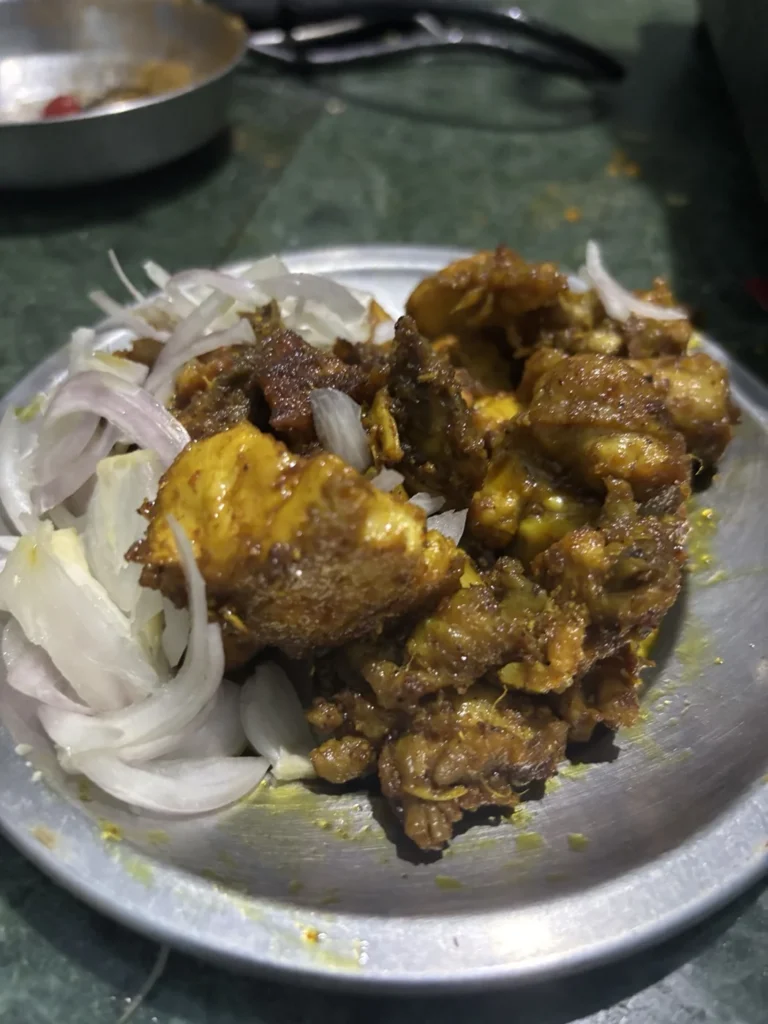
Three ounces of roasted, skinless turkey breast provides about 26 grams of protein. A 4-ounce portion provides about 34 grams. The amount of protein in turkey depends on the cut, portion size, and whether it is weighed raw or cooked. These estimates apply to cooked breast meat. [1]
Here’s why that matters: 4 ounces of Butterball Oven Roasted deli turkey provides 20 grams of protein, calculated from its label. Same weight, different product, different number to log. [2]
Whether you’re packing lunch between classes, eating at your desk, or figuring out what went onto your Thanksgiving plate, the useful question is the same: How much protein is in the turkey I actually ate?
You don’t need a perfect plate or a calculator at the dinner table. You need the right portion and the right food entry.
What is a serving of turkey in the US?
A common nutrition reference is 3 ounces of cooked turkey, or about 85 grams. Illinois Extension describes a portion this size as roughly the size and thickness of a deck of cards. [1]
That gives us a useful starting point. It does not establish the average amount every American eats, especially at Thanksgiving. Actual portions vary by appetite, meal, and occasion.
There are also different serving sizes on different products:
| Turkey you’re measuring | Reference or label serving | What the weight means |
|---|---|---|
| Roasted turkey breast | 3 oz, about 85 g | Cooked meat |
| Butterball 93/7 ground turkey | 4 oz, 112 g on its label | Raw product |
| Butterball Oven Roasted deli turkey | 2 oz, 56 g on its label | Ready-to-eat product |
Sources: Illinois Extension and the named manufacturers. These are reference portions, not instructions for how much you personally should eat. [1], [2], [3]
For tracking, start with your actual portion. If you ate 5 ounces, log 5 ounces. There’s no need to squeeze it into a serving size you didn’t eat.
Protein in turkey breast by serving size
Use this chart for roasted turkey breast meat without skin or bones.
| Cooked portion | Approximate weight | Approximate protein |
|---|---|---|
| 1 oz | 28 g | 9 g |
| 2 oz | 57 g | 17 g |
| 3 oz | 85 g | 26 g |
| 4 oz | 113 g | 34 g |
| 5 oz | 142 g | 43 g |
| 6 oz | 170 g | 51 g |
| 8 oz | 227 g | 68 g |
| 100 g | 3.5 oz | 30 g |
How we calculated this: Illinois Extension reports 25.6 g of protein per 85 g for whole-turkey breast, roasted and skinless, using USDA FoodData Central. We scaled that value by weight and rounded the results. Ounce conversions are approximate. [1]
Your turkey may differ because of the cut, added solution, and preparation. Treat these as estimates for the identified food, rather than exact values for every roast.
Breast, dark meat, ground turkey, and deli slices: which number should you use?
“Turkey” is a broad search term. Your food log needs something more specific.
Roasted breast
Use a cooked, roasted breast entry when that matches what is on your plate. Check whether the entry includes skin or added solution.
A home-roasted breast and a packaged turkey roast may have different ingredients. If your product has a nutrition label, that label is the better starting point for that product.
Thighs, legs, and other dark meat
Use an entry for the cut you ate, including its cooking method and whether you ate the skin.
A whole drumstick’s scale weight includes a bone. A nutrition entry for edible meat does not. Remove the bone before weighing, or subtract the uneaten bone afterward.
There’s no need to treat dark meat as a tracking problem. It simply needs its own entry.
Ground turkey
Ground turkey varies by lean percentage and brand. “93/7” means 93% lean and 7% fat by weight; it does not mean the product is 93% protein.
Butterball’s raw 93/7 ground turkey lists 22 g protein per 4 oz (112 g). Its listed calories are 160 per serving. Check your own package, since products and labels can change. [3]
Deli turkey
Deli slices deserve their own entry. Butterball Oven Roasted Turkey Breast lists 10 g protein and 400 mg sodium per 2 oz (56 g). Its ingredients include turkey breast, broth, and other ingredients. [2]
“Four slices” is less useful than a weight because slice thickness varies. A kitchen scale makes this much easier.
How much protein is in ground turkey?
Using Butterball’s raw 93/7 label as a specific example:
| Raw amount, using the label’s weights | Approximate protein |
|---|---|
| 2 oz / 56 g | 11 g |
| 4 oz / 112 g | 22 g |
| 6 oz / 168 g | 33 g |
| 8 oz / 224 g | 44 g |
| One labeled 1 lb package, four servings | 88 g |
These are label-based calculations for this product, not a universal ground-turkey chart. The gram amounts follow the manufacturer’s rounded label conversions. [3]
If your package lists a different protein amount, use that number.
A simple meal-prep example
Suppose you cook a package labeled as four servings, each with 22 grams of protein.
That gives you 88 grams of protein before cooking, based on the rounded label values.
After cooking, weigh the edible batch. If it weighs 340 grams and you split it into four equal portions, each portion weighs 85 grams.
For planning, you can allocate about 22 grams of protein to each portion, rather than treating that 85-gram cooked portion as 85 grams of raw turkey.
This is an estimate: discarded juices and drippings can carry nutrients away. If you use a cooked-food database entry instead, choose one that matches the cooked product and preparation.
The useful habit is consistency. Don’t log a raw entry for one meal and a cooked entry for the next without checking the weight basis.
Should you weigh turkey raw or cooked?
Either works. Match the food’s weight to the nutrition information you’re using.
- Weighed raw? Use the package’s raw-product information or a matching raw entry.
- Weighed cooked? Use a matching cooked entry.
- Weighed a finished recipe? Calculate the recipe total, then divide by the finished weight or number of portions.
Cooking changes weight, partly because water leaves the meat. It doesn’t create extra protein. This is why 100 grams raw and 100 grams cooked are different comparisons.
There isn’t one raw-to-cooked conversion that fits every turkey product and cooking method. Weighing your own batch is more useful than assuming it always loses a fixed percentage.
Also remember the extras. Log oil, butter, gravy, cheese, or sauce separately when tracking the whole meal.
How much turkey gives you 30 grams of protein?
Using the roasted, skinless breast reference above, about 100 grams cooked—roughly 3.5 ounces—provides 30 grams of protein. [1]
That’s a portion calculation, not a rule that every meal must contain 30 grams.
For another product, use this simple method:
Amount needed = protein you want ÷ protein per label serving × serving weight.
For example, using the deli turkey label:
30 ÷ 10 × 56 = 168 grams of deli turkey, or three labeled servings. [2]
The number changes because the product changes.
If you want help setting a daily target before choosing portions, use our free protein calculator. Then plan meals you enjoy around that estimate.
What about turkey on Thanksgiving?
Thanksgiving adds one extra source of confusion: how much turkey to buy is different from how much cooked meat to log.
Butterball gives a general shopping rule of about 1 pound of whole turkey per person, while noting that dinner plans and guest preferences affect the amount. That is a buying estimate for a whole bird. It is not a recommendation to eat a pound of cooked meat. [4]
For your food log:
- Put your plate on the scale and zero it.
- Add the cooked turkey you plan to eat.
- Exclude bones and choose an entry that matches the cut and skin.
- Add gravy and sides as separate foods.
Eating a mix of breast and dark meat? Weigh them separately if you want a closer estimate, or use an appropriate mixed-meat entry.
You can track a holiday meal without turning dinner into a laboratory. A reasonable estimate is useful when precise weighing isn’t practical.
How does turkey fit into a daily protein plan?
Start with your daily estimate and your usual meals. Then decide how much turkey fits.
For example, if your personal target is 100 grams and one meal provides 30 grams, you have about 70 grams left to get from your other meals and snacks. That arithmetic works whether you’re a student or the person designing the next spacecraft.
The rest of your plate still matters. Add vegetables and foods you enjoy, along with other sources of protein across the day.
For meal ideas, see what 100 grams of protein looks like in a day. For variety, our guides to protein in salmon fillets and protein in sardines explain two other options.
Keeping turkey meal prep safe
USDA advises cooking turkey to a safe minimum internal temperature of 165°F, checked with a food thermometer. For a whole bird, check the thickest breast and the innermost thigh and wing areas. [5]
Refrigerate cooked leftovers promptly in shallow containers, within two hours—or one hour when temperatures are above 90°F. Keep the refrigerator at 40°F or below, use cooked turkey within three to four days, and reheat leftovers to 165°F. Freeze portions you won’t use in time. [5], [6]
Quick questions about turkey protein
How much protein is in one slice of turkey?
Check the label and slice weight. Thickness varies too much for “one slice” to have a reliable universal value. For a deli product listing 10 g per 56 g, a 28-gram portion provides about 5 g. [2]
How much protein is in a turkey sandwich?
Calculate the turkey from its label and weight, then add the bread, cheese, and other ingredients. The sandwich total depends on what you put into it.
Can I use the breast chart for turkey bacon or turkey sausage?
Use the product label instead. Those products have their own ingredients and serving sizes.
How much protein is in a whole turkey?
You can’t accurately calculate it from the bird’s purchase weight alone. Bones, different cuts, skin, and cooking losses make that misleading. Weigh the cooked edible portions and use matching entries.
How much of your daily protein does this serving cover?
Calculate your daily protein target, then use the portion chart above to plan your turkey meal.
Sources and calculation notes
- University of Illinois Extension: Turkey nutrition and portion guide. Breast reference: 25.6 g protein per 85 g cooked, roasted, skinless breast. The portion chart uses this single reference consistently.
- Butterball: Oven Roasted Turkey Breast, deli product. Label: 10 g protein per 56 g.
- Butterball: Fresh All Natural Ground Turkey 93/7. Label: 22 g protein per 112 g; four servings per 1 lb package.
- Butterball: How to Cook a Turkey. Whole-bird shopping guidance.
- USDA FSIS: A Consumer Guide to Safely Roasting a Turkey.
- USDA FSIS: Turkey Basics—Handling Cooked Dinners.
Values are rounded planning estimates. Manufacturer labels were checked during research; use the label on your package if it differs. Example meal-prep weights are illustrative, not a measured cooking test.