The weights were still the same. I was the one who felt different.
During a period when I was eating less protein, lifting felt harder, I got tired more easily, and meals didn’t seem to keep me full the way they had before. I also noticed cramps, less thirst, and a change in my bathroom routine. That last one was actually an improvement, which made the whole experience a little confusing.
So, what happens when you don’t eat sufficient protein? Consistently falling short can make it harder to support muscle maintenance and your response to training. But feeling weak, hungry, or sore doesn’t automatically mean protein is the problem. [1]
This is my experience of eating less protein while continuing to work out. These observations don’t establish a diagnosed protein deficiency. I can describe what I felt, rather than prove what caused it.
What happens when you eat less protein?
Eating less protein than your body needs over time can make it harder to maintain muscle and support your response to training. You may also find meals less filling. A lower intake is not automatically inadequate: what matters is whether you consistently meet your needs. Hunger, fatigue, cramps, and pain cannot diagnose a protein deficiency.
My lifts felt harder than they should have
One of the first things I noticed was that I didn’t feel as strong when lifting. The effort was there, but I didn’t feel like I had enough strength behind it. Even outside the gym, some things felt more tiring than usual.
It’s frustrating when you’re showing up and trying, but your body seems to have arrived with 12 percent battery.
That made me pay more attention to what I was eating. Protein provides amino acids that the body uses to build, maintain, and repair muscle. Getting enough supports the adaptations you’re working toward through training. [1]
Still, I wouldn’t blame a difficult workout on protein alone. Overall food intake, carbohydrates, sleep, hydration, and the training itself all matter. Looking back, my meals were changing in more ways than just their protein content.
I felt worn out between sets
Another thing I noticed was that I didn’t feel refreshed between lifts. I would finish a set, take a break, and still feel worked over when it was time to go again. Simple workouts and everyday tasks could leave me feeling tired too.
There’s a difference between finishing a demanding workout and feeling as though every small task is demanding. During that period, I felt closer to the second one.
I associated this with eating less protein because I hadn’t noticed it in the same way during my higher-protein weeks. But that comparison wasn’t a controlled experiment. How much I ate, how well I slept, and how demanding each session was could also have affected how I felt.
Protein supports recovery after exercise, but it isn’t an instant recharge between sets. If you keep feeling drained, it makes sense to look at your whole routine rather than keep adding protein and hoping it fixes everything.
I felt hungry more often
Hunger was another noticeable change. Chicken and meat were some of my favorite foods, and eating less of them changed how satisfying my meals felt. I found myself wanting other food, and even after eating, I didn’t always feel as full as I had during my higher-protein weeks.
I could finish a meal and still feel ready to discuss the next one. Preferably immediately.
There is some research behind that feeling. A systematic review and meta-analysis found that higher protein intake reduced hunger and increased fullness in short-term studies. That doesn’t mean everyone experiences the same effect, or that protein alone controls appetite. [2]
In my case, I may also have been eating less food overall. Removing a familiar part of a meal without replacing it properly can leave the meal smaller, less satisfying, or both. I can’t confidently separate the effect of less protein from the effect of fewer calories.
I had more cramps and they got my attention
The cramps were harder to ignore. I noticed them in my hands, around my waist, and sometimes in my shoulders. Stretching sometimes seemed to bring them on, and occasionally I needed a friend to help by holding the affected muscle.
At that point, it wasn’t just a disappointing gym session. It was uncomfortable.
Because this happened during the same period, I wondered whether eating less protein had something to do with it. But cramps aren’t a reliable sign of low protein. Muscle overuse, dehydration, low electrolyte levels, nerve problems, and certain medicines are among the possible causes. [3]
I can honestly say the cramps happened while I was eating less protein. I can’t honestly say that less protein caused them. Frequent or severe cramps, particularly with weakness or swelling, deserve medical advice rather than a guess based on your food diary. [3]
My bathroom routine actually became easier
Here’s the part that didn’t fit neatly into a story about everything getting worse: passing stools became easier.
During my higher-protein weeks, I had sometimes struggled more in the bathroom. When I ate less protein, that seemed to improve. My workouts weren’t impressed with the change, but my bathroom routine was.
That doesn’t prove the lower-protein diet was better for my gut health. It does mean my digestion felt more comfortable during that period.
Protein itself isn’t the whole explanation for constipation. A diet built heavily around meat can leave less room for fiber-rich foods if you aren’t paying attention. Getting enough fiber and fluids helps stools become softer and easier to pass. [4] I wrote more about this in my experience with protein and constipation.
I can’t say exactly which dietary change made the difference for me. The useful lesson is to keep the rest of the plate in mind: vegetables, fruit, whole grains, and beans still deserve space when you’re focused on protein.
I noticed less thirst too
This was a smaller change, but I remember it. During my higher-protein weeks, I felt thirstier and reached for water more often. When I ate less protein, I didn’t feel the same urge to drink.
I’m including it because it was part of my experience, not because thirst is a useful way to measure protein intake. Water intake, salt intake, and sweating could all have influenced it, so I can’t pin that change on protein.
Feeling less thirsty also wasn’t evidence that everything else in my diet was going well. It was simply another difference I noticed.
Some discomfort woke me during the night
Sometimes I woke up with a small twinge of pain around my backside. I had been going to the gym for months, and I hadn’t noticed that same discomfort during my higher-protein period.
Naturally, I wondered whether the two were connected. But I don’t know what caused the pain, and I wouldn’t turn it into another item on a list of protein deficiency symptoms.
Pain that keeps waking you, persists, or gets worse deserves attention from a clinician. Eating more protein shouldn’t become a reason to ignore it.
How much protein is enough?
Before deciding you need more protein, it helps to know roughly how much you already eat and what your activity level calls for. Our guide to protein needs by activity level explains how training changes the context.
For healthy adults, the protein Recommended Dietary Allowance is 0.8 grams per kilogram of body weight per day. Sports nutrition guidance commonly puts athletes at around 1.2 to 2.0 grams per kilogram per day, depending on their training and needs. [1]
For someone weighing 70 kilograms, or about 154 pounds, that works out to 56 grams at the adult RDA, compared with 84 to 140 grams using the athlete range. These are general reference figures, not a personalized prescription. For more examples in pounds and kilograms, see our protein intake by weight chart.
| Reference | Protein per day |
|---|---|
| Healthy adult RDA: 0.8 g/kg | 56 g |
| Athlete guidance: 1.2–2.0 g/kg | 84–140 g |
You can use The Protein Calculator as a starting estimate, then look at how your usual meals compare. If you have a medical condition that affects your diet, get an individual target from a qualified professional.
Estimate your daily protein needs
Compare your usual meals with a starting protein estimate based on your weight, activity level, age, and goal.
Less protein side effects: common questions
Does eating less protein always cause side effects?
No. Eating less than you did before may still meet your needs. The concern is consistently eating less than your body requires, especially when you train. The symptoms in my story are observations, not proof of a deficiency.
Can low protein cause cramps or fatigue?
Cramps and fatigue have many possible causes. My experience cannot establish that protein caused them. Consider your overall food intake, hydration, sleep, and training, and seek medical advice for frequent or severe symptoms.
What can I eat to help meet my protein target?
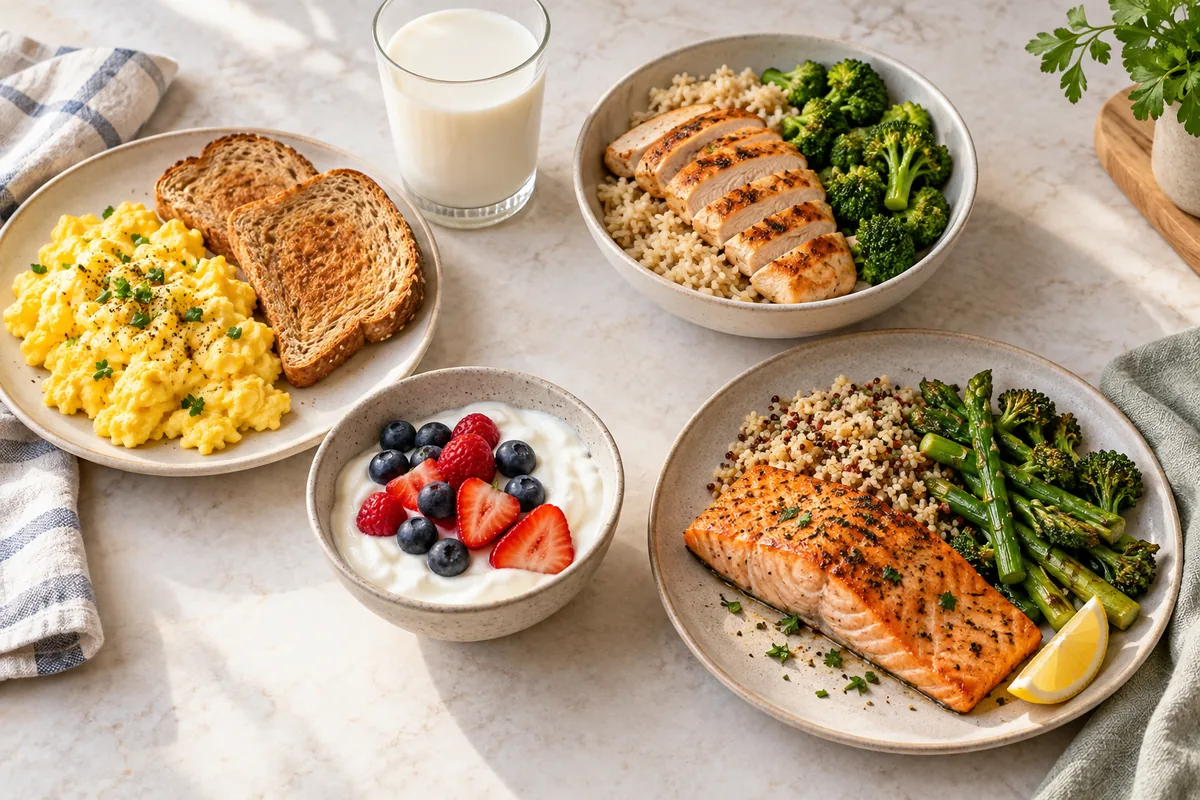
Choose foods you enjoy, such as chicken, fish, eggs, yogurt, tofu, or beans, while keeping fiber-rich foods in your meals. Our guide to what 20 grams of protein looks like offers practical serving examples.
What I took away from eating less protein
The biggest changes I noticed were in how strong I felt, how quickly I got tired, and how satisfied I felt after meals. Those experiences made me take my food intake more seriously. Showing up at the gym mattered, but I also needed to pay attention to how I was feeding myself.
The cramps and nighttime discomfort were worth noticing too, without automatically blaming them on protein. And the easier bathroom visits reminded me that a higher-protein diet still needs balance.
If your workouts feel harder and your meals leave you hungry, try keeping a simple food record for a few days. Look at your protein, your total food intake, and whether you’re making room for fiber-rich foods. Consider your sleep and training load alongside the diet.
My experience didn’t tell me that more protein fixes everything. It did tell me to stop treating the food side of training as an afterthought. The gym already gives me enough work to do; I don’t need to arrive hungry and underfed as well.