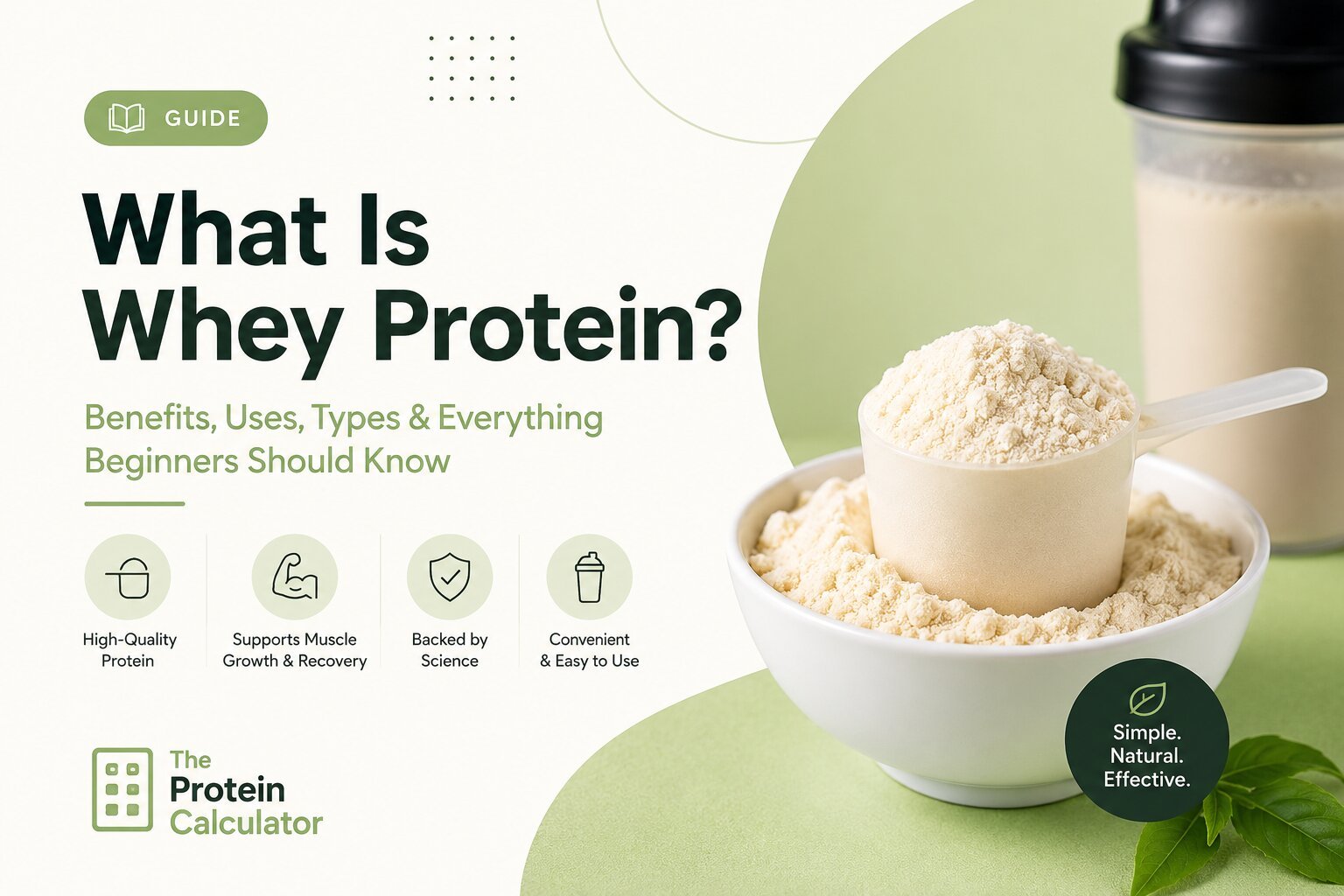
If you are someone who is following a nutritional diet and wants to gain and maintain muscle, then we know you have heard of something called “whey protein”.
It’s the go-to word for a person who wants to talk to you regarding fitness and muscle building. The word has become so popular that “whey” gets synonymous with “protein”.
It’s one of the most popular and extensively researched protein supplements in the world, used by everyone from professional athletes to people who simply want to support a healthy lifestyle.
Despite its popularity, many people still wonder what whey protein actually is, how it’s made, and whether it’s something they really need. The good news is that whey protein isn’t a synthetic substance—it’s a natural protein that comes from milk and has been studied for decades for its nutritional value and role in supporting muscle health.
In this guide, you’ll learn what whey protein is, how it’s made, the different types available, its potential benefits, and who may benefit from using it. We’ll also explain when whey protein can be helpful—and when whole foods alone may be enough to meet your daily protein needs.
Quick Answer
Whey protein is a high-quality protein naturally found in cow’s milk. It is produced during the cheese-making process, where the liquid portion of milk—called whey—is separated from the solid curds. This liquid is then filtered, purified, and dried into the protein powder commonly sold as whey protein.
Because whey contains all nine essential amino acids and is rich in branched-chain amino acids (BCAAs), particularly leucine, it is considered a complete protein that supports muscle protein synthesis. This makes whey protein a convenient option for increasing daily protein intake, especially for people who exercise regularly, have higher protein requirements, or find it difficult to meet their needs through food alone.
Always remember one thing!
Whey protein is a dietary supplement and not a meal replacement or “magic solution” for building muscle. If you hear someone say “Only get whey protein,” then pretty sure the dude is trying to sell you something.
An improved balanced diet and regular resistance training remain the most important factors for improving body composition and supporting long term-health.
What Is Whey Protein?
Okay so!
Whey protein is one of the two naturally occurring proteins found in cow’s milk. Approximately 80% of the protein in milk is casein, while the remaining 20% is whey. Although both are high-quality proteins, they differ in how they’re processed by the body and the situations in which they are commonly used.
The name “whey” comes from the liquid that remains after milk is curdled during cheese production. Enzymes or beneficial bacteria are added to milk, causing the casein proteins to coagulate and form solid curds that are used to make cheese. The remaining liquid—known as liquid whey—contains water, lactose, minerals, and whey proteins.
To create whey protein powder, manufacturers filter this liquid to remove much of the water, lactose, and fat while concentrating the protein. The resulting protein is then spray-dried into a fine powder that can be mixed with water, milk, or added to foods such as smoothies, yoghurt, or oatmeal.
One of the reasons whey protein has become so popular is its excellent nutritional quality. It contains all nine essential amino acids, which the body cannot produce on its own and must obtain through diet. Whey is also naturally rich in leucine, an essential branched-chain amino acid (BCAA) that plays a key role in stimulating muscle protein synthesis—the process your body uses to repair and build muscle tissue after exercise.
Because of this amino acid profile, whey protein is widely used by athletes, recreational gym-goers, older adults seeking to maintain muscle mass, and anyone looking for a convenient way to increase their daily protein intake. However, it’s important to understand that whey protein is simply another source of dietary protein. It does not provide unique muscle-building effects beyond helping you meet your overall protein requirements when combined with appropriate nutrition and regular exercise.
A simple Nutritional Value Table for your understanding.
But do remember that nutritional value may be different for the brand of protein that you are using.
| Nutrient | Amount |
|---|---|
| Calories | 110–130 kcal |
| Protein | 22–25 g |
| Carbohydrates | 1–4 g |
| Total Fat | 1–3 g |
| Sugar | 1–2 g |
| Calcium | 100–150 mg |
| Sodium | 50–150 mg |
Note: Nutritional values differ between manufacturers and formulations. Always check the nutrition label on your chosen product for the most accurate information.
One of whey protein’s biggest nutritional advantages is that it contains all nine essential amino acids, making it a complete protein. Essential amino acids cannot be produced by the body and must be obtained through food or supplements.
Whey protein is also naturally rich in branched-chain amino acids (BCAAs)—leucine, isoleucine, and valine. Among these, leucine is especially important because it acts as a key signal that stimulates muscle protein synthesis, the biological process responsible for repairing and building muscle tissue after resistance exercise.
It’s okay if you don’t understand all these formulas, just knowing that “whey protein” helps to rebuild the gap that is left by that intense workout in the gym.
Unlike many whole-food protein sources that require preparation and cooking, whey protein can be consumed within minutes. This convenience makes it easier for people with busy schedules to consistently meet their daily protein goals.
It’s worth remembering that while whey protein is a high-quality source of protein, it doesn’t provide the wide range of vitamins, minerals, healthy fats, and dietary fiber found in nutrient-dense whole foods such as lean meats, fish, eggs, dairy products, legumes, nuts, and seeds. For this reason, whey protein should be viewed as a supplement to a balanced diet rather than a replacement for whole-food protein sources.
Do You Actually Need Whey Protein?
Now this is a serious question for you
Here’s the short answer:
No. You don’t need whey protein to build muscle, lose weight, or live a healthy life.
Surprised?
Despite what some supplement advertisements (or that one person at the gym) might suggest, your muscles don’t have a secret membership program that only accepts whey protein. They simply need enough high-quality protein each day, whether it comes from chicken, fish, eggs, Greek yogurt, beans, tofu, or a scoop of whey.
Think of whey protein like a blender.
Do you need a blender to make a smoothie? Of course not. You could chop fruit into tiny pieces if you were incredibly patient. A blender just makes the job much easier.
Whey protein works the same way.
If your daily protein target is 150 grams, but your meals only provide 110 grams, drinking one shake is often much easier than cooking another chicken breast at 9 p.m. That’s convenience—not magic.
On the other hand, if you’re already meeting your daily protein needs through whole foods, adding whey protein won’t suddenly unlock “extra” muscle growth. Once your protein requirements are covered, another scoop is simply another source of protein.
That’s why the most important question isn’t:
“Should I buy whey protein?”
It’s:
“How much protein do I actually need?”
Before spending money on supplements, calculate your daily protein requirement based on your body weight, activity level, and fitness goals. You may find that your current diet already provides enough protein—or you may discover that a single scoop of whey is all you need to bridge the gap.
At The Protein Calculator, that’s exactly what our calculator is designed to help you determine.
Whey protein has earned its popularity for a good reason. It’s a convenient, high-quality source of complete protein that’s backed by decades of scientific research and can make it easier to meet your daily protein requirements.
But it’s important to keep its role in perspective.
Whey protein isn’t a miracle powder. It won’t replace consistent training, a balanced diet, adequate sleep, or patience. If it did, we’d all be sipping protein shakes on the couch while waiting for six-pack abs to appear—and unfortunately, biology has declined that feature update.
Instead, think of whey protein as a practical tool. When combined with regular exercise and an overall nutritious diet, it can help you consistently reach your protein goals and support muscle maintenance, recovery, and growth.
If you’re unsure how much protein you actually need each day, start with our Protein Calculator. Knowing your personal protein target is far more valuable than buying a supplement you may not even need.