If your goal is to lose body fat while building or maintaining muscle, you’ve probably come across the term body recomposition. Unlike traditional bulking or cutting phases, body recomposition focuses on improving your body composition—reducing body fat while increasing lean muscle mass—rather than simply changing the number on the scale.
One of the most important factors in achieving successful body recomposition is getting enough protein. Protein provides the essential amino acids your body needs to repair and build muscle tissue while also helping preserve lean muscle during a calorie deficit. Without adequate protein, it becomes much harder to maximize muscle growth or maintain strength as you lose fat.
So, how much protein do you actually need for body recomposition? The answer depends on several factors, including your body weight, activity level, training experience, and overall fitness goals. While there’s no single number that works for everyone, research provides clear recommendations that can help you determine your ideal daily protein intake.
In this guide, you’ll learn:
- How much protein you need for body recomposition.
- The science behind recommended protein intake.
- How to calculate your daily protein requirements.
- The best high-protein foods to support your goals.
- Common protein intake mistakes that can slow your progress.
- How to estimate your ideal intake using our free Protein Calculator.
Whether you’re just starting your fitness journey or looking to fine-tune your nutrition, this guide will help you understand exactly how much protein your body needs to support effective body recomposition.
What Is Body Recomposition?
Body recomposition is the process of losing body fat while simultaneously maintaining or building lean muscle mass. Instead of focusing solely on reducing the number on the scale, body recomposition aims to improve your overall body composition—meaning a higher percentage of muscle and a lower percentage of body fat.
Unlike traditional fitness approaches that separate bulking (gaining muscle by eating in a calorie surplus) and cutting (losing fat in a calorie deficit), body recomposition combines both goals. This is achieved through a combination of resistance training, adequate protein intake, proper recovery, and a well-balanced diet.
Many people notice that even if their body weight changes very little, their physique improves significantly. Clothes may fit better, muscles become more defined, and body fat gradually decreases.
The Main Goals of Body Recomposition
- Reducing body fat while preserving lean muscle mass to improve overall body composition.
- Building or maintaining muscle mass through consistent resistance training and adequate daily protein intake.
- Improving strength and athletic performance by supporting muscle recovery, growth, and physical endurance.
- Creating a leaner, more defined physique without relying on extreme dieting, excessive bulking, or unsustainable nutrition plans.
💡 Did You Know?
Two people can weigh exactly the same but look completely different depending on how much of their weight comes from muscle versus body fat. That’s why body composition is often considered a better indicator of overall fitness and health than body weight alone.
How Much Protein Do You Need for Body Recomposition?
Protein plays a critical role in body recomposition because it provides the amino acids your body needs to repair and build muscle tissue. During a calorie deficit, consuming enough protein also helps minimize muscle loss, allowing your body to burn more fat while preserving lean mass.
According to current research, most healthy adults aiming for body recomposition should consume between:
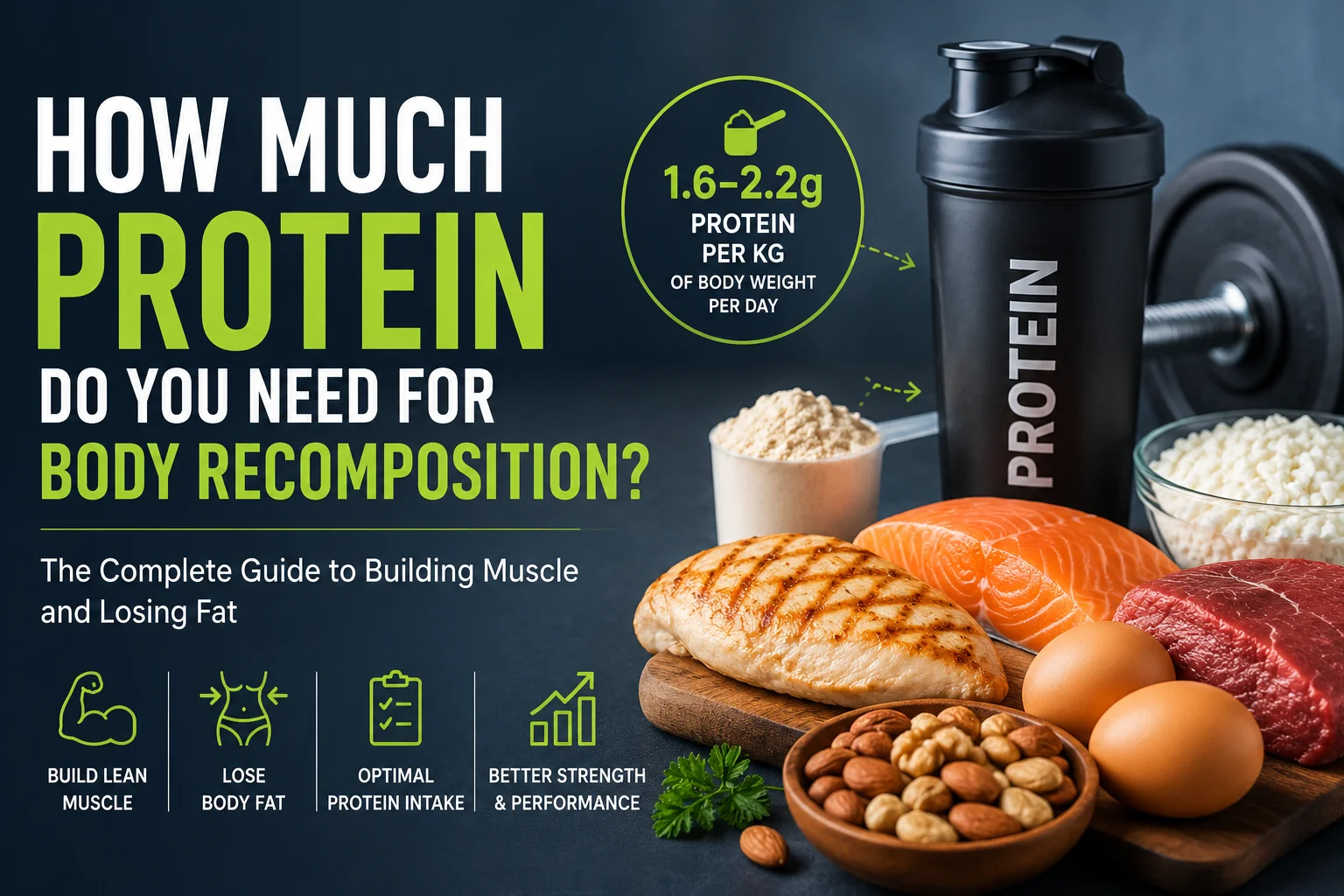
- 1.6–2.2 grams of protein per kilogram (kg) of body weight per day.
- 0.7–1.0 grams of protein per pound (lb) of body weight per day.
This protein range has consistently been shown to support muscle protein synthesis, improve recovery from resistance training, and help preserve lean muscle during fat loss.
Your ideal protein intake depends on several factors, including:
- Your current body weight.
- Your age and sex.
- Your activity level.
- Your training experience.
- Whether your goal is fat loss, muscle gain, or maintenance.
- Whether you’re eating in a calorie deficit, at maintenance, or in a calorie surplus.
General Protein Recommendations
| Goal | Recommended Protein Intake |
|---|---|
| General Health | 0.8–1.0 g/kg of body weight |
| Active Individuals | 1.2–1.6 g/kg |
| Body Recomposition | 1.6–2.2 g/kg |
| Muscle Building | 1.6–2.2 g/kg |
| Fat Loss While Preserving Muscle | 1.8–2.4 g/kg (depending on calorie deficit and body fat percentage) |
Calculate Your Daily Protein Intake
Not sure how much protein you need? Use our free Protein Calculator to receive a personalized daily protein recommendation based on your body weight, activity level, and fitness goal. It only takes a few seconds and removes the guesswork from planning your nutrition.