If you grew up eating dal, seeing “lentils” on a nutrition label can be confusing. Is it masoor? Does moong count? And which one should you choose for protein?
Not every dal is a lentil. And a bowl of thin dal does not necessarily contain the same protein as a cup of plain cooked lentils. Here is how to tell them apart and compare the portions you actually eat.
What Are Lentils?
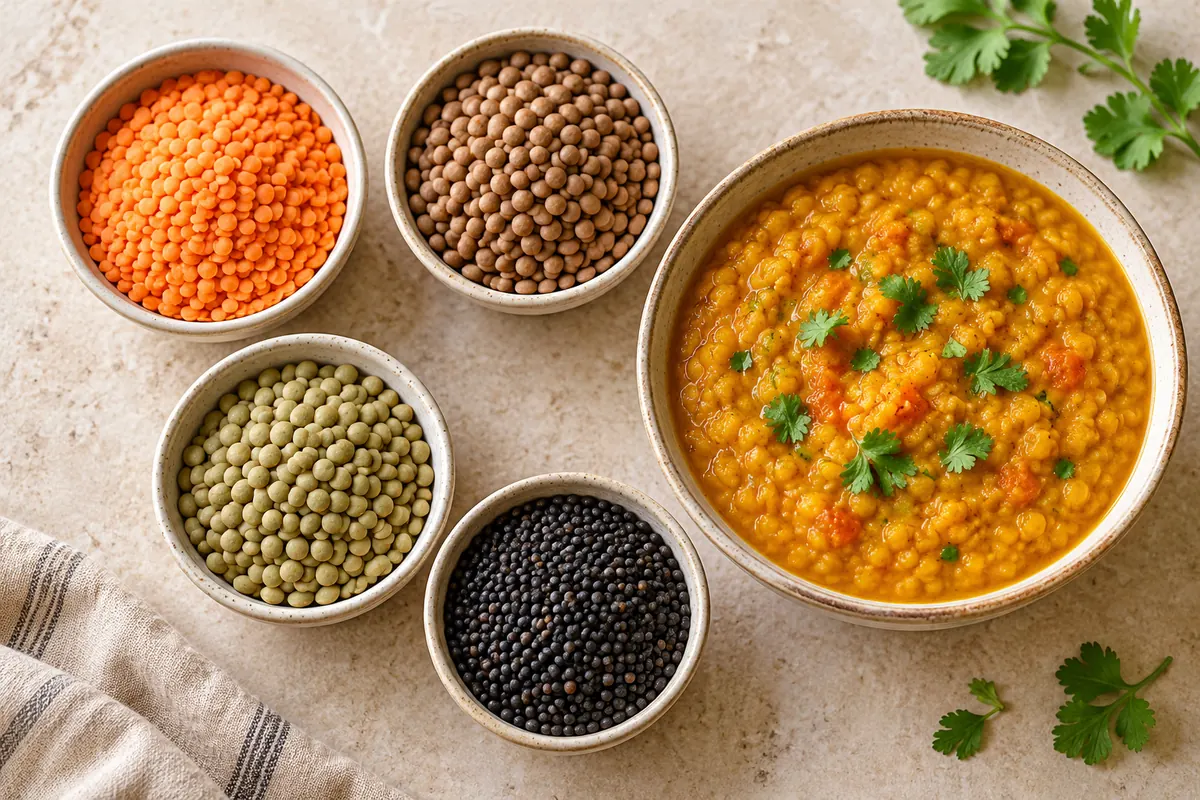
Lentils are small, lens-shaped seeds from the plant Lens culinaris. They are pulses, a group that also includes dried beans, chickpeas, and dried peas. Lentils are sold whole or split, in colors including brown, green, red, and black. Masoor is the familiar Indian name for lentils.
Are lentils and dal the same?
Sometimes—but “dal” has a broader meaning. It can describe split pulses or the cooked dish made from them.
| Indian name | What it is | A true lentil? |
|---|---|---|
| Masoor dal | Hulled, usually split red lentils | Yes |
| Sabut masoor | Whole masoor lentils with their skin intact | Yes |
| Moong dal | Split mung beans | No |
| Toor or arhar dal | Split pigeon peas | No |
| Chana dal | Split desi chickpeas | No |
| Urad dal | Black gram, sold whole or split | No |
They are all pulses, but their nutrition figures are not interchangeable. See the USA Pulses guide to pulse types for the broader categories.
Which Type of Lentil Has the Most Protein?
There is no single winner that applies to every product and cooking method. Different comparisons can give different answers because varieties, serving weights, and water content vary.
The USA Pulses nutrition chart lists these values:
| Lentil type | Protein per half cup cooked, as listed |
|---|---|
| Red lentils | 12 g |
| Green lentils | 9 g |
| Small brown lentils | 9 g |
Red lentils are higher in that chart. However, the chart does not supply gram weights for those half-cup portions. It cannot establish that red lentils always have more protein when equal cooked weights are compared.
A separate 2026 study summarized by USDA researchers found the highest protein concentration in black lentils among the raw samples tested. That is a different comparison from protein per cooked cup, and it should not be used to promise a fixed advantage in every cooked meal.
For everyday tracking, use the label or database entry that matches your lentils and preparation. Choose a texture you enjoy rather than relying on color alone.
How Much Protein Is in Cooked Lentils?
The USDA standard entry for mature lentils, boiled without salt, gives 9.02 grams of protein per 100 grams. The portions below are rounded from that baseline:
| Cooked portion | Protein |
|---|---|
| 100 g | 9.0 g |
| Half cup, about 99 g | 8.9 g |
| One cup, about 198 g | 17.9 g |
Reference: USDA FoodData Central, entry 172421. These are generic cooked-lentil figures, not separate measurements for every color or a prepared dal recipe. Harvard’s protein guide also gives approximately 18 grams per cooked cup.
Lentil Types Explained Separately
1. Red Lentils: Split Masoor Dal
Red lentils are the orange or salmon-colored lentils commonly sold as split masoor dal. Removing the skin and splitting the seed helps them soften quickly and break down into a creamy texture.
They suit dal, smooth soups, and sauces. The USA Pulses chart lists 12 grams of protein per half cup cooked for its red-lentil entry. Treat that as a source-specific serving value, rather than a guarantee for every bowl of masoor.
2. Brown Lentils: Including Whole Masoor
Brown lentils have an earthy flavor and work well in soups and stews. They can retain their shape with gentle cooking but become softer with longer cooking.
Whole masoor has a brown outer skin; the reddish-orange interior becomes visible when that skin is removed. Whole masoor and split red masoor are related forms. However, “brown lentils” is a broader grocery category, so not every brown-lentil product should automatically be identified as the same masoor variety.
USA Pulses lists 9 grams of protein per half cup cooked for small brown lentils.
3. Green Lentils
Green lentils are useful when you want individual lentils rather than a smooth puree. Try them in salads, grain bowls, and side dishes.
Green lentils are not green moong. Moong is a mung bean, a different pulse. USA Pulses lists 9 grams of protein per half cup cooked for green lentils.
4. French Green Lentils
French green lentils are smaller, firm lentils often used in salads and sides. They are useful when you want the cooked lentils to remain distinct. Lentilles du Puy refers to a geographically specific French lentil, rather than every French-style green lentil sold elsewhere.
The nutrition chart above does not provide a separate French-green entry, so it does not establish an exact protein ranking for them. Use a matching product label or nutrition entry.
5. Black Beluga Lentils
Black beluga lentils are small, dark lentils with an earthy flavor. They work well in salads and sides where their shape stands out.
Beluga lentils are not urad dal. Urad is black gram, a different pulse. Although black lentils had the highest protein concentration among the raw samples in the USDA-linked study, that does not supply a universal cooked-cup value. Use your product’s nutrition information for tracking.
For more on texture and preparation, see Harvard’s lentil guide and Oregon State University Extension’s lentil guide.
Dry Versus Cooked Lentils: Why the Numbers Change
Lentils absorb water during cooking. That increases their weight without adding protein. A 100-gram portion of dry lentils therefore represents more lentil solids than 100 grams of cooked lentils.
Think of cooking a measured amount of dry masoor into dal. Adding water makes a larger pot, but it does not create extra protein. Dividing the pot into more bowls gives each bowl a smaller share of the original lentils.
Use dry nutrition information with dry weights, or cooked nutrition information with cooked weights. Do not apply the dry figure to the weight on your plate.
How I Cook Masoor Dal at Home
When I cook masoor dal, I use a pressure cooker. I start with a little oil, add garlic and chopped onions, and cook the onions until golden. Then I add the masoor, water, and turmeric before closing the cooker.
In my cooker, I usually cook it for three to four whistles. That is my own method, rather than a universal cooking time: whole and split masoor cook differently, and pressure cookers vary. Follow your cooker’s instructions for liquid, filling limits, cooking, and safe pressure release.
It is a simple way to make a lentil dish with a small amount of added oil. The protein per bowl depends on the amount of dry masoor in the pot and how many portions I serve.
This is a personal cooking note, not a measured recipe with calculated nutrition.
What About Canned Lentils?
Canned lentils are already cooked, making them convenient for quick meals. Drain and rinse them before adding them to a salad, bowl, or soup.
Check whether the label describes drained lentils or includes the liquid. Calculate protein per can using the labeled serving amount and number of servings, and make sure those quantities match what you actually eat. There is no single protein figure for every can size and brand.
Frequently Asked Questions
Does one cup of lentils really provide about 18 grams of protein?
Yes. The standard reference for plain boiled lentils provides about 17.9 grams per 198-gram cup. A cup of lentil soup or thin dal may contain less because it contains more liquid and fewer lentils.
Is masoor dal a lentil?
Yes. Split masoor is a red lentil, while sabut masoor is the whole form with its skin intact. Moong, toor, chana, and urad are different pulses.
Should I choose red lentils just for the protein?
Choose them if you enjoy them. The available serving chart does not prove a universal protein advantage over every other lentil. The product, portion weight, and preparation matter.
Which lentils should I buy first?
For a soft dal or creamy soup, try split red masoor. For firmer lentils in salads, try green, French green, or black beluga. Brown lentils are a versatile option for soups and stews.
To see how a lentil serving fits into your day, use our protein calculator. For more portion ideas, see what 20 grams of protein looks like in real foods.