A hot jacket potato, a bowl of chilli or bangers with mash all make sense on Bonfire Night. You can prepare them before the fireworks, serve them without much fuss and add a useful amount of protein with familiar ingredients.
The high-protein Bonfire Night food ideas below provide approximately 29–44 g of protein per serving, depending on the dish and the products you use. There are options for a garden gathering, dinner before heading out and a warming meal after the display.
You can still enjoy a toffee apple or a piece of parkin. These suggestions simply give you a few substantial savoury options alongside the treats.
Why these foods fit Bonfire Night
Bonfire Night, also called Guy Fawkes Night, takes place on 5 November. It commemorates the failure of the Gunpowder Plot of 1605, when conspirators planned to blow up Parliament while King James I was attending. UK Parliament explains the history and the annual commemoration.
Today, fireworks displays, bonfires and gatherings provide the setting for an evening of warming food. The British Council identifies baked potatoes, toffee apples and northern English parkin among the foods associated with the occasion.
Bangers and chilli fit contemporary Bonfire Night menus too: Tesco's seasonal collection includes both. Our versions below adapt these familiar meal ideas around defined protein portions.
High-protein Bonfire Night food at a glance
| Meal | Protein | Calories | Carbohydrate | Fat | Where it works best |
|---|---|---|---|---|---|
| Tuna, yoghurt and cheddar jacket potato | 44 g | 520 kcal | 62 g | 9 g | Served at home |
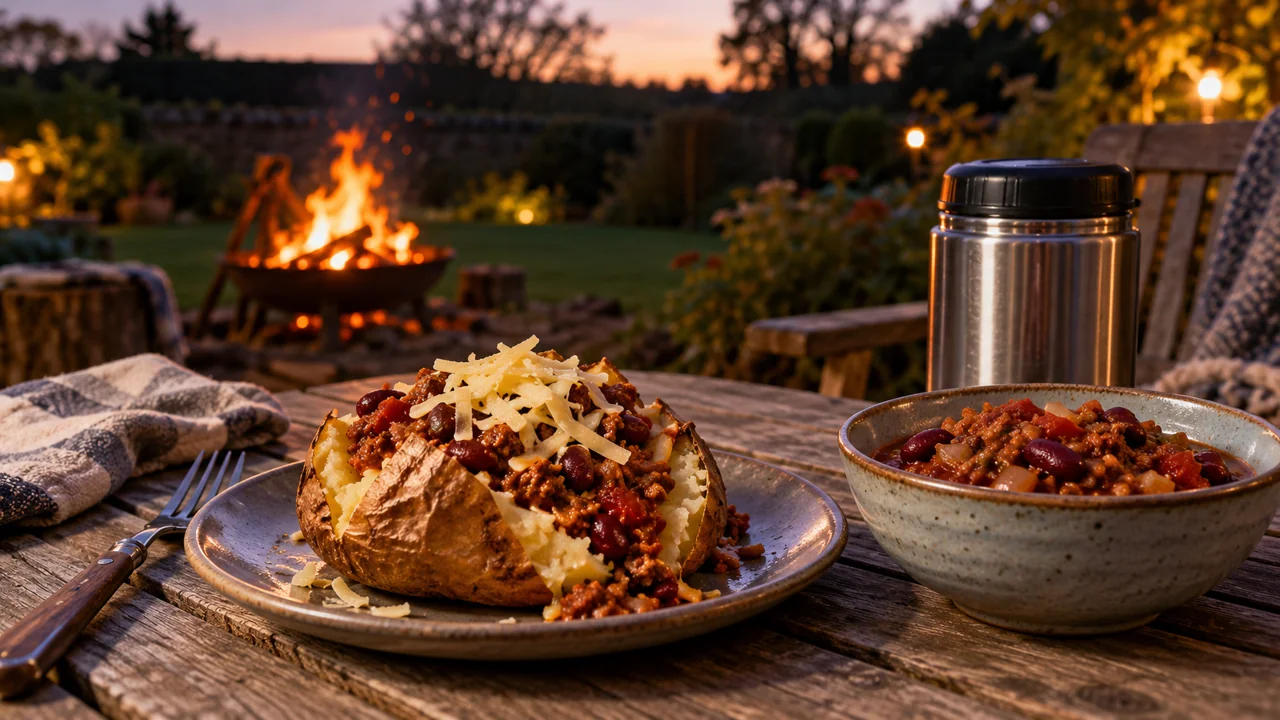
| Turkey and bean chilli jacket potato | 41 g | 605 kcal | 75 g | 13 g | Garden dinner or after the display |
| Chicken bangers with potato and white bean mash | 32 g | 505 kcal | 59 g | 13 g | A hot meal at home |
| Lentil and kidney bean chilli with cheddar | 29 g | 505 kcal | 61 g | 14 g | Home gathering or a suitable food flask |
Nutrition note: These are rounded ingredient-based estimates, not laboratory measurements. They include the quantities listed below, including measured oil, but exclude optional extras and small amounts of dry seasoning. Potato weights are after baking, mince weights are raw, and tinned bean and tuna weights are drained. Changing brands, serving sizes or toppings changes the totals. The nutrition sources and calculation method appear at the end.
1. Tuna, yoghurt and cheddar jacket potato
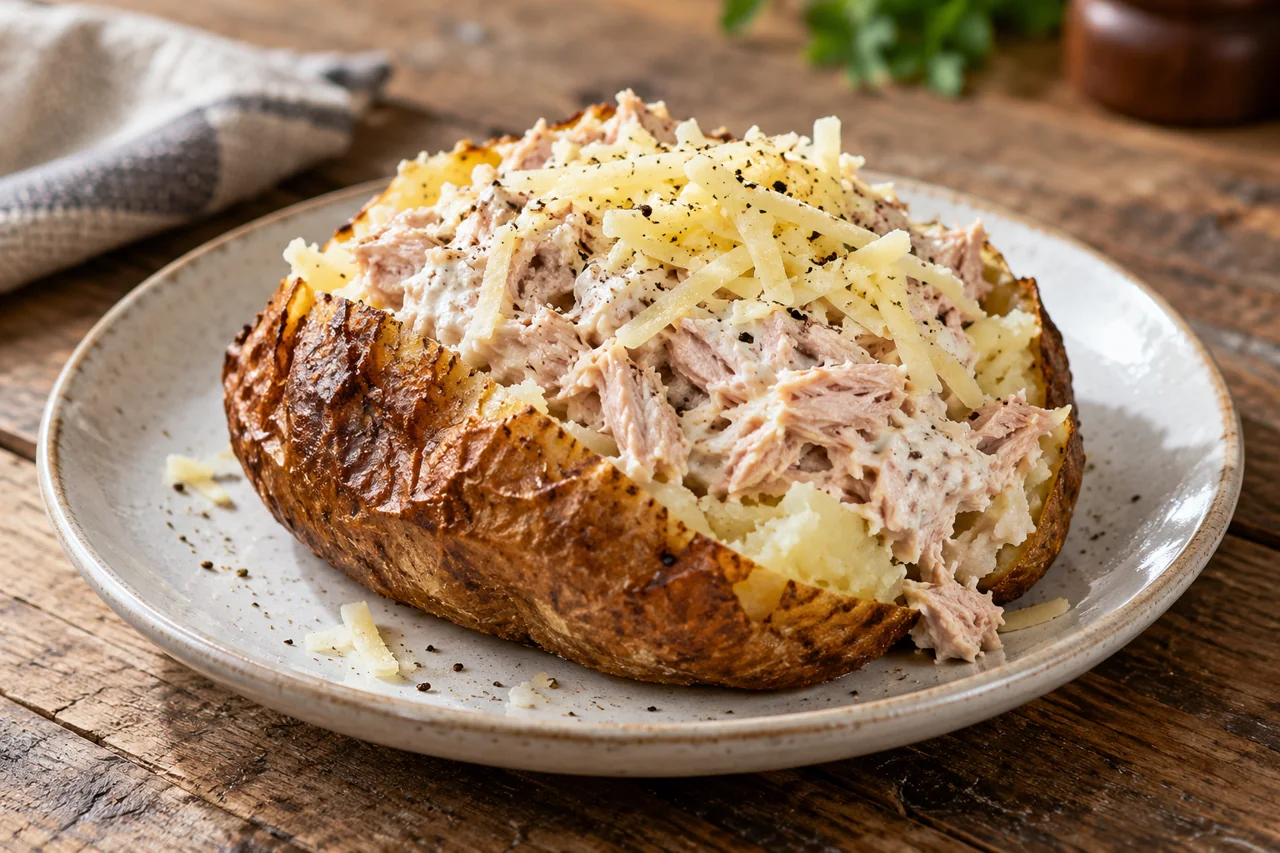
AI-generated serving illustration; appearance and portions may vary.
Makes: 1 serving · Prep: about 5 minutes · Cooking: approximately 60–80 minutes for an oven-baked potato
This is the simplest option if you want something substantial before heading out. The tuna provides most of the protein, while yoghurt loosens the filling and cheddar adds a stronger flavour.
Ingredients
- 1 jacket potato yielding approximately 250 g after baking
- 112 g drained tuna in spring water
- 75 g plain 0% Greek-style yoghurt
- 20 g mature cheddar, grated
- Black pepper, to taste
Method
- Scrub and pierce the potato. Bake at 200°C, or 180°C fan, until completely tender; a large potato can take 60–80 minutes. Follow the potato's pack instructions if using another cooking method.
- Mix the drained tuna with the yoghurt and black pepper.
- Split the cooked potato, fluff the centre and spoon in the tuna filling.
- Scatter over the cheddar and serve straight away.
Estimated nutrition: 44 g protein, 520 kcal, 62 g carbohydrate and 9 g fat.
For context, the example tuna label lists 24.9 g protein per 100 g drained. A 112 g drained portion therefore contributes about 28 g before the other ingredients.
Taking it outside? Keep the tuna-yoghurt filling chilled separately in a cool bag with ice packs until serving. This is easier to manage at home than carrying a lukewarm assembled potato around a display.
2. Turkey and bean chilli jacket potato
Makes: 2 servings · Prep: about 10 minutes · Cooking: 25–35 minutes for the chilli, alongside the potatoes
A chilli topping makes a jacket potato feel like a full dinner. Turkey breast mince keeps this version straightforward, while kidney beans add texture and more protein.
Ingredients
- 2 jacket potatoes, each yielding approximately 250 g after baking
- 200 g raw turkey breast mince
- 120 g tinned kidney beans, drained and rinsed
- 200 g tinned chopped tomatoes
- 100 g onion, finely chopped
- 100 g pepper, chopped
- 10 g cooking oil
- 30 g mature cheddar, grated
- 1 teaspoon smoked paprika
- 1 teaspoon ground cumin
- Chilli powder, salt and pepper, to taste
- Water as needed
Method
- Bake the potatoes until tender.
- Heat the oil in a saucepan. Soften the onion and pepper for about 5–7 minutes.
- Add the turkey mince, breaking it into small pieces, and cook according to the pack instructions.
- Stir in the spices, tomatoes and beans. Add a splash of water and simmer for about 15–20 minutes, stirring occasionally. The mince must be thoroughly cooked throughout; timing alone is not a doneness check.
- Divide the chilli equally between the potatoes and finish each with 15 g cheddar.
Estimated nutrition per serving: 41 g protein, 605 kcal, 75 g carbohydrate and 13 g fat.
The calculation uses a turkey breast mince label showing 25 g protein per 100 g raw. Another mince may have different protein and fat values.
For a group: Multiply the filling quantities by the number of portions you need. Keep the potato and chilli portions consistent if you want the nutrition estimates to remain useful.
3. Chicken bangers with potato and white bean mash
Makes: 1 serving · Prep: about 10 minutes · Cooking: follow the sausage pack; allow additional time if baking a potato from scratch
White beans can be mashed into potato without turning dinner into a complicated recipe. This version uses cooked jacket potato flesh, so you can bake extra potatoes alongside the other dishes.
Ingredients
- 2 chicken sausages, using the nutrition example below
- 150 g cooked, plain baked potato flesh
- 123 g tinned cannellini beans, drained and rinsed
- 50 g onion, sliced
- 5 g cooking oil
- Hot water for loosening the mash
- Black pepper, to taste
Method
- Cook the sausages thoroughly according to their pack instructions.
- Heat the oil in a small pan and gently cook the sliced onion until soft.
- Warm the beans with a little water, following the tin's heating directions. Mash them with the hot potato, adding hot water a spoonful at a time until you like the texture.
- Serve with the sausages and onions.
Estimated nutrition: 32 g protein, 505 kcal, 59 g carbohydrate and 13 g fat, excluding gravy or sauces.
The sausage portion here is based on Tesco British Chicken Sausages: two sausages provide approximately 20 g protein on the listed serving basis. Your bangers may differ considerably.
When shopping, compare protein per serving, fat and salt. “90% pork” describes the pork content; it does not mean the sausage is 90% lean meat. You can use pork or vegetarian sausages here, but recalculate the meal using that product's label.
4. Lentil and kidney bean chilli with cheddar
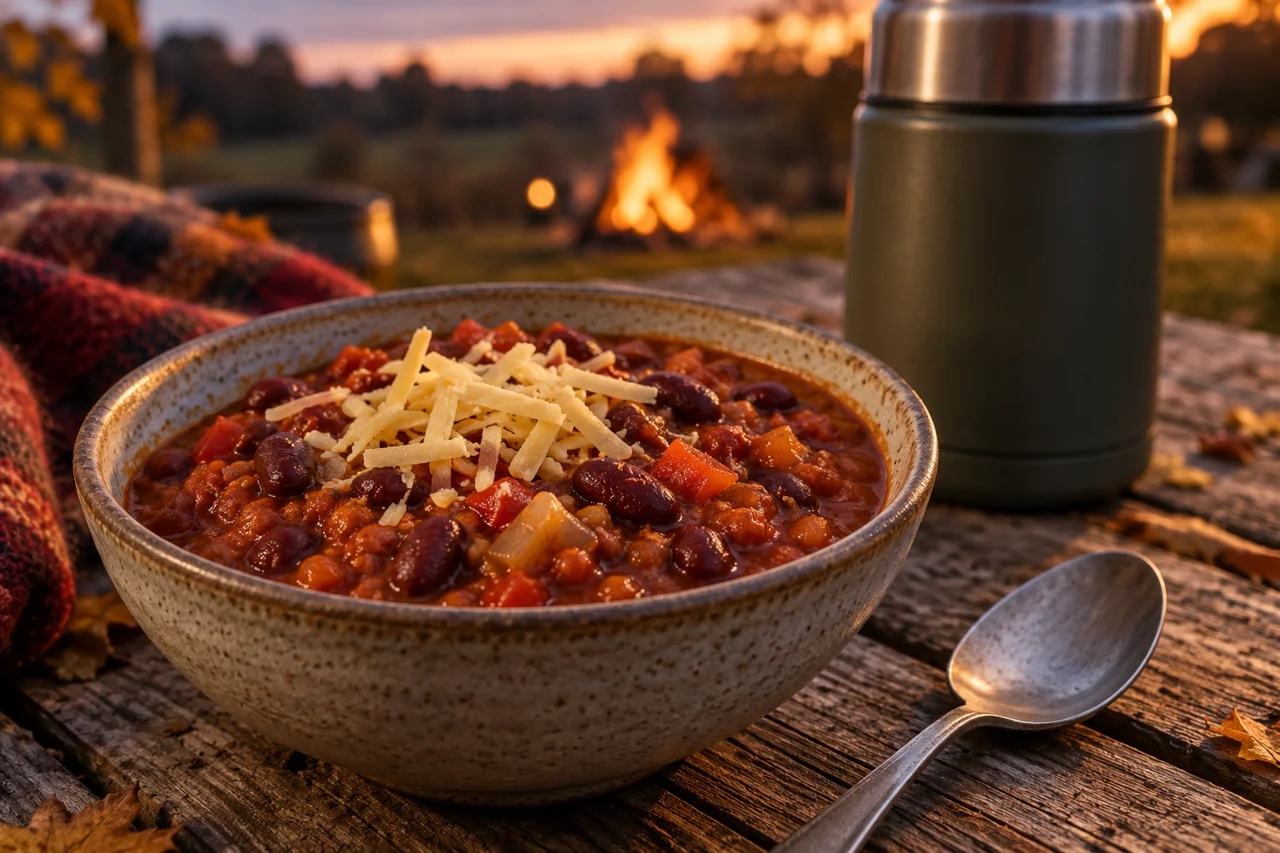
AI-generated serving illustration; appearance and portions may vary.
Makes: 2 generous servings · Prep: about 10 minutes · Cooking: approximately 30–40 minutes, or until the lentils are tender
This is the vegetarian option for anyone who wants a warm bowl rather than a potato or a bap. Dry red lentils thicken the sauce, and tinned kidney beans make preparation easier.
Ingredients
- 100 g dry red split lentils, rinsed
- 240 g tinned kidney beans, drained and rinsed
- 400 g tinned chopped tomatoes
- 100 g onion, finely chopped
- 100 g pepper, chopped
- 10 g cooking oil
- 40 g vegetarian mature cheddar, grated
- 1 teaspoon ground cumin
- 1 teaspoon smoked paprika
- Chilli powder, salt and pepper, to taste
- Approximately 400–600 ml water, adding more as needed
Method
- Heat the oil in a saucepan and soften the onion and pepper for about 5–7 minutes.
- Stir in the spices, rinsed lentils, tomatoes and 400 ml water.
- Simmer gently, stirring frequently, until the lentils are fully tender. Follow their pack instructions and add more water if the mixture thickens before they cook through.
- Add the kidney beans and heat thoroughly. Divide into two bowls and top each with 20 g cheddar.
Estimated nutrition per serving: 29 g protein, 505 kcal, 61 g carbohydrate and 14 g fat.
These estimates use TRS dry red lentils, which list 24 g protein per 100 g. That is a dry ingredient value: cooked lentils contain more water, so the same weight of cooked lentils is not interchangeable.
Vegan option: Omit the cheddar. The chilli then provides approximately 24 g protein per serving. A plant-based cheese substitute may add flavour without replacing all the protein removed.
Taking Bonfire Night food outdoors
Check the event's rules before packing a meal. Organisers may restrict outside food, drinks or particular containers.
- Use a suitable insulated food flask for hot chilli. Preheat it following the manufacturer's directions and fill with thoroughly heated food just before leaving. Heat retention depends on the container and conditions.
- Treat foil as wrapping. It is not a substitute for insulated hot storage or chilled storage.
- Keep cold fillings cold. Carry yoghurt, tuna fillings and other chilled foods in a cool bag with ice packs.
- Pack for easy eating. A spoon, napkin and secure lid make a thick chilli much more practical outdoors.
- Eat at home if transport is awkward. Dinner before leaving or after returning is a perfectly useful option.
For reference, UK hot-holding guidance for food businesses uses 63°C or above. A flask does not guarantee that temperature. The same guidance advises reheating until steaming hot throughout and reheating only once. Follow the Food Standards Agency's advice on cooking and leftovers when preparing ahead.
What if you are buying food at the fireworks?
Look at what is actually available. A sausage in a roll, a burger, bean chilli or a filled jacket potato can provide the basis of a meal. If a stall offers extra beans, meat or cheese, you can choose a filling that suits your appetite.
You usually will not know the exact macros of an unlabelled stall meal. Sausage size, meat content, oil, rolls and toppings all affect the result, so avoid logging a precise number as though it were verified.
There is also room for the foods you came to enjoy. A toffee apple or parkin can sit alongside dinner without needing a protein makeover.
Frequently asked questions
What is traditional Bonfire Night food?
Jacket potatoes, toffee apples, bonfire toffee and parkin are associated with the occasion. Hot dogs, burgers and hot soup are also familiar choices at gatherings and displays, as described by Cotswolds Tourism. Traditions vary by region and household.
What are good vegetarian protein options for Bonfire Night?
Lentil and bean chilli, beans with cheese on a jacket potato, and white bean mash with vegetarian sausages are practical choices. Check the sausage label: vegetarian products do not all contain the same amount of protein.
Can I make Bonfire Night chilli ahead?
Yes. Cool and refrigerate it promptly, following food-safety guidance. The Food Standards Agency advises refrigerating cooked leftovers within two hours and eating them within 48 hours or freezing them. Reheat only once, until steaming hot throughout.
Do I need protein powder for these recipes?
No. The protein comes from tuna, yoghurt, cheese, turkey, sausages, beans and lentils. None of these recipes needs whey or casein.
How much protein should my Bonfire Night dinner contain?
There is no special protein requirement for Bonfire Night. Choose a portion that suits your normal eating pattern and daily needs; the amounts in these recipes are meal estimates, not a target everyone must meet.
How the nutrition estimates were calculated
Each total adds the listed ingredient quantities and divides by the number of servings. Values are rounded to whole grams and roughly the nearest 5 kcal. Small quantities of dry spices are excluded; optional sauces, bread, butter and extra toppings are not included. Cooking times are guides, and the recipes have not been personally kitchen-tested.
Nutrition references, checked 31 October 2026:
- Baked potato: values for the baked product, applied to cooked potato weights.
- Tuna in spring water: drained values.
- 0% Greek-style yoghurt and mature cheddar.
- Turkey breast mince: as-sold values applied to raw mince weights.
- Chicken sausages: the listed two-sausage serving.
- Kidney beans and cannellini beans: drained portions.
- Dry red lentils, chopped tomatoes, onions and peppers.
Oil is counted at approximately 9 kcal and 1 g fat per gram. Label rounding, produce variation and cooking losses mean these figures should be treated as estimates. The named products are calculation references, not a ranking or endorsement.