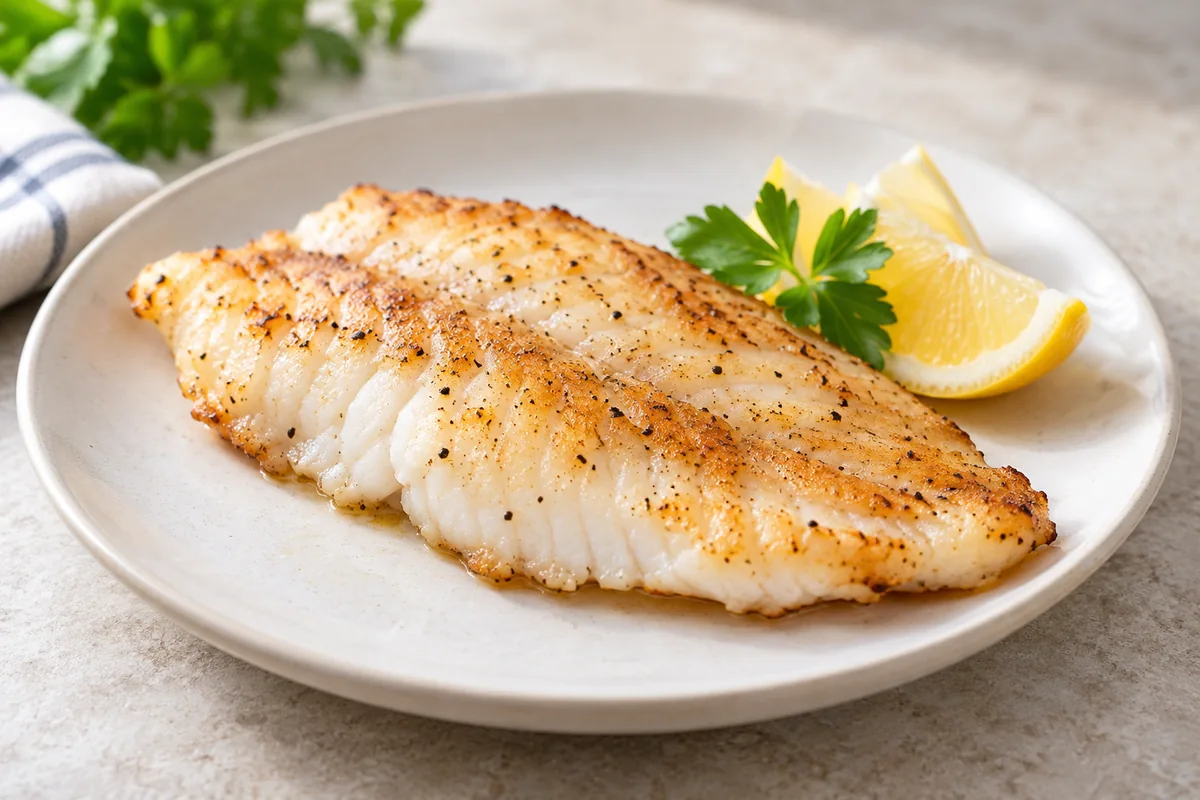
A 4 oz (113 g) portion of cooked tilapia provides about 30 g of protein. If you weigh that portion raw, 4 oz (113 g) provides about 23 g. The difference comes mainly from water lost during cooking, which concentrates the protein per ounce.
That is why two nutrition listings can show different numbers for the same fish. Before logging your meal, check both the portion weight and whether the entry is for raw or cooked tilapia.
Here is how to work out the protein in your serving, whether your kitchen scale uses ounces or grams.
Tilapia protein by serving size
The table below uses USDA FoodData Central values for plain raw tilapia and tilapia cooked with dry heat. Every row compares the same measured weight in each state. It does not show how much a raw portion will weigh after cooking. [1, 2]
| Portion weight | Protein if weighed raw | Protein if weighed cooked |
|---|---|---|
| 1 oz (28 g) | 5.7 g | 7.4 g |
| 3 oz (85 g) | 17.1 g | 22.2 g |
| 4 oz (113 g) | 22.8 g | 29.7 g |
| 5 oz (142 g) | 28.5 g | 37.1 g |
| 6 oz (170 g) | 34.2 g | 44.5 g |
| 8 oz (227 g) | 45.5 g | 59.3 g |
| 100 g (3.53 oz) | 20.1 g | 26.2 g |
| 150 g (5.29 oz) | 30.1 g | 39.2 g |
| 200 g (7.05 oz) | 40.2 g | 52.3 g |
Ounce conversions were calculated using 1 oz = 28.3495 g, before rounding. Gram equivalents are rounded for readability; protein estimates are rounded to one decimal place. Values exclude breading, sauces, and added ingredients.
If you weigh out 150 g of cooked tilapia, for example, your portion provides about 39 g of protein. A 150 g raw portion provides about 30 g before it goes into the pan.
How much protein is in one tilapia fillet?
There is no fixed protein amount in “one fillet” because fillets vary in size.
USDA reference portions illustrate this: its raw tilapia entry lists a fillet weighing 116 g (4.09 oz), with about 23.3 g of protein. Its cooked entry lists a fillet weighing 87 g (3.07 oz), with about 22.8 g of protein. These are database reference portions, not a promise about the fillets in your package. [1, 2]
For your own meal, weigh the edible fish and use the matching row above. Two small fillets may weigh less than one large fillet, so counting pieces alone can give a misleading estimate.
For packaged fish, check the label too. If the label gives nutrition per 4 oz (113 g) and your portion weighs 6 oz (170 g), multiply the label’s protein amount by 1.5, provided both weights refer to the same preparation state.
What does a 4 oz serving of tilapia mean?
4 oz means about 113 g of fish by weight. It is not 4 fluid ounces, which measures volume.
In its fish-consumption advice, the FDA uses 4 oz (113 g) before cooking as an adult serving. That does not mean every package, restaurant, or food-tracking app uses the same serving definition. [3]
For readers using metric scales:
- 100 g is about 3.5 oz.
- 250 g (0.25 kg) is about 8.8 oz.
- 500 g (0.5 kg) is about 17.6 oz.
- 1 kg is about 35.3 oz, or 2.2 lb.
Package weight and meal weight are different things. If you buy 1 kg of whole tilapia, that includes parts you may not eat. The nutrition figures here apply to the edible fish, not the whole fish with its head, bones, and other discarded parts.
Raw versus cooked tilapia protein
Cooking does not create extra protein. It mainly removes water, so the fish weighs less and its protein becomes more concentrated per gram.
Think of one piece of fish: it starts heavier and becomes lighter as it cooks. Most of its protein remains, although juices and cooking losses can affect the final amount. A separate portion weighing 4 oz after cooking generally represents more starting fish than a portion weighing 4 oz raw.
To track it consistently:
- Weigh before cooking: choose a raw tilapia entry.
- Weigh after cooking: choose a cooked tilapia entry that matches your method as closely as possible.
- Add other ingredients separately: oil, butter, breading, and sauces change the meal’s nutrition.
Avoid using one fixed raw-to-cooked conversion for every meal. Moisture loss varies with thickness, cooking method, and cooking time.
For a cooked portion that is not in the table, use:
Protein in grams = cooked fish weight in grams × 0.2615
For example, 120 g cooked tilapia × 0.2615 = about 31 g protein.
Tilapia versus salmon at the same portion size
Comparing a tilapia fillet with a salmon fillet can be misleading because the pieces may have very different weights. Here is an equal-weight comparison using plain cooked tilapia and farmed Atlantic salmon, both cooked with dry heat. [2, 4]
| Cooked portion | Tilapia protein | Farmed Atlantic salmon protein |
|---|---|---|
| 3 oz (85 g) | 22.2 g | 18.8 g |
| 4 oz (113 g) | 29.7 g | 25.1 g |
| 6 oz (170 g) | 44.5 g | 37.6 g |
| 100 g (3.53 oz) | 26.2 g | 22.1 g |
At 4 oz (113 g) cooked, tilapia also provides about 145 calories and 3 g fat, compared with about 234 calories and 14 g fat in this salmon entry. These figures describe the fish itself, without added oil or sauce. [2, 4]
For these specific entries, tilapia gives you more protein and fewer calories at the same cooked weight. Salmon offers substantially more long-chain omega-3 fats. Salmon species and preparation methods vary, so these numbers should not be applied to every salmon product. [5]
If your priority is a lean protein portion, tilapia fits that purpose. If you also want more omega-3 fats, salmon has an advantage. Both can have a place in your meals. For another portion guide, see our salmon fillet protein article.
Frequently asked questions
Is tilapia very high in protein?
Yes. Plain cooked tilapia provides about 26 g protein per 100 g (3.53 oz), with about 128 calories and 2.7 g fat. A 4 oz (113 g) cooked portion provides about 30 g protein. [2]
How much protein is in 4 oz of tilapia fillet?
4 oz (113 g) of raw tilapia provides about 23 g protein. The same weight of cooked tilapia provides about 30 g. Choose the figure that matches when you weighed your fish. [1, 2]
Why do bodybuilders eat tilapia?
Tilapia is a practical option for people tracking protein and calories because it supplies plenty of protein with little fat. It has no special muscle-building advantage simply because it is tilapia; it is one way to contribute to your daily protein intake.
Is salmon or tilapia healthier?
It depends on what you want from the meal. Tilapia is leaner in the cooked entries compared above, while salmon supplies considerably more omega-3 fats. Compare the same portion weight and consider your overall diet rather than judging either fish by protein alone. [2, 4, 5]
Fit your serving into your daily protein target
Once you know the weight of your portion, estimating its protein is straightforward: 4 oz (113 g) cooked tilapia gives you about 30 g, and 6 oz (170 g) gives you about 45 g.
You can also compare servings in our guides to protein in tuna and protein in sardines.
Use The Protein Calculator to estimate your daily protein target, then count your tilapia serving toward that total.
Sources
- USDA FoodData Central — Fish, tilapia, raw, FDC 175176. SR Legacy: 20.08 g protein and 96 kcal per 100 g; reference fillet 116 g.
- USDA FoodData Central — Fish, tilapia, cooked, dry heat, FDC 175177. SR Legacy: 26.15 g protein, 128 kcal, and 2.65 g fat per 100 g; reference fillet 87 g.
- FDA — Technical information on FDA/EPA advice about eating fish. Adult reference serving: 4 oz (113 g) before cooking.
- USDA FoodData Central — Fish, salmon, Atlantic, farmed, cooked, dry heat, FDC 175168. SR Legacy: 22.1 g protein, 206 kcal, and 12.35 g fat per 100 g.
- NIH Office of Dietary Supplements — Omega-3 fatty acids. Explains differences in omega-3 content between fatty fish and lean fish.
Nutrition records checked October 28, 2026. Portions were calculated from the per-100-g records; they are estimates, not laboratory measurements of each serving. The same USDA dataset is used throughout for consistency; regional databases and product labels may differ.