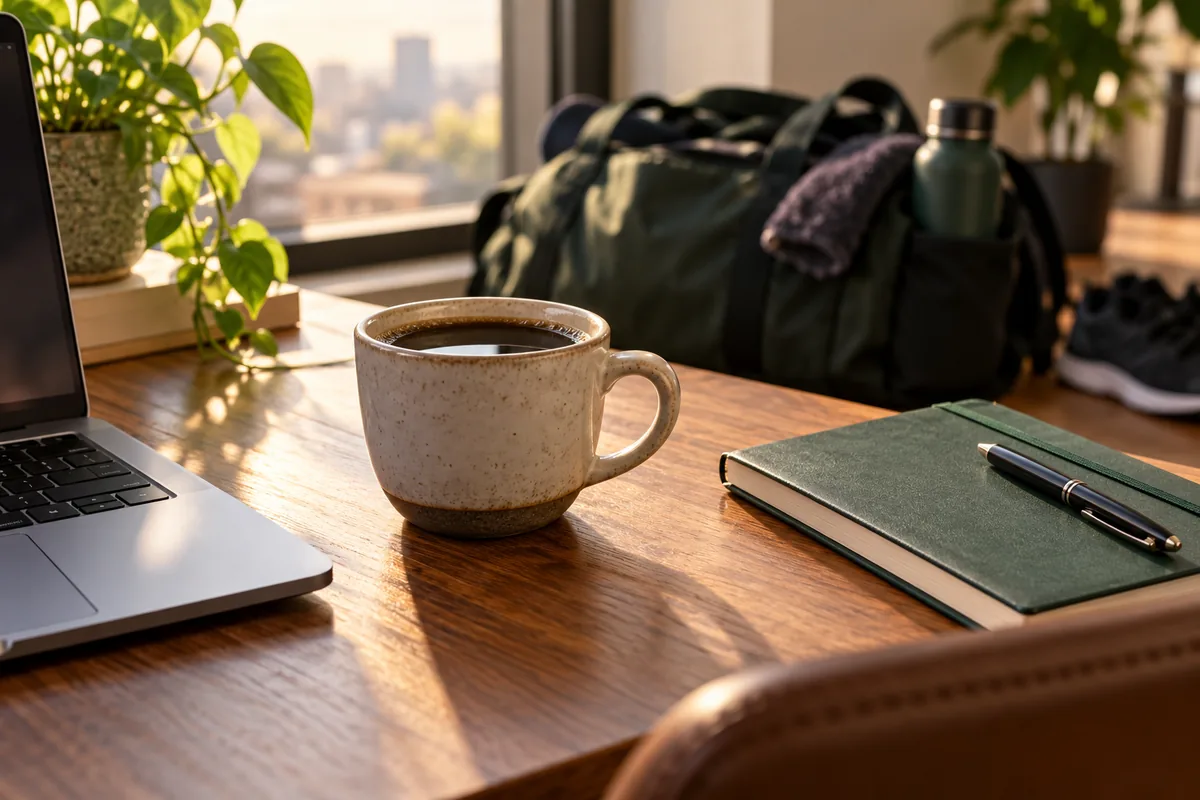
I have been drinking black coffee for about six months, around the same time I started working out. Somewhere along the way, that first morning cup became something I really looked forward to.
It is not even mainly about the taste. It is the feeling afterward: as if someone has finally switched the lights on in my head.
I work a 9–5 job and train at night. Some mornings, I arrive at the office feeling sleepy and low on energy. Coffee helps me feel more awake and ready to concentrate. But there is another side to this routine: sometimes I struggle to fall asleep, even when I am tired.
This is my experience of both sides. It is a personal account, not a controlled experiment or a recommendation to copy my intake.
How I Make My Black Coffee
| Detail | My routine |
|---|---|
| Drink | Black coffee with water; no sugar |
| Preparation | Machine-made coffee or Nescafé instant prepared with heated water |
| Cup volume | Approximately 50–100 mL (1.7–3.4 US fl oz) |
| Frequency | Sometimes three cups across the day; four on at least one occasion |
| Evening cup | Around 5 PM |
| Usual bedtime and wake time | 11:30 PM to 8 AM; actual sleep duration varies |
| Caffeine dose | Not measured |
My coffee is simple: coffee and water, with no sugar.
I usually drink Nescafé, and sometimes have machine-made coffee. When I use instant powder, I prepare it with water heated in a pan. My cups are small, roughly 50–100 mL each.
I sometimes have three cups over the day, and on at least one occasion I had four. One of my cups is around 5 PM.
An important detail: I have not measured the caffeine in these servings. A small cup does not automatically mean a small caffeine dose. The quantity of coffee and how it is prepared matter too. The FDA notes that caffeine content varies between products and serving sizes.[1]
What That First Morning Cup Feels Like
The clearest change I notice is alertness.
Before coffee, I can feel lethargic at work. After that first cup, I feel more switched on and find it easier to focus on what I need to do.
I cannot tell you the exact minute it starts working or how long the effect lasts. I have not tracked that. What I can say is that the difference feels noticeable to me.
Since starting the gym, I have also noticed stronger cravings for my morning coffee. I cannot say why those cravings increased, or whether training itself had anything to do with them. The timing alone does not prove a connection.
Has Black Coffee Helped Me in the Gym?
I feel more alert during training and better able to concentrate during my sets. That is the benefit I can describe most confidently.
Research offers some support for caffeine helping exercise performance. The International Society of Sports Nutrition reports potential benefits for muscular endurance, strength, and other activities, while noting that responses vary.[2]
However, feeling more focused during a workout does not tell me exactly how much coffee has changed my results. I have not compared otherwise identical periods with and without caffeine.
Does Morning Coffee Help With Protein Intake?
Plain black coffee does not meaningfully increase your protein intake. It is not a substitute for protein-rich food or a protein shake. Feeling more awake after coffee is different from getting the amino acids your body uses to maintain and build muscle.
If you are searching for “coffee for protein intake,” the important distinction is between black coffee and coffee with added protein. Protein coffee usually includes protein powder, a prepared protein shake, or a protein-containing milk. The added ingredient supplies the meaningful protein—not the coffee itself. [7] Check its nutrition label rather than assuming every coffee drink has the same protein content.
My own drink contains coffee and water, with no sugar. I have not described adding milk or protein powder, so it would be misleading to call my routine a high-protein coffee habit.
For a practical food comparison, see what 20 grams of protein looks like. Coffee can sit alongside a protein-containing breakfast; it does not need to replace breakfast.
Did Coffee Make My Muscles Grow Faster?
At first, I wondered whether it did. On some days when I drink several cups, my muscles feel firmer or stronger rather than loose.
That is a sensation I have noticed, not a measurement of new muscle. It does not establish that coffee made my muscles grow faster. I was also training during this period, so I cannot separate the effects from my personal observations.
The research on short-term exercise performance is not proof that my coffee routine caused faster muscle growth.[2] For readers building their own routine, tracking training progress and planning adequate nutrition gives a more useful picture than judging progress by how tight a muscle feels.
Estimate your daily protein needs with our free protein calculator.
What Does Coffee Do for Building Muscle or Losing Weight?
Coffee may help some people train with more alertness or better short-term performance, but that is different from directly building muscle. My experience does not establish faster muscle growth, and a firmer feeling is not a muscle-growth measurement.[2]
For weight loss, unsweetened black coffee has very few calories. Replacing a higher-calorie sweetened drink with it could reduce calorie intake if the rest of the diet stayed the same. That is a substitution effect, not proof that black coffee melts body fat. Nescafé describes its Original instant coffee prepared with water as a very-low-calorie drink; that product example is not a measured nutrition analysis of my own cups.[4]
NIH notes that caffeine-containing weight-loss products may have a small effect on weight, but tolerance can reduce the effect over time. Those findings do not show that my coffee routine caused weight loss.[5] A sustainable eating plan and physical activity remain central to weight management.[6]
I have not supplied measured weight or body-composition changes from these six months, so I cannot offer a personal fat-loss result. For muscle gain or fat loss, I would plan my meals and training rather than rely on coffee to do the work.
What About the Day My Triceps Stopped Twitching?
On one occasion, my triceps was twitching. I had about four cups of black coffee that day, and the twitching eventually stopped.
I initially wondered whether coffee helped. Looking back, I do not have evidence for that connection. Something happening after coffee does not mean coffee caused it.
The NHS lists tiredness, stress, and caffeine among factors associated with muscle twitching. It advises avoiding lots of caffeine and seeking medical advice if twitching lasts more than two weeks or the affected area feels weak or stiff.[3]
I would not recommend drinking more coffee to treat a twitch.
The Downside: Feeling Tired but Struggling to Sleep
This is the part I would not want to leave out of an honest account.
I usually go to bed around 11:30 PM and wake around 8 AM. That leaves approximately eight and a half hours in bed, although time in bed is not necessarily time asleep.
My 5 PM coffee is about six and a half hours before bedtime. It can make me feel focused again in the evening, but sometimes I find it difficult to fall asleep despite feeling tired.
Caffeine can disrupt sleep, and sensitivity differs between people.[1] I cannot prove how much my evening cup contributes without changing and tracking my routine. It is a sensible place to start reviewing my intake, though.
There may be a cycle worth watching: feeling tired, reaching for coffee, then having difficulty sleeping and feeling tired again. That is a possibility to investigate, not a diagnosis of what is happening to me.
What I Would Tell Another Office Worker Who Trains
My experience with black coffee has been useful, but mixed. I appreciate feeling more awake at work and more focused during my sets. I also need to take the sleep difficulty seriously.
The FDA cites 400 mg of caffeine per day as an amount not generally associated with negative effects for most adults. That is not a daily goal, and some people experience problems at lower intakes. It also recommends cutting back gradually if you drink caffeine regularly.[1]
After six months, my clearest takeaway is personal: coffee helps me feel more alert. I cannot credit it with faster muscle growth, and I cannot claim it fixed my twitching. How well I sleep deserves just as much attention as how awake I feel after a cup.
Frequently Asked Questions
Is Black Coffee Good Before a Workout?
Caffeine can improve some aspects of exercise performance, but benefits and side effects differ between people.[2] I feel more focused during my sets. That does not mean everyone needs coffee before training, especially if late caffeine affects their sleep.
Does Black Coffee Count Toward My Protein Target?
Plain black coffee provides too little protein to be a useful protein source. If you add milk, a protein shake, or protein powder, count the protein from those ingredients using their labels. My coffee-and-water routine is not a protein drink.
Can an Evening Coffee Affect Sleep Even if I Feel Tired?
Yes. Sleep disruption is a recognized caffeine side effect.[1] My 5 PM cup is about six and a half hours before my usual bedtime. Feeling physically tired does not rule out caffeine contributing to difficulty falling asleep.
References
- FDA: Spilling the Beans—How Much Caffeine Is Too Much?
- International Society of Sports Nutrition position stand: caffeine and exercise performance
- NHS: Twitching eyes and muscles
- Nescafé Original: product information and preparation guidance. Manufacturer information for a specific UK product, not my measured serving.
- NIH Office of Dietary Supplements: Dietary Supplements for Weight Loss.
- NIDDK: Eating and Physical Activity to Lose or Maintain Weight.
- Cleveland Clinic: Protein Coffee—Benefits and How To Make. Guidance from registered dietitian Kate Patton on coffee with added protein.
Plan the Protein Alongside Your Coffee
Estimate a daily protein range for your weight, activity, and goal, then build meals around it.
Written with AI assistance from Vishal Pradhan’s first-hand notes. Personal observations are distinguished from published research; this article does not provide a diagnosis or individualized medical advice.