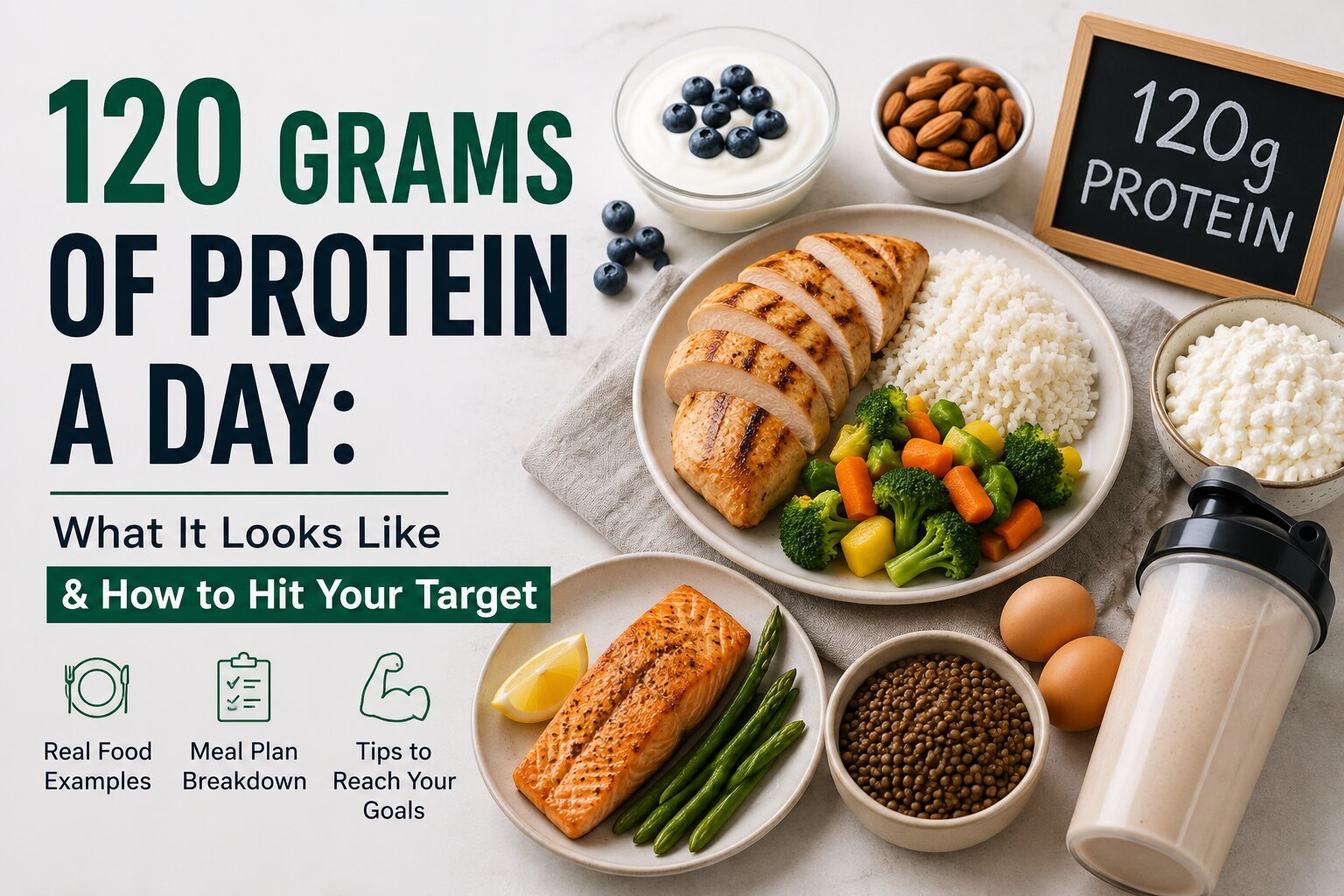
For many adults, 120-grams of protein look like an achievable goal. People think it can be reached by using everyday food. The thing is, you don’t need to rely on chicken to get this. You also don’t need too many protein shakes to achieve this. A combination of light foods can get you this. Get a combo of Greek Yogurt, eggs, lean meats and dairy products and voila you meet the target. These can easily set you to the target 120 grams a day.
With people I come across every day, they talk about this number as a very much. The “120 grams“, I have seen people complete that number with cottage cheese for lunch. For some this number is very much, and for some this is just a snack.
So you really need to fit yourself in which category you are to imagine this protein number.
That means 120 grams isn’t the right target for everyone. The amount of protein depends upon your body weight, activity level and health. It also depends on whether you are building, losing or maintaining your muscle mass.
Someone who weighs 55 kg and lives a mostly sedentary lifestyle may need less.
As an active person weighing 90 kg may benefit from considerably more.
If you’re unsure how much protein is right for you, use our Protein Calculator. This will help you to estimate your daily protein needs based on your body and goals.
Why People Ask This Question
What people actually wants to know are not the numbers but the meals or even visuals.
Just hearing the number makes you sound like you need to eat a lot to get that number of protein in your body.
What most people do is spread this number into four meals. Each meal only contributes to the modest amount.
The examples I show you below will tell you approx how much 120-grams of protein look like. in a typical day. We also worked with visualisation so that you can understand that more clearly.
Note: The protein values used in this article are approximate. The exact amount can vary depending on the brand, cooking method, and serving size, but the examples are accurate enough for everyday meal planning.
Find Your Ideal Daily Protein Intake
This 120-gram meal plan is just one example. Your ideal protein intake depends on your weight, age, activity level, and fitness goals. Use our free Protein Calculator to receive a personalized recommendation in under a minute.
What 120-Grams of Protein Look Like In a Day
One of the easiest ways to understand 120-grams of protein is to see how it fits into a normal day’s meals. Contrary to popular belief, you don’t have to eat huge portions of meat or drink multiple protein shakes to reach this amount.
The example below uses common foods that are widely available in grocery stores. Protein values are approximate and may vary slightly depending on the brand, serving size, and cooking method.
Breakfast
| Food | Serving Size | Protein |
|---|---|---|
| Plain Greek yogurt | 250 g | 25 g |
| Rolled oats | 30 g (about ⅓ cup) | 4 g |
| Almonds | 15 g (small handful) | 3 g |
Breakfast Total: ~32 g
Starting your day with a protein-rich breakfast can help keep you feeling full for longer and makes it much easier to reach your daily target without cramming protein into later meals.
Lunch
| Food | Serving Size | Protein |
|---|---|---|
| Grilled chicken breast | 150 g cooked | 46 g |
| Cooked white rice | 1 cup | 4 g |
| Mixed vegetables | 1 cup | 2 g |
Lunch Total: ~52 g
Running Total: ~84 g
Chicken breast is one of the most protein-dense whole foods available, which is why it appears in many high-protein meal plans. Pairing it with rice and vegetables creates a balanced meal that also provides carbohydrates, fiber, and important vitamins.
Afternoon Snack
| Food | Serving Size | Protein |
|---|---|---|
| Low-fat cottage cheese | 150 g | 18 g |
Snack Total: ~18 g
Running Total: ~102 g
A high-protein snack can bridge the gap between lunch and dinner while making it easier to reach your protein goal without eating oversized portions at night.
Dinner
| Food | Serving Size | Protein |
|---|---|---|
| Baked salmon | 120 g cooked | 25 g |
| Steamed vegetables | 1 cup | 3 g |
Dinner Total: ~28 g
Daily Protein Total
| Meal | Protein |
|---|---|
| Breakfast | ~32 g |
| Lunch | ~52 g |
| Snack | ~18 g |
| Dinner | ~28 g |
| Total | ~130 g |
You’ll notice this example finishes at around 130 grams of protein rather than exactly 120 grams. That’s completely normal. Nutrition labels and food composition databases provide average values, and the protein content of foods naturally varies with the exact portion size, brand, and cooking method.
The important takeaway isn’t hitting 120-grams exactly—it’s seeing that a high-protein diet can be achieved through ordinary meals spread across the day. Small adjustments, such as slightly reducing the chicken portion or choosing a smaller serving of Greek yogurt, could easily bring the total closer to 120 grams if that’s your target.
What 120-Grams of Protein Looks Like In a Day – Interactive visual
Hover over each meal to watch your protein intake build throughout the day. You’ll notice that reaching 120 grams is easier than most people think.
Breakfast
Greek yogurt, oats & almonds
32 g ProteinLunch
Chicken breast, rice & vegetables
84 g TotalSnack
Low-fat cottage cheese
102 g TotalDinner
Salmon & vegetables
130 g Total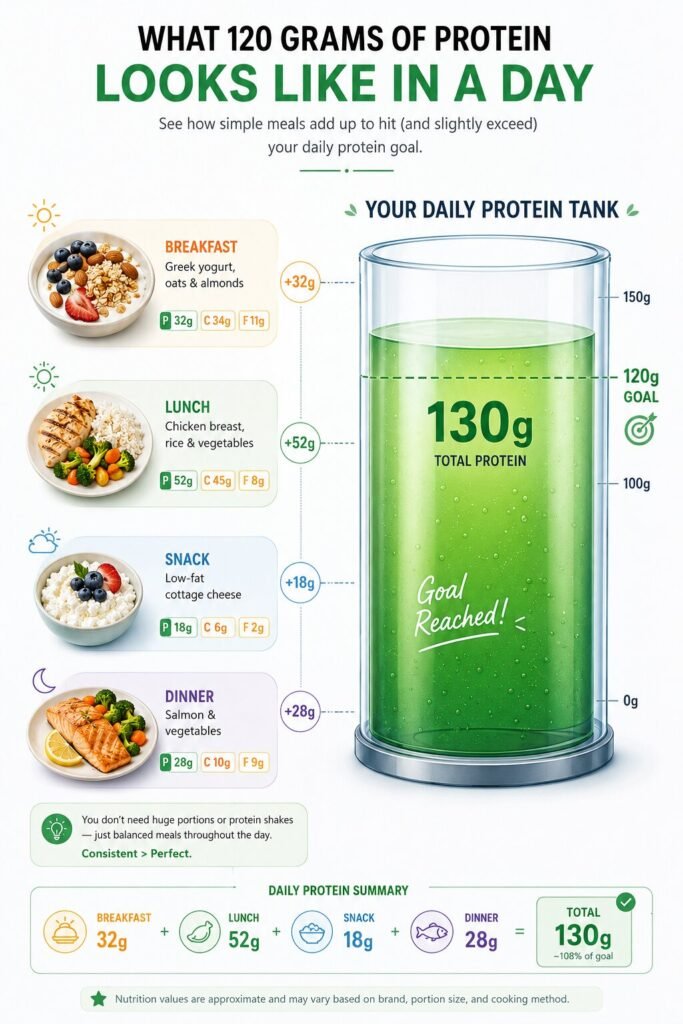
Find Your Ideal Daily Protein Intake
This 120-gram meal plan is just one example. Your ideal protein intake depends on your weight, age, activity level, and fitness goals. Use our free Protein Calculator to receive a personalized recommendation in under a minute.
Can You Reach 120-Grams of Protein Without Protein Powder?
Yes—you absolutely can.
Drinking too much protein powder does not actually give you too much protein. This is a trap many companies would want to use to sell you the product. As the example shows above in the interactive, you should always have real food. The “supplement” is to be used as a supplement to that food. 120 grams can be easily attain by everyday food is what we are trying to say.
Protein powder provides a concentrated source of ‘protein”. It can be helpful when you are short on time and struggling to meet the daily protein need alone. A scoop of whey protein typically provides around 20 -30 grams of protein. It’s just a convenient way to consume the nutrient,
However, if you combine the above-given real foods, you can easily meet this targeted amount.
Whole Grain vs Protein Powder – Comparison Table
| Whole Foods | Protein Powder |
|---|---|
| Provides protein along with vitamins, minerals, and other nutrients. | Provides a concentrated source of protein with minimal preparation. |
| Usually keeps you feeling full for longer because it contains other nutrients. | Quick and convenient when you’re busy or after exercise. |
| Works well for most daily meals. | Useful if you’re struggling to meet your protein target through food alone. |
For most healthy adults, the best approach is to prioritize whole-food protein sources first and use protein powder only when it genuinely makes your daily routine easier. Neither approach is inherently “better”—what matters most is consistently meeting your individual protein needs.
Remember: Your ideal protein intake may be higher or lower than 120 grams. Use our Protein Calculator to estimate a daily target that’s based on your weight, activity level, age, and fitness goals instead of following a one-size-fits-all number
Find Your Ideal Protein Intake
The meal plan in this article is simply an example to help you visualize what 120-grams of protein looks like in everyday meals. Your own requirement could be higher or lower.
Our Protein Calculator estimates your recommended daily protein intake based on factors such as:
- Your body weight
- Your age
- Your activity level
- Your fitness goal (maintain, build muscle, or lose weight)
In less than a minute, you’ll receive a personalized protein target that’s more useful than copying a number from social media or someone else’s meal plan.
👉 Try the Protein Calculator to discover how much protein you actually need each day
Read More of Our Latest Posts here –
- How Is Protein Intake Calculated?
- How Much Protein a Day for 70 kg?
- What Is the Unhealthiest Protein? The Protein Sources You May Want to Limit
- How Much Protein Do I Need Based on My Activity Level?
- How Much Protein Do Sardines Have?
Resources From Where We Wrote this article
References
- USDA FoodData Central – Food Composition Database
- National Institutes of Health (NIH) Office of Dietary Supplements – Protein Fact Sheet
- International Society of Sports Nutrition Position Stand: Protein and Exercise
- National Center for Biotechnology Information (NCBI Bookshelf) – Dietary Protein and Human Health