Protein has one of the healthiest reputations of any nutrient.
Walk through a supermarket, and you will see the word everywhere: high-protein cereal, protein bars, protein shakes, protein yogurt, protein chips and even protein desserts.
But putting the word “protein” on a food does not automatically make that food healthy.
A grilled salmon fillet, a bowl of lentils and a plate of bacon can all provide protein, yet they deliver very different combinations of fat, sodium, fiber, vitamins, minerals and other compounds.
So, what is the unhealthiest protein source?
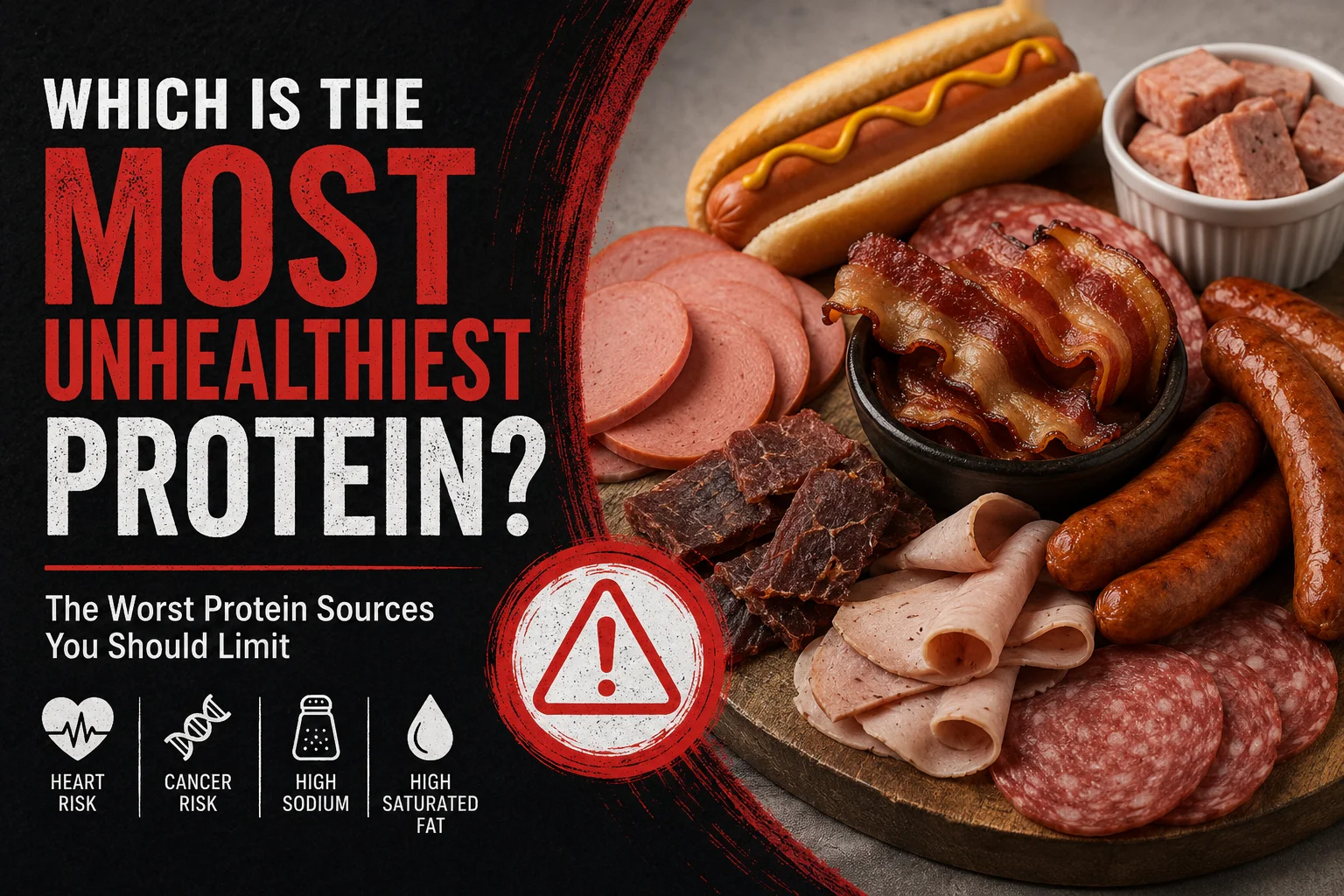
If we look at the overall body of evidence, processed meats such as bacon, sausages, hot dogs, salami, pepperoni and many deli meats are among the least healthy protein sources to consume regularly.
The reason has relatively little to do with protein itself.
The bigger issue is everything that comes with that protein.
Processed meats can contain large amounts of sodium, saturated fat and preservatives, and regular consumption has been associated with an increased risk of colorectal cancer and several cardiometabolic health problems.
That does not mean eating a hot dog once will damage your health. Nutrition rarely works that way. What matters much more is your overall dietary pattern and how frequently you eat these foods.
Let’s look at why some protein sources are healthier than others and which ones deserve the most caution.
What Makes a Protein Source “Unhealthy”?
Before ranking protein foods, it is important to separate protein as a nutrient from foods that contain protein.
Protein itself is essential.
Your body uses amino acids from dietary protein to help build and maintain muscle, produce enzymes and hormones, support the immune system and repair tissues.
The health difference comes from what researchers sometimes describe as the “protein package.”
Consider these two foods:
- Lentils provide protein along with fiber, potassium, folate and other plant compounds.
- Bacon provides protein but may also contain significant amounts of sodium, saturated fat and preservatives.
Both contain protein.
Nutritionally, however, they are very different foods.
Harvard’s Nutrition Source similarly emphasizes that when considering health outcomes, the source of protein matters, not simply the number of grams of protein consumed.
When evaluating whether a protein source is healthy, some of the most important factors include:
Saturated fat: Some protein foods contain substantial amounts of saturated fat. Diets high in saturated fat can raise LDL cholesterol, an important cardiovascular risk factor.
Sodium: Processed protein foods can contain large amounts of salt. Consistently high sodium intake can contribute to elevated blood pressure.
Processing: Smoking, curing, salting and adding preservatives can change the health profile of meat considerably.
Fiber: Animal protein contains no dietary fiber, whereas beans, lentils, peas, nuts and many other plant proteins provide both protein and fiber.
Cooking method: Grilled chicken and deep-fried chicken may begin with the same source of protein but end up being nutritionally very different meals.
Overall nutrient density: Ideally, a protein food should provide useful micronutrients without excessive amounts of sodium, saturated fat, refined carbohydrates or added sugar.
For reference, the FDA’s Daily Value is 2,300 mg for sodium and 20 grams for saturated fat on a standard 2,000-calorie diet. The FDA considers 20% of the Daily Value or more per serving to be high.
- If you want to research more on FDA values, please read this article from where the above information was sourced: https://www.fda.gov/food/nutrition-facts-label/how-understand-and-use-nutrition-facts-label?
The Unhealthiest Protein Source: Processed Meat
If one category has to take the top position, processed meat has the strongest case.
Processed meat refers to meat that has been altered through processes such as curing, salting, smoking or fermentation, usually to improve preservation or flavor.
Common examples include:
- Bacon
- Hot dogs
- Sausages
- Salami
- Pepperoni
- Ham
- Beef jerky
- Corned beef
- Luncheon meat
- Some sliced deli meats
- Certain processed chicken and turkey products
The World Cancer Research Fund recommends consuming “very little, if any” processed meat, while the American Heart Association recommends minimizing processed meats such as bacon, ham, salami, sausages, hot dogs, deli slices and jerky.
There are several reasons processed meat stands out.
If you feel like you need to be sure about how much protein do you actually need then you can use our protein calculator which is free online to estimate exactly how much protein you need and see exactly what type of food do you need.
1. Processed Meat Has the Clearest Cancer Concern
In 2015, the International Agency for Research on Cancer, part of the World Health Organization, classified processed meat as carcinogenic to humans — Group 1.
That classification is frequently misunderstood.
It does not mean processed meat is as dangerous as smoking, even though tobacco is also classified in Group 1.
The classification describes the strength of evidence that something can cause cancer, rather than indicating that every Group 1 substance carries the same level of risk.
The strongest association for processed meat is with colorectal cancer.
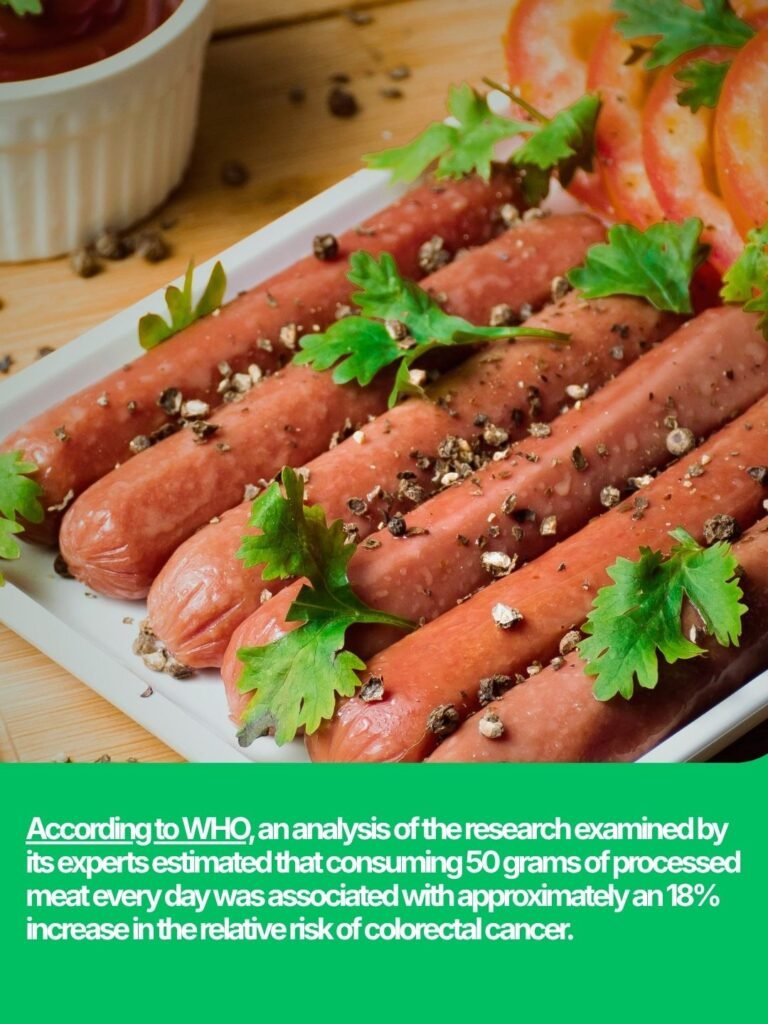
You can read the analysis here in more details –
WHO Analaysis on processed food,
For perspective, 50 grams is not an enormous serving. Depending on the food, it could represent roughly a couple of slices of processed meat or a relatively small sausage.
This is one reason organizations including the World Cancer Research Fund recommend eating little, if any, processed meat.
2. Many Processed Meats Are High in Sodium
Salt is one of the primary ingredients used to preserve and flavor processed meat.
That can make foods such as ham, salami, bacon, jerky, and deli meat surprisingly high in sodium.
Sodium is not inherently unhealthy. Your body needs it to function.
The problem is excessive intake.
The FDA lists a Daily Value of 2,300 mg of sodium, and the American Heart Association recommends choosing protein foods in ways that minimize highly processed meats.
Regularly consuming several high-sodium foods can make it relatively easy to exceed recommended amounts.
Over time, high sodium intake can contribute to high blood pressure, which is an important risk factor for cardiovascular disease.
3. Some Processed Meats Are High in Saturated Fat
Processed meats vary dramatically.
Turkey deli meat, pepperoni, bacon and sausage do not have identical nutrition profiles.
But many processed meat products—particularly bacon, salami and fatty sausages—can contain significant amounts of saturated fat.
This is why simply asking “How much protein does this food contain?” does not tell you whether it is a good protein choice.
Twenty grams of protein from a food that also contains a large amount of saturated fat and sodium is nutritionally different from twenty grams of protein coming from lentils, fish or lean poultry.
4. Processing Introduces Additional Concerns
Processed meat may contain nitrates or nitrites used during curing and preservation.
Under certain conditions, these compounds can contribute to the formation of N-nitroso compounds, which are among the mechanisms researchers have investigated to explain the relationship between processed meat and colorectal cancer.
The World Cancer Research Fund notes that nitrites and nitrates added to processed meat can form compounds in the body that may increase bowel cancer risk.
This is another reason that fresh meat and processed meat should not automatically be placed in the same nutritional category.
Ranking Protein Sources From Less Healthy to Healthier Choices
There is no scientifically perfect ranking because products, portions and cooking methods differ.
As a general guide, however:
| Protein source | General everyday choice | Main consideration |
|---|---|---|
| Processed meats | Limit considerably | Processing, sodium, cancer evidence, sometimes saturated fat |
| Fatty processed sausage/bacon | Limit considerably | Saturated fat, sodium and processing |
| Heavily fried protein foods | Limit | Added calories, fat, sodium and refined coating |
| Fatty red meat | Moderate | Saturated fat and red-meat intake |
| Lean unprocessed red meat | Moderate | Nutrient-rich but portion/frequency matter |
| Eggs | Generally good | Nutrient-dense complete protein |
| Lean poultry | Generally good | High protein with relatively little saturated fat when prepared simply |
| Low-mercury fish | Excellent | Protein plus beneficial nutrients; species matters |
| Plain Greek yogurt/cottage cheese | Generally good | High protein; check sodium/sugar depending on product |
| Tofu/soy foods | Excellent | Protein with a favorable nutrient profile |
| Beans and lentils | Excellent | Protein plus fiber and micronutrients |
| Nuts and seeds | Excellent | Protein, fiber and unsaturated fats; calorie-dense |
The American Heart Association recommends obtaining protein largely from plant sources such as beans, peas, lentils and nuts, along with fish and seafood, lower-fat dairy and, when meat is eaten, lean unprocessed choices. It specifically advises minimizing or avoiding processed meats.
Why Beans and Lentils Are So Different From Processed Meat
Beans illustrate the concept of the protein package particularly well.
Suppose two meals contain similar amounts of protein.
One obtains that protein primarily from sausages.
The other gets it from lentils.
The lentils also provide substantial dietary fiber, while animal meat provides none.
Fiber can contribute to:
- Digestive health
- Satiety
- Healthy cholesterol levels
- Better blood glucose regulation
Legumes also tend to contain very little saturated fat unless substantial amounts of fat are added during cooking.
This does not mean everyone needs to become vegetarian.
It means replacing some processed or fatty meats with plant protein can improve dietary quality without sacrificing protein intake.
How to Identify an Unhealthy Protein Food
You do not need to memorize hundreds of protein foods.
When looking at a packaged product, ask five questions.
1. Is it heavily processed?
Fresh chicken and smoked processed sausage should not be evaluated the same way.
2. How much sodium does it contain?
Look at both the milligrams and % Daily Value.
The FDA considers 20% DV or more per serving high for a nutrient.
3. How much saturated fat does it contain?
Particularly fatty meats can provide substantially more saturated fat than lean poultry, fish or plant protein.
4. Does it contain fiber?
Most animal proteins contain zero fiber.
Plant proteins such as beans, chickpeas and lentils provide both nutrients simultaneously.
5. What else am I getting with the protein?
This may be the most useful question of all.
Do not judge food only by:
“It contains 25 grams of protein.”
Ask instead:
“What does it take nutritionally to get those 25 grams?”
The Bottom Line: What Is the Most Unhealthy Protein?
If you are searching for the unhealthiest protein source, the best evidence-based answer is processed meat.
Foods such as bacon, hot dogs, sausages, salami, pepperoni and many processed deli meats provide protein, but they can also come with significant amounts of sodium, saturated fat and preservatives.
More importantly, processed meat has one of the clearest unfavorable long-term evidence profiles among common protein foods. WHO’s International Agency for Research on Cancer classifies processed meat as carcinogenic to humans based primarily on evidence concerning colorectal cancer, while organizations including the American Heart Association, American Cancer Society and World Cancer Research Fund recommend minimizing or substantially limiting it.
But the larger lesson is more useful than simply identifying a “worst” food:
Do not judge a food by its protein content alone.
Twenty grams of protein from lentils, salmon, chicken, yogurt and processed sausage may look identical in a calorie-tracking app.
Inside your body, those foods bring very different things along for the ride.
Instead of simply trying to eat more protein, aim to get more of your protein from foods such as:
- Beans and lentils
- Fish
- Tofu and soy foods
- Nuts and seeds
- Eggs
- Plain dairy products
- Lean poultry
- Lean, unprocessed meat in moderation
Protein matters.
But where your protein comes from matters too.