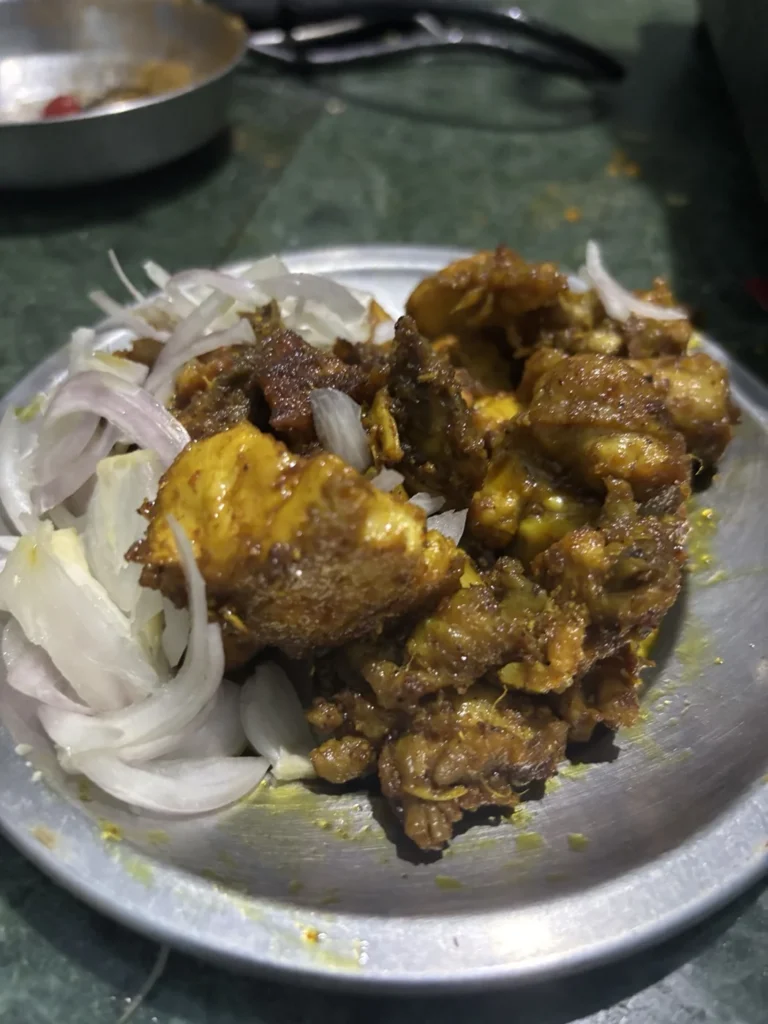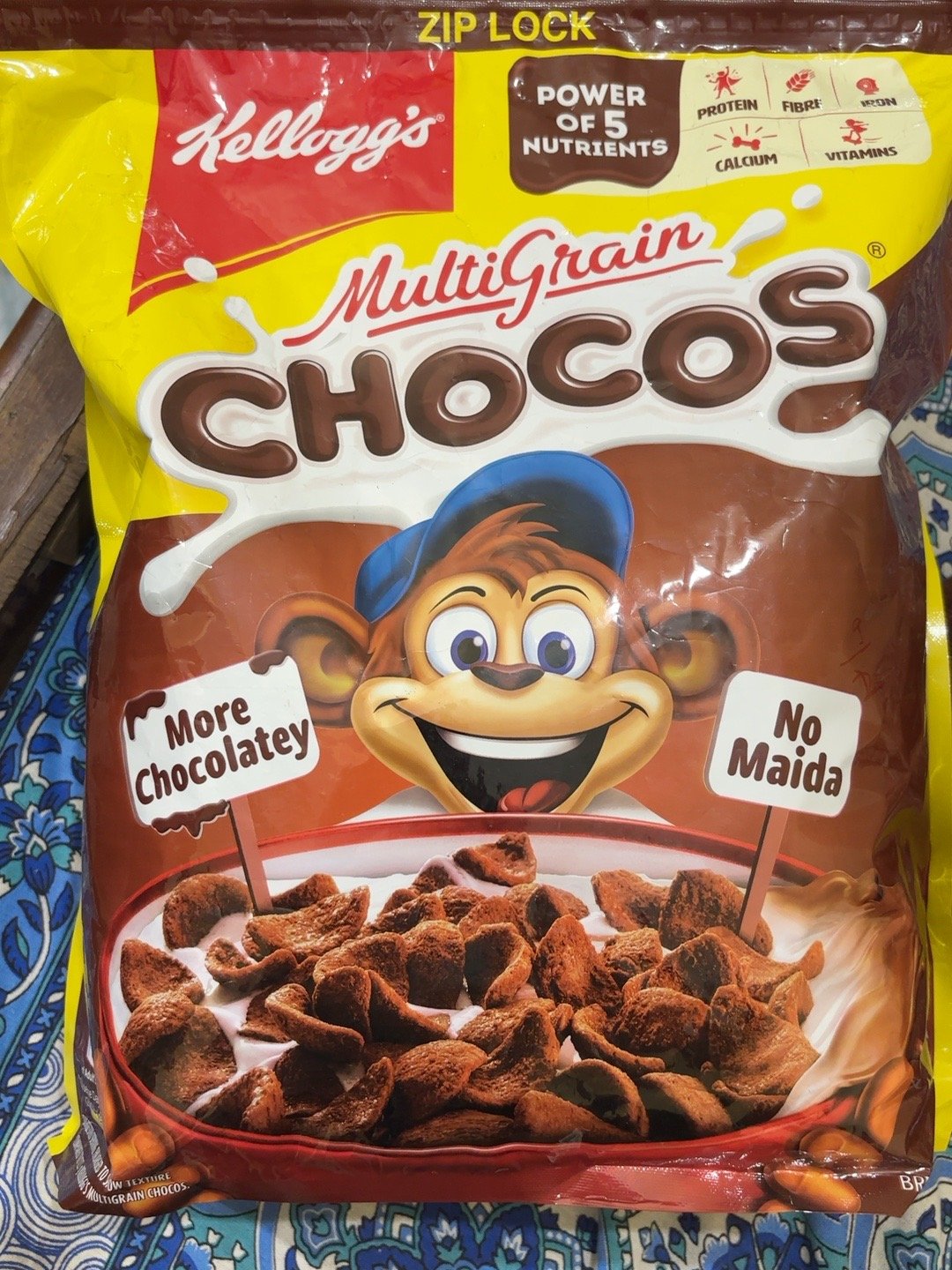
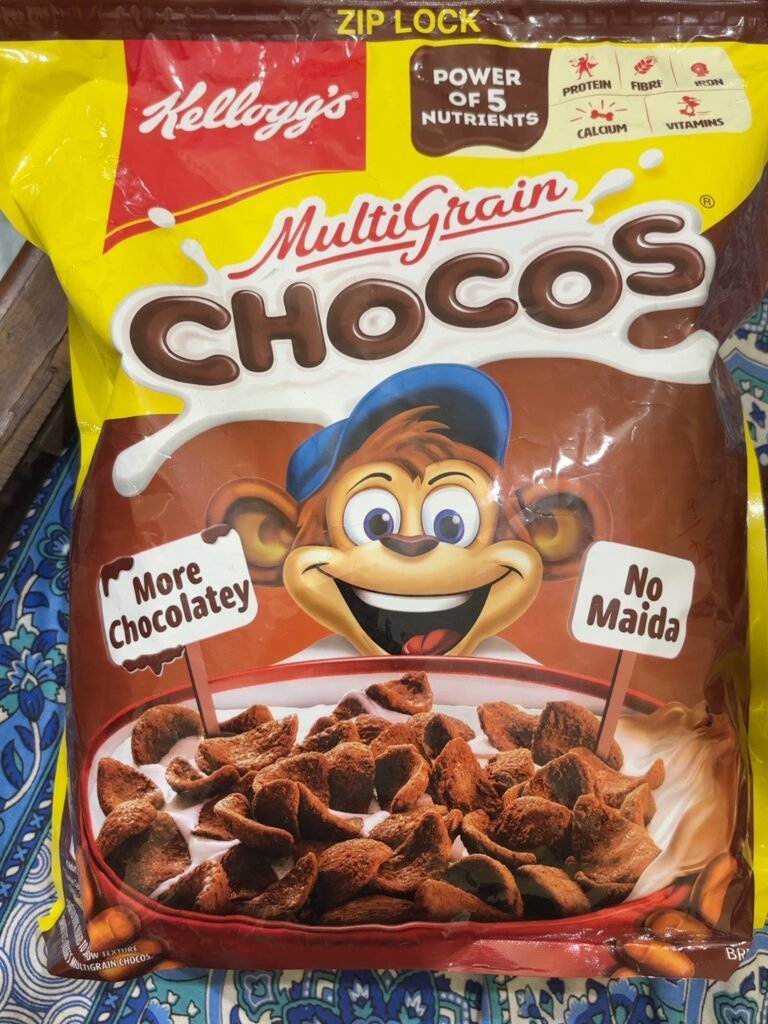
Kellogg’s Multigrain Chocos tastes sweet, has a satisfying crunch, and makes breakfast easy. But a 30-gram serving supplies only 2.7 grams of protein alongside 8.1 grams of added sugar. After eating it for about a week, I like the convenience more than I like the idea of relying on it for protein.
I’m Vishal, the person behind The Protein Calculator. I work a nine-to-five job, go to the gym, and am working on my fitness. I bought the large yellow packet because the multigrain, fiber, and protein claims caught my attention. Here is what I actually experienced, followed by what the label says.
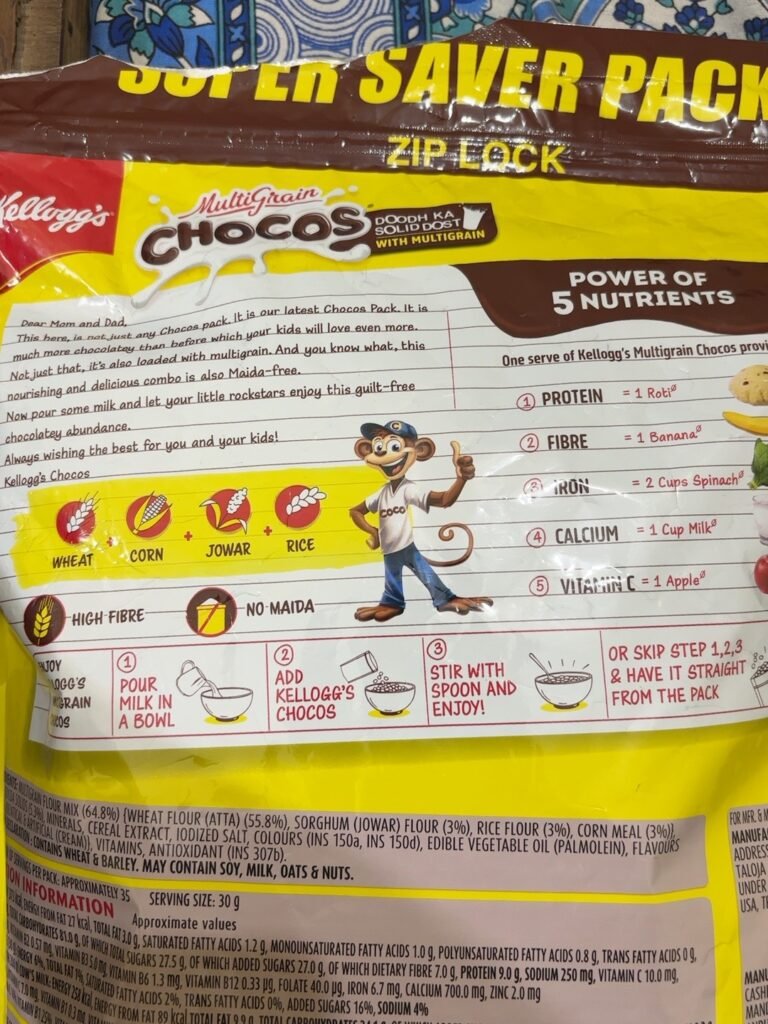
This review covers the Indian 1.05 kg Multigrain Chocos packet shown in my photos, not the separate Protein Chocos product. My purchase price was not recorded for this review. Personal observations cover approximately one week; nutrition calculations use this packet’s label. Recipes and labels can change.
My one-week Chocos review at a glance
| What I checked | My experience or label finding |
|---|---|
| Taste | Very sweet and delicious to me, with a chocolate flavor. |
| Texture eaten dry | Hard and crunchy; the munching sensation reminds me of chips. |
| With warm milk | I enjoyed it this way; it made the milk taste sweeter and chocolatey. |
| Convenience | Quick to prepare, with no cereal cooking needed. |
| My actual portion | An unweighed handful, sometimes with milk and sometimes dry. |
| Protein per labeled 30 g serving | 2.7 g from the cereal alone. |
| Added sugar per labeled 30 g serving | 8.1 g. |
| Digestive experience | Occasional bloating; the cause is uncertain. |
| Long-term results | Not assessed after one week. |
How I eat it: a handful, not a measured serving
Most mornings, I grab a handful and put it in a bowl. Sometimes I add milk; sometimes I eat it straight from the packet. I have also tried it with warm milk, which I particularly enjoyed.
I have not weighed my usual handful. It would be misleading to call it 30 grams or attach an exact calorie count to it. The 30-gram figures below describe the manufacturer’s serving size, not a measurement of my breakfast. Hand size and how tightly the cereal is held make a difference.
For anyone tracking intake, weighing a usual portion once gives a reference without requiring every breakfast to become a measuring exercise.
Taste and texture: sweet, crunchy, and easy to snack on
I find Chocos very sweet, but I also find it delicious. Eaten dry, it has a hard, crunchy texture. The closest comparison I can give is the feeling of munching chips, although the taste is chocolatey rather than savory.
With warm milk, I liked how the flavor carried into the milk. It tasted sweeter, which makes sense for a sweetened cereal. That is my taste preference, rather than a nutritional advantage.
I have not tracked how long it keeps me full, so I cannot honestly give it a fullness score or claim it prevents snacking.
Chocos nutrition: what is in a serving?
The packet lists approximately 35 servings, each weighing 30 grams. The smaller portions below are calculated by multiplying the per-100-gram label values by 0.3 or 0.6.
| Nutrient | 100 g dry cereal | 30 g dry cereal | 60 g dry cereal |
|---|---|---|---|
| Energy | 373 kcal | 112 kcal | 224 kcal |
| Protein | 9 g | 2.7 g | 5.4 g |
| Carbohydrates | 81 g | 24.3 g | 48.6 g |
| Total sugars | 27.5 g | 8.25 g | 16.5 g |
| Added sugars | 27 g | 8.1 g | 16.2 g |
| Dietary fiber | 7 g | 2.1 g | 4.2 g |
| Total fat | 3 g | 0.9 g | 1.8 g |
| Sodium | 250 mg | 75 mg | 150 mg |
Source: nutrition panel on my packet. Calories are rounded to the nearest whole number. Added sugars are part of total sugars; do not add those two rows together. The 60-gram example illustrates a larger portion and is not a recommended serving.
How much protein comes from Chocos versus milk?
On its own, 30 grams of cereal provides 2.7 grams of protein. The label’s prepared-bowl example—30 grams of cereal plus 200 milliliters of cow’s milk—lists approximately 9.2 grams of protein and 253 calories.
| Breakfast example | Protein | Calories |
|---|---|---|
| 30 g cereal, eaten dry | 2.7 g | About 112 kcal |
| 30 g cereal + 200 ml cow’s milk, using the packet’s example | 9.2 g | 253 kcal |
| Contribution attributed to that milk, calculated by subtraction | About 6.5 g | About 141 kcal |
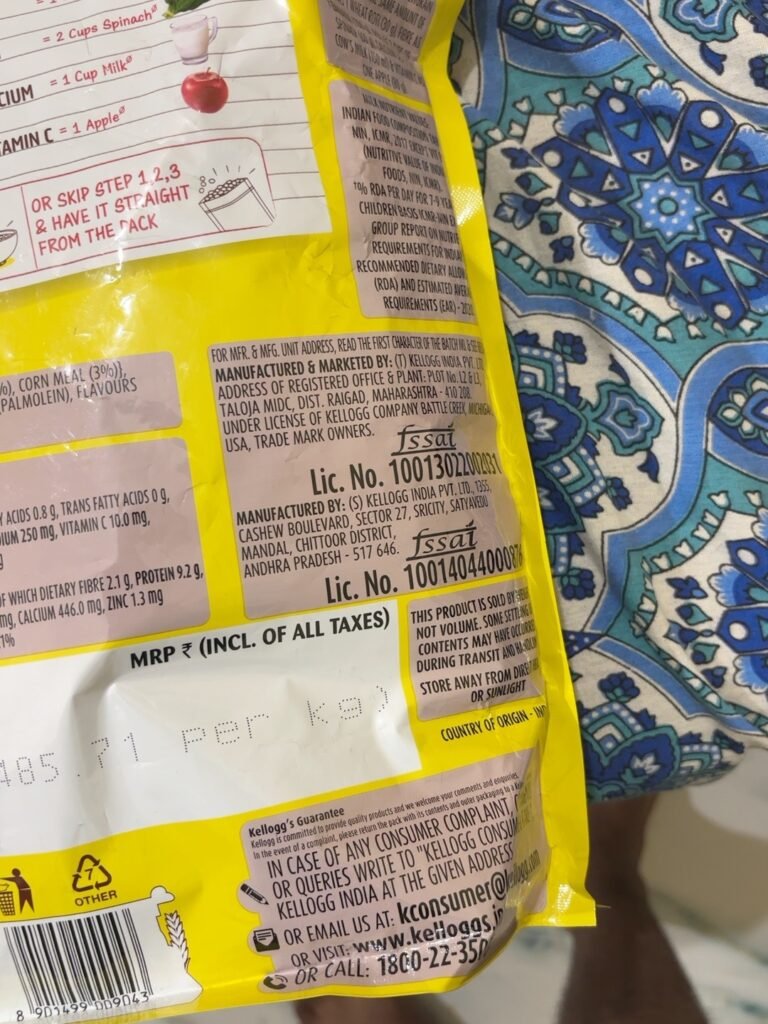
The milk contributes most of the protein in that example. Different milk products give different results. If I eat Chocos dry, I do not get the protein shown for the prepared bowl.
For my gym goals, I would count Chocos as one part of breakfast and consider a protein-rich accompaniment, such as eggs or plain high-protein yogurt, depending on preference and tolerance. Our daily protein calculator can help put breakfast’s contribution in the context of a daily target.
Is the added sugar a concern?
The cereal contains 27 grams of added sugar per 100 grams: just over a quarter of its dry weight. A 30-gram serving contains 8.1 grams, approximately two level teaspoons using 4 grams per teaspoon. A 60-gram portion doubles that to roughly four teaspoons.
WHO recommends keeping free sugars below 10% of daily energy, with a further reduction below 5% offering additional benefits. At 2,000 calories, those thresholds correspond to 50 and 25 grams. They are daily reference thresholds, not sugar allowances to aim to use up.
A 30-gram cereal serving contains about 32% of that 25-gram reference; a 60-gram portion contains about 65%. Free sugars include added sugar and sugars in honey, syrups, and juices, but not the sugar naturally present in plain milk or intact fruit.
In my case, I avoid adding sugar to coffee and other drinks because I know this cereal already contains it. I am not skipping meals to compensate. That describes my habits, not a verified measurement of my whole day’s sugar intake.
The practical issue is portion size and the overall diet. The presence of sugar alone cannot establish whether this breakfast fits someone’s calorie or protein goals, and “multigrain” does not mean low-sugar.
What does multigrain mean in this packet?
The label lists a 64.8% multigrain flour mix: wheat flour (atta) makes up 55.8% of the product, while jowar flour, rice flour, and cornmeal each make up 3%. Sugar follows the flour mix in the ingredients list. Kellogg’s official Indian product page lists the same grain combination.
The cereal also contains cocoa and added vitamins and minerals. Those nutrients do not remove the added sugar, and having multiple grains does not establish that every grain ingredient is whole grain.
Allergen note: the packet states that it contains wheat and barley and may contain soy, milk, oats, and nuts. Check your own packet if you have an allergy or need to avoid gluten.
My experience with bloating: an observation, not a proven cause
During the week after starting Chocos, I sometimes felt bloated. I think it may also have happened on days when I ate it dry, although I have not kept a detailed food-and-symptom record.
I cannot say the cereal caused it, and I cannot identify added sugar as the culprit. My other meals changed around the festive season too. This is one person’s experience over a short period, not evidence that everyone will have the same reaction.
NIDDK explains that some carbohydrates, whole grains, and higher-fat foods can contribute to gas or bloating in some people. A food-and-symptom diary can help investigate patterns. That general guidance does not diagnose my symptoms or establish a problem with this product.
If symptoms keep recurring, seek medical advice rather than assuming sugar is the explanation. Severe abdominal pain, repeated vomiting, blood in the stool, or abdominal swelling with inability to pass stool or gas warrant prompt assessment.
My verdict after one week
I like Chocos for its taste, crunch, and convenience. On a busy morning, having something ready in a packet is useful. Warm milk was my favorite way to eat it, although I also enjoy it dry.
What I would be more careful about is treating the front-of-pack protein and fiber messages as a complete picture. A measured 30-gram serving provides 2.7 grams of protein, 2.1 grams of fiber, and 8.1 grams of added sugar. My unweighed handful could differ.
For me, it is a convenient sweetened cereal that can contribute to breakfast. It is not something I would rely on as my main protein source. The bloating remains an unresolved personal observation, and one week is too short to claim benefits for weight loss, muscle gain, or long-term digestion.
Sources and calculation notes
- Original photographs and nutrition label from my Indian 1.05 kg Kellogg’s Multigrain Chocos packet; personal use for approximately one week.
- Kellogg’s India: Multigrain Chocos ingredients and allergens.
- WHO: guidance on free sugars.
- NIDDK: eating, diet, and nutrition for gas symptoms.
Reviewed October 26, 2026. This is a personal food review and label analysis, not medical advice or a controlled product test.