Protein is one of the most important nutrients your body needs every day. It helps build and repair muscles, supports healthy bones, produces hormones and enzymes, and keeps you feeling full after meals. Whether your goal is to lose weight, build muscle, or simply stay healthy, eating the right amount of protein is essential.
The ideal protein intake varies from person to person and depends on factors such as your body weight, activity level, age, and fitness goals. Understanding your individual needs can help you make better nutrition choices and improve your overall health.
What Is the Recommended Daily Protein Intake?
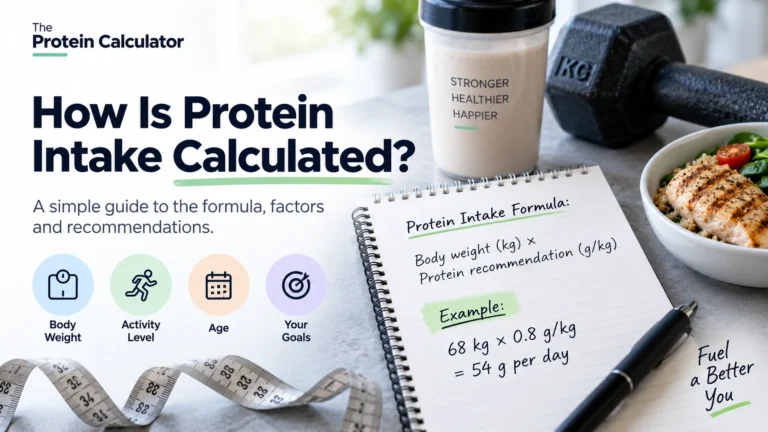
For the average healthy adult, the Recommended Dietary Allowance (RDA) is 0.8 grams of protein per kilogram of body weight per day. This amount is designed to meet the basic nutritional needs of most sedentary adults.
However, if you exercise regularly or have specific fitness goals, your protein requirements are often higher.
Here are some general guidelines:
- Sedentary adults: 0.8 g of protein per kg of body weight.
- Recreationally active individuals: 1.0–1.2 g of protein per kg of body weight.
- People aiming for weight loss: 1.2–1.6 g of protein per kg of body weight.
- Muscle building or strength training: 1.6–2.2 g of protein per kg of body weight.
- Endurance athletes: 1.2–2.0 g of protein per kg of body weight.
How to Calculate Your Protein Needs
A simple way to estimate your daily protein requirement is:
Body Weight (kg) × Protein Requirement (g/kg)
For example, if you weigh 70 kg and your goal is muscle gain:
70 × 1.8 = 126 grams of protein per day
If your goal is general health and you are moderately active, your requirement may be closer to 84 grams per day.
You can also use The Protein Calculator to receive a personalized recommendation based on your body weight, activity level, and fitness goals in just a few seconds.
Why Protein Is Important
Protein performs many essential functions throughout the body. It is involved in repairing tissues, maintaining muscle mass, supporting the immune system, and producing important hormones and enzymes.
Some of the key benefits of eating enough protein include:
- Supports muscle growth and recovery.
- Helps maintain healthy bones.
- Supports healthy skin, hair, and nails.
- Helps keep you feeling full for longer.
- May assist with healthy weight management.
- Supports recovery after exercise.
Best Sources of Protein
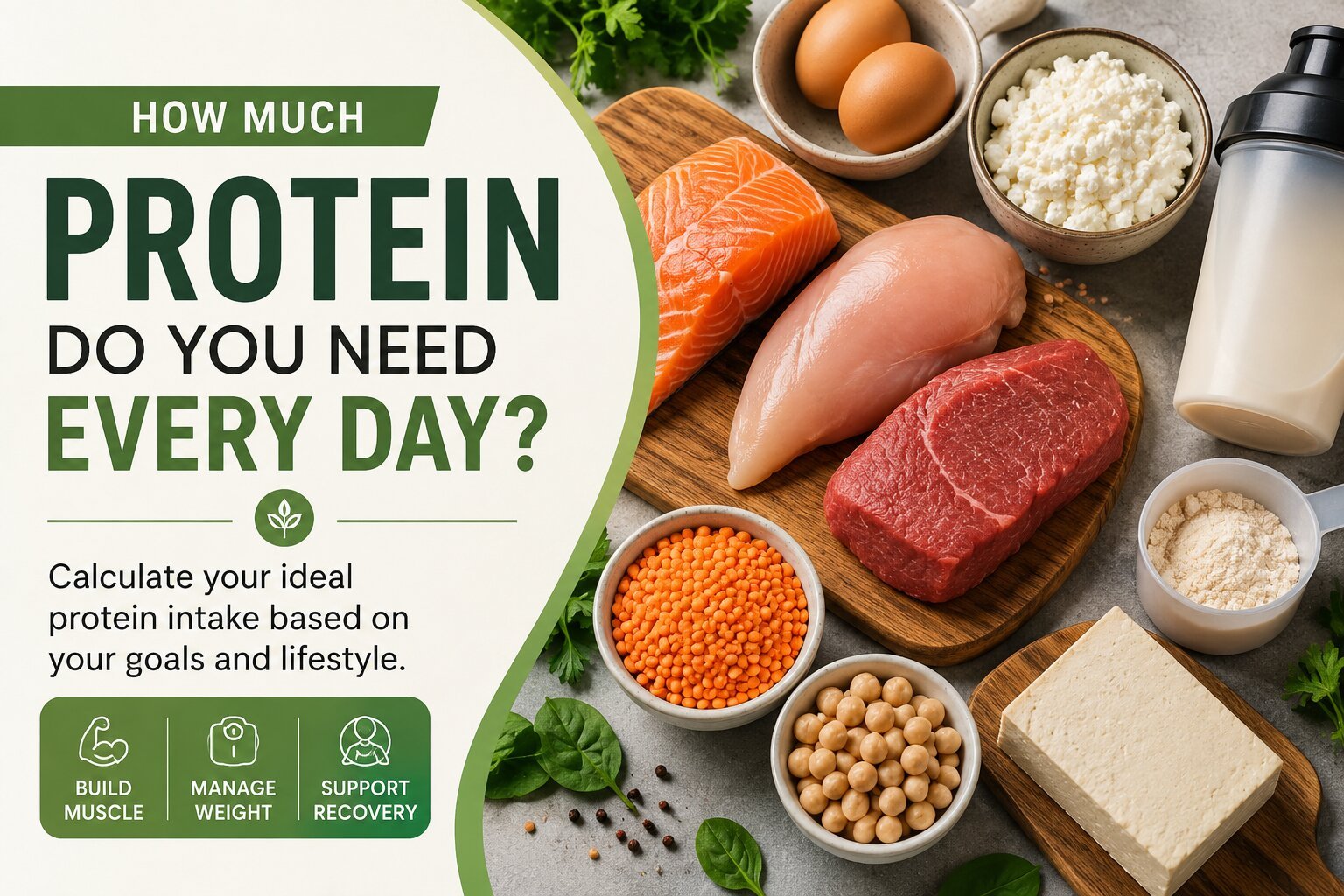
Getting your protein from a variety of whole foods is the best approach. Different foods provide different nutrients alongside protein.
- Chicken breast
- Eggs
- Greek yogurt
- Salmon
- Lean beef
- Lentils
- Chickpeas
- Tofu
- Cottage cheese
- Whey protein
A balanced diet containing both animal and plant-based protein sources can help you meet your daily nutritional needs.
Can You Eat Too Much Protein?
For most healthy adults, consuming a higher-protein diet is generally considered safe when it is part of a balanced eating pattern. However, eating significantly more protein than your body needs does not necessarily provide additional benefits.
If you have kidney disease or another medical condition affecting protein metabolism, you should consult your doctor or a registered dietitian before making major dietary changes.
Final Thoughts
There is no single protein recommendation that works for everyone. Your ideal daily protein intake depends on your body weight, activity level, age, and personal fitness goals.
While the general recommendation is 0.8 grams of protein per kilogram of body weight, people who exercise regularly, want to build muscle, or are trying to lose weight often benefit from higher protein intake.
Using a personalized protein calculator makes it easier to determine your ideal target and create a nutrition plan that supports your health and fitness goals.