Quick Answer
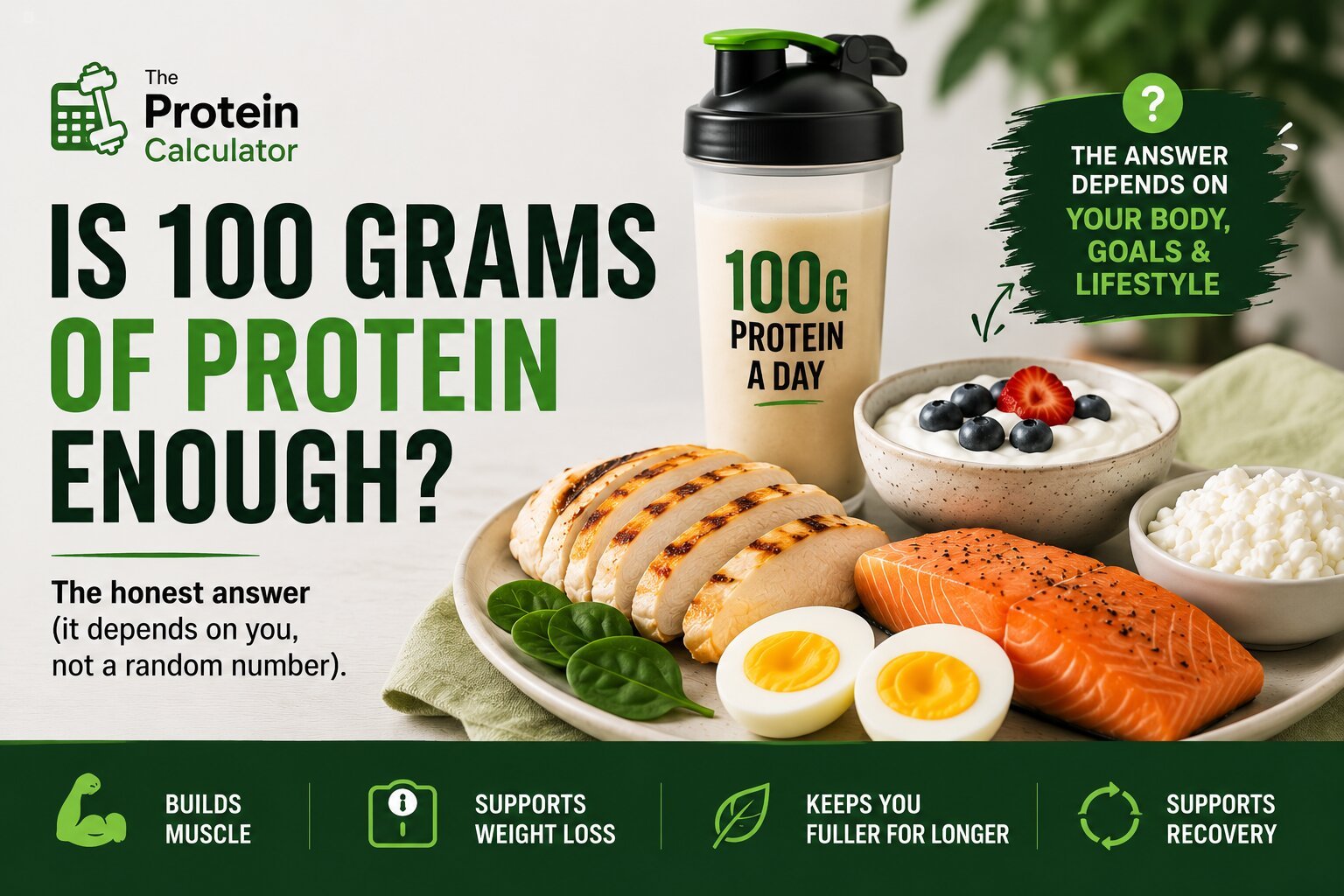
For many adults, 100 grams of protein per day is a solid intake, but whether it’s enough depends on your body weight, activity level, age, calorie intake, and fitness goals.
Protein has become the celebrity of the nutrition world. Scroll through social media for five minutes, and you’ll probably see someone drinking a protein shake the size of a flower vase, someone claiming you need 250 grams a day to survive leg day, and someone else insisting a handful of almonds is all you’ll ever need.
“The right amount of protein isn’t the same for everyone—it depends on your body, not social media.”
So… who’s actually right?
If you’ve ever found yourself wondering, “Is 100 grams of protein enough?”, you’re not alone. It’s one of the most common questions people ask, whether they’re trying to build muscle, lose weight, or simply eat a little healthier.
The truth is, there isn’t a magical protein number that works for everyone. Your ideal intake depends on things like your body weight, age, activity level, and fitness goals.
Instead of chasing a fixed protein number, calculate your intake based on your body weight and training level.
Why Protein Requirements Are Different for Everyone
One of the biggest myths is that everyone should eat the same amount of protein.
In reality, nutrition experts recommend calculating protein based on body weight, not a fixed daily number.
Your requirements increase if you:
- Lift weights regularly
- Exercise intensely
- Want to build muscle
- Are trying to lose body fat while preserving muscle
- Are over 60 years old
- Are recovering from illness or surgery
Someone who spends most of the day at a desk has very different protein needs than someone training five days a week.
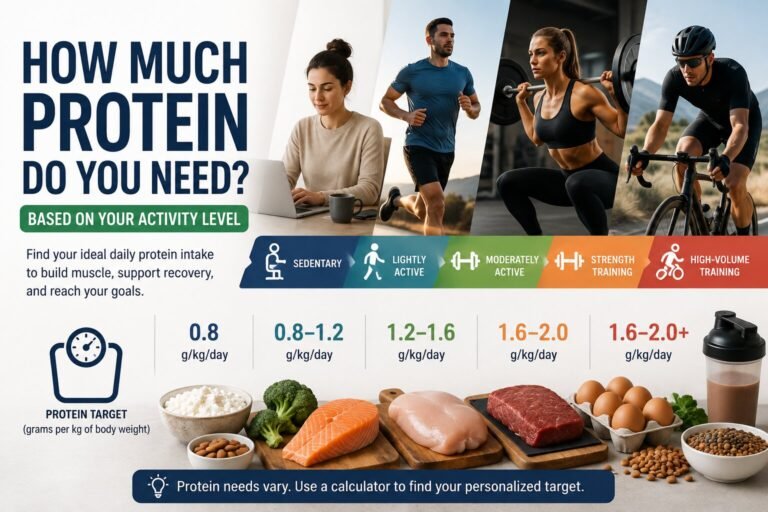
| Goal | Protein Recommendation |
|---|---|
| Sedentary adults | 0.8 g/kg/day |
| General health | 0.8–1.0 g/kg |
| Recreational exercise | 1.2–1.6 g/kg |
| Muscle growth | 1.6–2.2 g/kg |
| Fat loss while preserving muscle | 1.6–2.4 g/kg |
| Older adults (65+) | 1.2–2.0 g/kg |
These ranges come from organizations such as the RDA, ISSN and recent sports nutrition research.
Is 100 Grams Enough Based on Your Weight?
| Body Weight | Sedentary | Active | Muscle Building | 100g Enough? |
|---|---|---|---|---|
| 50 kg | 40 g | 60–80 g | 80–110 g | ✅ Yes |
| 60 kg | 48 g | 72–96 g | 96–132 g | ✅ Usually |
| 70 kg | 56 g | 84–112 g | 112–154 g | ⚠️ Depends |
| 80 kg | 64 g | 96–128 g | 128–176 g | ❌ Usually Not |
| 90 kg | 72 g | 108–144 g | 144–198 g | ❌ No |
| 100 kg | 80 g | 120–160 g | 160–220 g | ❌ No |
This table clearly shows why one number cannot fit everyone.
Is 100g of Protein Enough to Build Muscle?
For beginners, yes—it can be enough.
If you’re new to resistance training, eating 100 grams of protein while following a structured strength program can support muscle growth, especially if you’re lighter in body weight.
However, as body weight increases, protein requirements generally increase too.
Research consistently suggests that around 1.6 grams per kilogram of body weight is close to the optimal intake for maximizing muscle protein synthesis in most healthy adults.
- 60 kg → about 96 g/day
- 70 kg → about 112 g/day
- 80 kg → about 128 g/day
- 90 kg → about 144 g/day
This means that 100 grams becomes less adequate as body weight increases.
Is 100g Enough for Weight Loss?
Often, yes.
If you’re trying to lose weight, 100 grams of protein is a pretty solid target for many people.
- Stay fuller for longer
- Reduce hunger between meals
- Preserve lean muscle while losing fat
- Support recovery during a calorie deficit
Think of protein as the friend who stops you from wandering into the kitchen at 10 p.m. and convincing yourself that “a few cookies won’t hurt.”
That said, if you’re taller, heavier, or very active, 100 grams may still fall short of your ideal intake.
Is 100g Enough for Women?
For many women, yes.
- 55 kg
- 60 kg
- 65 kg
Women actively building muscle or participating in endurance sports may require more.
What Does 100 Grams of Protein Look Like?
| Food | Protein |
|---|---|
| Greek yogurt (200 g) | 20 g |
| 3 eggs | 18 g |
| Chicken breast (150 g cooked) | 45 g |
| Lentils (1 cup cooked) | 18 g |
| Handful of almonds | 6 g |
| Total | ~107 g |
This demonstrates that reaching 100 grams is achievable through whole foods without relying on protein powders.
If you’re unsure where to start, calculating your daily protein requirement provides a more accurate target than relying on a fixed amount like 100 grams. You can use our protein calculator to do exactly that
Research Sources (High Authority)
- Institute of Medicine (Dietary Reference Intakes)
- Recommended Dietary Allowance (RDA): 0.8 g/kg/day
- International Society of Sports Nutrition (ISSN) Position Stand (Jäger et al., 2017)
- Morton RW et al. (2018). A Systematic Review, Meta-analysis and Meta-regression of Protein Supplementation on Resistance Training-Induced Gains in Muscle Mass and Strength.
- American College of Sports Medicine (ACSM) Nutrition Guidelines.
- Phillips SM & Van Loon LJC. Dietary Protein for Athletes: From Requirements to Metabolic Advantage.
- PROT-AGE Study Group (protein recommendations for older adults).