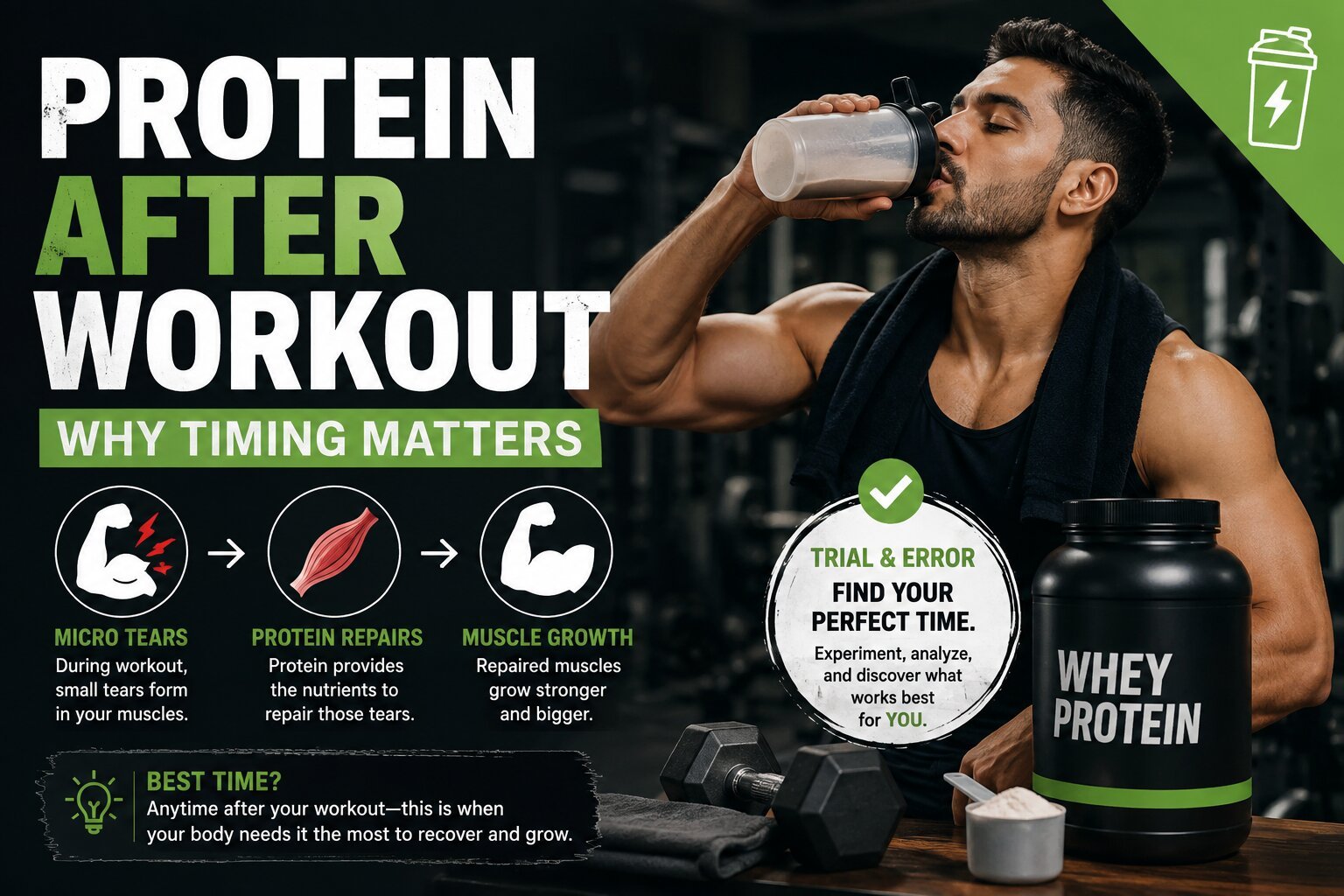
Protein after a workout helps your body repair and build muscle. But you do not need to drink a shake the moment you finish your last rep. What matters most is getting enough protein across the day and training consistently.
Quick answer: A meal or snack with protein after training is convenient, especially if you have not eaten for several hours. Protein before training can work too. Choose a time that fits your appetite and schedule.
What does protein do after exercise?
Resistance training stimulates muscle protein synthesis, the process your body uses to build and maintain muscle proteins. Eating protein provides amino acids for that process. Muscle adapts to repeated training and recovery over time; an individual rep does not create a little hole that a shake immediately fills.
The International Society of Sports Nutrition’s position stand explains that resistance exercise and protein intake work together. For many people who exercise regularly, it suggests a daily intake of about 1.4–2.0 grams per kilogram of body weight. Your needs may differ, and our protein calculator can provide a starting estimate for generally healthy adults.
Do you need protein immediately after a workout?
No. The idea that you must have protein within a few minutes of training is too strict. A meta-analysis of protein timing studies found that the apparent benefit of a narrow timing window became less clear after accounting for total protein intake. A small trial comparing protein before and after resistance training also found similar results between the two approaches.
If you trained without eating for a long time, having a protein-containing meal soon afterward is practical. If you ate a protein-rich meal before your workout, you can generally eat again at your next regular mealtime. The exact schedule matters less than your overall intake.
Is protein before a workout useful?
Yes, it can be. Protein eaten before training supplies amino acids that remain available during and after the session. If a large meal makes you feel uncomfortable, try eating earlier or having a smaller snack. That is a matter of comfort, not a rule that everyone must follow.
Food works as well as a supplement for meeting your protein target. Greek yogurt, eggs, tofu, beans, fish, or a regular meal can all contribute. A shake is simply convenient when food is harder to arrange.
A simple way to plan your protein
- Estimate your daily target based on your body weight, activity, and goal.
- Include protein in meals throughout the day.
- Eat before or after training according to your schedule and digestion.
- Choose foods you enjoy; use a supplement only if it helps you meet your target.
For an example of how daily intake can look in practice, read our guide to 120 grams of protein in a day. If you have a medical condition that affects your diet, ask a qualified clinician or registered dietitian about an appropriate target.