Quick Answer
Think of protein water as the lighter, more refreshing cousin of the protein shake. It looks like flavored water but packs 15–20 grams of protein in a typical bottle, usually from whey protein isolate or collagen peptides. It’s low in calories, virtually fat-free, and often contains little or no added sugar, making it a convenient option after workouts or on busy days. Just don’t expect it to replace lunch—protein water brings the protein to the party, but it forgets the fiber, healthy fats, and many essential nutrients that come with a balanced meal. It complements a healthy diet; it doesn’t replace one.
What Is Protein Water?
Protein water is a clear, ready-to-drink beverage designed to provide a high amount of protein without the creamy texture of traditional protein shakes. Most protein waters are made using whey protein isolate or collagen peptides, allowing manufacturers to create a refreshing drink that is typically low in calories, sugar, and fat.
Unlike milk-based protein shakes, protein water has a light consistency similar to flavored water or a sports drink. It is commonly consumed after workouts, during busy days, or whenever someone wants to increase their protein intake without eating a full meal.
Depending on the brand, a single bottle usually contains between 15 and 20 grams of protein while providing fewer than 100 calories. Many products also include electrolytes, vitamins, or added flavors to make them more refreshing.
Protein water is not the same as a sports drink. Sports drinks are designed to replace carbohydrates and electrolytes during prolonged exercise, while protein water focuses primarily on increasing protein intake to support muscle recovery and daily nutrition goals.
Typical Protein Water Nutrition Facts
Nutrition can vary slightly depending on the brand and protein source, but most protein waters have a similar nutritional profile. Here’s what you can generally expect from a standard 500ml (16–17 oz) bottle.
| Nutrient | Typical Amount |
|---|---|
| Protein | 15–20 g |
| Calories | 70–100 kcal |
| Total Fat | 0 g |
| Carbohydrates | 0–4 g |
| Sugars | 0–2 g |
| Protein Source | Usually Whey Protein Isolate or Collagen Peptides |
| Common Flavors | Lemon, Berry, Orange, Tropical, Mixed Fruit |
Always check the nutrition label before buying protein water. Choose products that provide at least 15 grams of protein, have little or no added sugar, and use high-quality protein sources such as whey protein isolate if your goal is muscle recovery.
Protein Water Bottle Breakdown
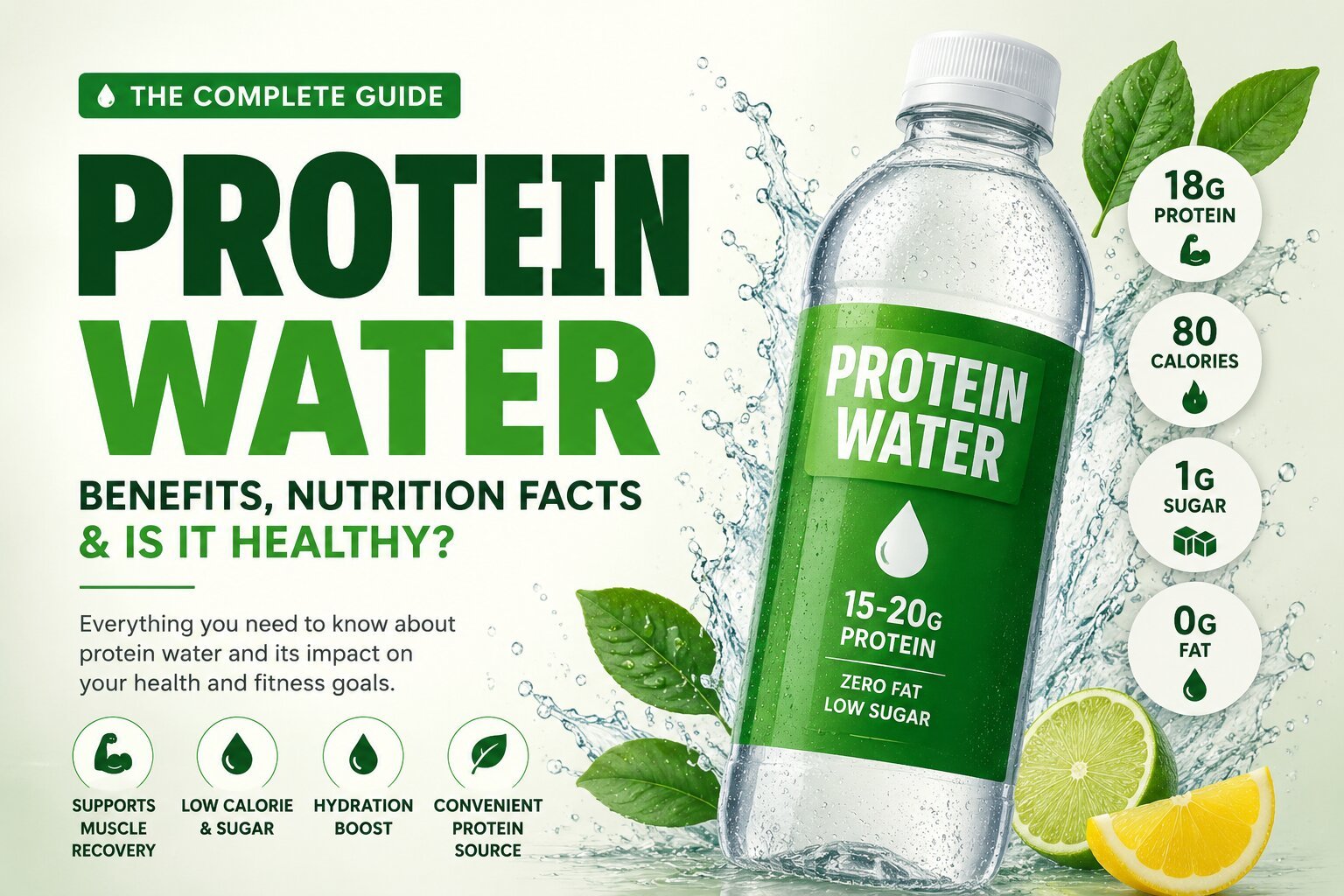
Hover over each nutrient to learn what it does and why it matters.
Protein
18g of complete protein helps support muscle recovery.
Calories
Around 80 calories per bottle.
Protein Water
Sugar
Usually contains little or no added sugar.
Fat
Most protein waters contain no fat.
Benefits of Protein Water
Protein water has become increasingly popular among fitness enthusiasts, busy professionals, and people looking for convenient ways to increase their daily protein intake. While it isn’t a replacement for a balanced diet, it offers several benefits when used appropriately.
Supports Muscle Recovery
Provides high-quality protein that helps repair and rebuild muscle tissue after exercise.
Low in Calories
Most protein waters contain fewer than 100 calories while delivering 15–20 grams of protein.
Refreshing
A light, clear drink that feels more like flavored water than a traditional protein shake.
Convenient
Ready to drink whenever you need a quick source of protein during a busy day.
Supports Weight Management
Protein can help increase fullness, making it easier to manage hunger between meals.
Easy to Digest
Many products use whey protein isolate, which contains very little lactose.
Protein Water Can Help—But How Much Protein Do You Actually Need?
Whether you’re trying to build muscle, lose weight, or simply stay healthy, your ideal protein intake depends on your body weight, activity level, and goals. Instead of guessing, calculate your personalized daily protein target in less than 60 seconds with our free Protein Calculator.
Protein Water vs Protein Shake
Many people assume that protein water and protein shakes are the same, but they serve slightly different purposes. Both can help increase your daily protein intake, but they differ in texture, calories, ingredients, and when they’re best used.
Protein water is designed to be a light, refreshing drink that provides protein with very few calories, making it ideal for hydration and post-workout recovery. Traditional protein shakes, on the other hand, are thicker, more filling, and often contain additional carbohydrates, fats, vitamins, and minerals, making them a better choice as a snack or meal replacement.
If your goal is simply to increase protein intake while keeping calories low, protein water may be the better option. However, if you need a more satisfying drink to support muscle gain or replace a meal, a protein shake is usually the smarter choice.
| Feature | Protein Water | Protein Shake |
|---|---|---|
| Protein | 15–20 g | 20–30 g |
| Calories | 70–100 kcal | 120–300+ kcal |
| Texture | Light and refreshing | Thick and creamy |
| Fat | Usually 0 g | May contain healthy fats |
| Sugar | Usually 0–2 g | Varies by product |
| Best For | Hydration, post-workout recovery, low-calorie diets | Meal replacement, muscle gain, increased calorie intake |
| Feeling of Fullness | Lower | Higher |
| Convenience | Ready to drink | Ready-to-drink or mixed from powder |