If ancient Greece had a “Most Unfortunate Traveller” award, Odysseus would have won it easily. The famous king of Ithaca had already fought in the brutal ten-year Trojan War, only to find that getting home would take another ten years. On his way, he faced a one-eyed Cyclops, outsmarted dangerous sea monsters, resisted the tempting songs of the Sirens, spent years stranded on magical islands, and angered Poseidon, the Greek god of the sea; not someone you want to annoy when your only way home is by ship.
Despite all these incredible adventures, one thing remained quite ordinary: he still had to eat. No supermarkets were waiting on the next island, no preserved protein bars hidden in a backpack, and definitely no food delivery arriving by ship. Whether he was feasting with kings, living on freshly caught fish, raiding supplies, or taking a generous slice of a Cyclops’ sheep cheese (with questionable permission), food was more than comfort; it was survival.
This makes Odysseus an interesting character to study from a nutrition point of view. His journey introduces readers to nearly every kind of meal a Bronze Age Greek might have enjoyed, from lavish banquets full of roasted meat and watered-down wine to simple meals made from bread, cheese, olives, and whatever the sea or countryside could offer. In other words, if anyone inadvertently tasted the full menu of the ancient Greek world, it was Odysseus.
What Did Ancient Greeks(Odysseus’ People) Really Eat?
The short answer? Much healthier and more protein-rich than many people think.
Homer’s Odyssey tells the story of one famous hero, but the foods described in the epic closely match what historians and archaeologists believe people in Mycenaean Greece (around 1600–1100 BC) actually ate. Whether you were a king returning from the Trojan War, a sailor navigating the Aegean Sea, or a shepherd watching over sheep in the hills, your daily meals were based on simple, local ingredients instead of fancy recipes.
For Greek warriors and sailors, food was not just for enjoyment; it was fuel. Long marches, battles, sailing trips, hunting, and farming required a diet that provided enough energy and protein to keep people working from sunrise to sunset. Fresh meat was often saved for religious festivals, sacrifices, or special gatherings, while everyday meals mostly included fish, cheese, bread, olives, legumes, fruits, and wine.
Of course, there were exceptions. Noble households and victorious warriors could enjoy grand banquets with roasted lamb, goat, pork, or beef, while ordinary families had simpler meals made of barley bread, lentils, goat’s milk, and seasonal produce. Even so, many of the foods that sustained ancient Greece are still seen as nutritious today and remain key parts of the Mediterranean diet.
In the sections below, we’ll look at the most important protein-rich foods that fed Ancient Greeks—from legendary heroes like Odysseus and his crew to the farmers, fishermen, and warriors who formed the backbone of Bronze Age Greece.
| Food | Typical Protein (per 100 g)* | Mentioned in Homer? | Archaeological Evidence | Commonly Eaten By |
|---|---|---|---|---|
| Lamb | 25 g | ✅ | ✅ | Warriors, nobles, festivals |
| Goat | 27 g | ✅ | ✅ | Shepherds, villages, feasts |
| Pork | 27 g | ✅ | ✅ | Common households |
| Beef | 26 g | ✅ | ✅ | Mostly wealthy households and sacrifices |
| Fish (varies) | 20–30 g | ✅ | ✅ | Coastal communities, sailors |
| Octopus | 29 g | ❌ | ✅ | Islanders and fishermen |
| Goat Cheese | 22 g | ✅ | ✅ | Nearly everyone |
| Sheep Cheese | 21 g | ✅ | ✅ | Daily food |
| Lentils | 9 g (cooked) | Indirect | ✅ | Everyday households |
| Chickpeas | 9 g (cooked) | Indirect | ✅ | Farmers and villagers |
Protein values are based on modern nutritional analyses of equivalent foods. The exact nutritional composition of Bronze Age livestock and crops would have varied somewhat due to breed, diet, and farming practices, but these values provide a practical estimate for comparison.
🐑 Lamb & Goat: The Protein of Kings, Shepherds, and Warriors
If there is one food that defines the world of Homer’s Odyssey, it is roasted sheep and goat.
Throughout the epic, important guests are welcomed with freshly roasted meat. Before meals begin, animals are often sacrificed to the gods, after which the meat is shared among everyone present. These feasts were more than celebrations—they reflected hospitality, religion, and social status in Bronze Age Greece.
Archaeology tells a similar story. Excavations of Mycenaean settlements have uncovered large quantities of sheep and goat bones, showing that these animals were among the most important livestock of the period. Unlike cattle, which were valuable for farming and breeding, sheep and goats were easier to raise across Greece’s rocky hillsides, making them a practical source of meat, milk, and cheese.
| Food | Protein (100 g) |
|---|---|
| Roast Goat | 27 g |
| Roast Lamb | 25 g |
Odyssey Connection
One of the most memorable examples comes from the many royal feasts Odysseus attends during his journey home, where roasted meat is served alongside bread and diluted wine. While these banquets represent special occasions rather than everyday life, they illustrate the prestige associated with meat in ancient Greek society.
🐂 Cattle: Rare, Valuable, and Sacred
Although beef appears in the Odyssey, cattle were not everyday food.
An ox was worth far more alive than on a dinner plate. It could plough fields, transport goods, and produce future livestock, so slaughtering one was usually reserved for religious ceremonies or exceptional celebrations.
One of the Odyssey’s most dramatic episodes centres on the cattle of Helios, the Sun God. Despite Odysseus warning his exhausted crew not to touch the sacred animals, hunger eventually wins. They slaughter the cattle while Odysseus is asleep—a decision that ultimately leads to Zeus destroying their ship, leaving Odysseus as the sole survivor.
It’s one of literature’s earliest reminders that making poor food choices can have… rather serious consequences.
| Food | Protein (100 g) |
|---|---|
| Beef | 26 g |
🐟 Fish & Seafood: The Everyday Protein of the Mediterranean
For people living near the sea, fish was often a more reliable source of protein than meat.The Mediterranean offered tuna, mackerel, sardines, anchovies, shellfish, squid, and octopus. Some were eaten fresh, while others were salted or dried to last during long sea voyages. Although Homer spends more time describing heroic feasts than ordinary fishing trips, the Odyssey still reminds readers that hunger often forced sailors to rely on whatever the sea could provide. During periods of hardship, fishing became a matter of survival rather than choice.
| Seafood | Protein (100 g) |
|---|---|
| Tuna | 29 g |
| Sardines | 25 g |
| Mackerel | 24 g |
| Octopus | 29 g |
🧀 Cheese: Ancient Greece’s Everyday Protein
One of the most famous food scenes in all of Greek mythology doesn’t involve meat—it involves cheese.
When Odysseus enters the cave of the Cyclops Polyphemus, he discovers shelves filled with baskets of freshly made sheep’s and goat’s cheese alongside containers of milk. The episode gives us one of the earliest literary descriptions of cheese-making anywhere in the world.
Unlike roasted meat, cheese was an everyday food. It was portable, nutritious, and could last much longer than fresh milk, making it ideal for shepherds, travellers, and sailors.
| Dairy | Protein (100 g) |
|---|---|
| Goat Cheese | 22 g |
| Sheep Cheese | 21 g |
Now If you are reading this article purely to know about Homer’s epic, then I think you will like to read this part.
I researched a bit and checked the scores before I introduce you to the list. Remember these are the foods that Homer has mentioned, and some of them might be magical, so I cannot guarantee the protein intake of some of these foods, but here we go.
The list will give you an idea about the food that is mentioned in Christopher Nolan’s adaptation of Homer’s epic
🧙 Circe’s Enchanted Meal
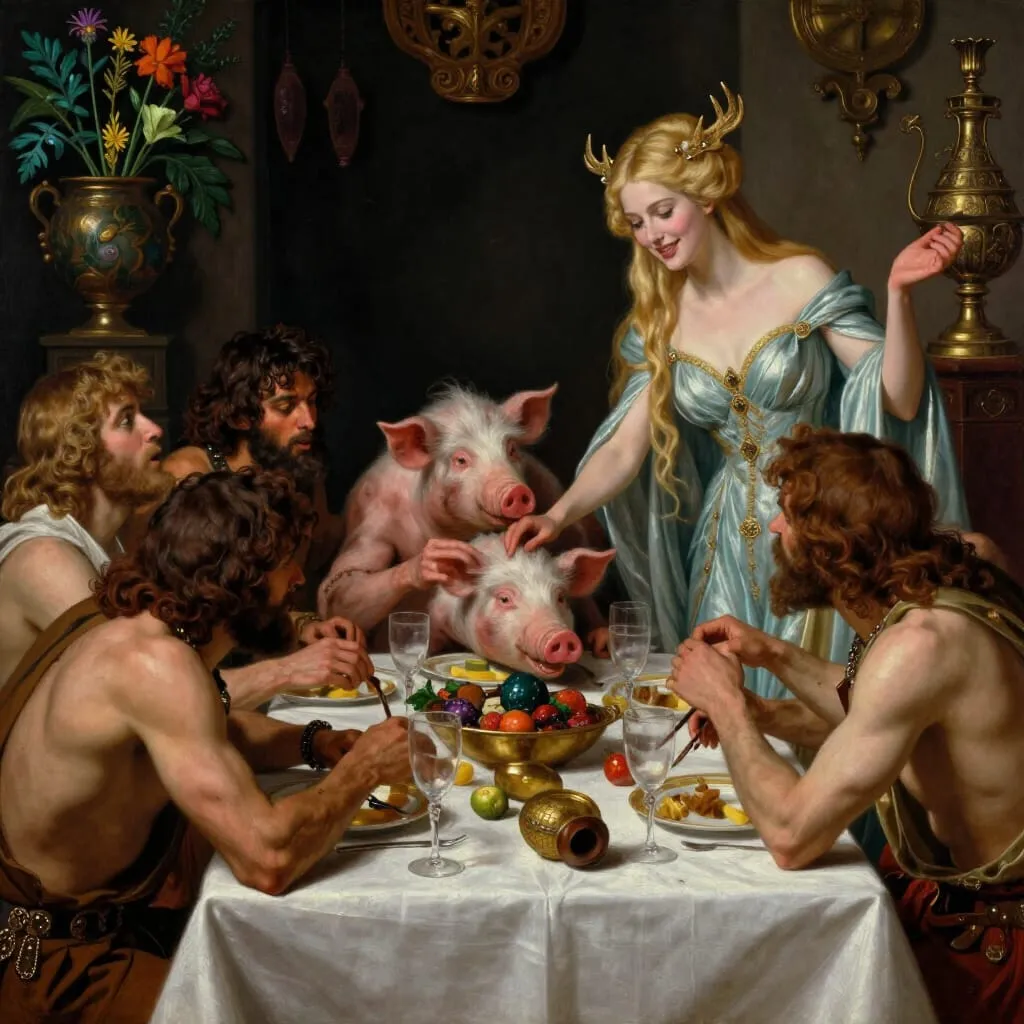
One of the most memorable meals in the Odyssey is served by the enchantress Circe. When Odysseus’ crew arrives on her island, she welcomes them with what appears to be a generous feast. Homer describes her mixing barley meal, cheese, pale honey, and Pramnian wine, before secretly stirring a magical potion into the drink. After eating and drinking, the men are transformed into pigs—not because of the ingredients themselves, but because of Circe’s magic.
Although the transformation is mythical, the meal itself is surprisingly realistic. Barley was the staple grain of Bronze Age Greece, goat’s or sheep’s cheese was eaten daily, honey was the primary sweetener, and wine was the standard drink. Remove the magic, and Circe’s feast closely resembles what a wealthy household of the period might actually have served.
Likely ingredients
- Barley meal
- Sheep or goat cheese
- Honey
- Pramnian wine
- Magical herbs (fictional element)
Protein highlights
- Cheese: ~21–22 g protein per 100 g
- Barley: ~12 g protein per 100 g (dry grain)
🍷 The Wine That Defeated the Cyclops
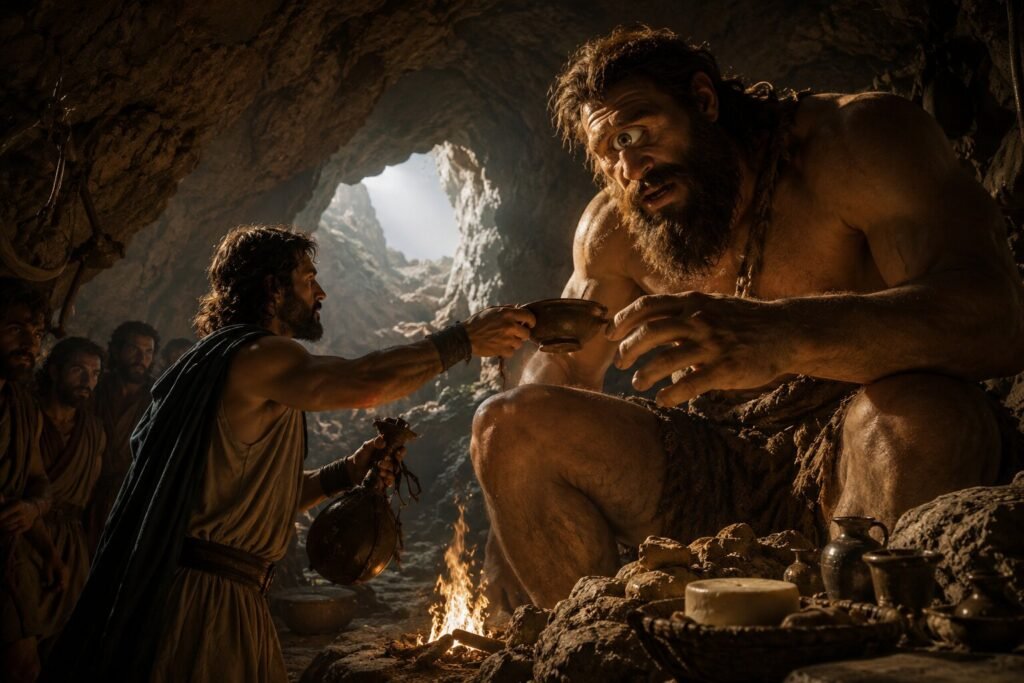
Rather than overpowering the Cyclops Polyphemus with strength, Odysseus defeats him with wine and strategy. Before entering the Cyclops’ cave, Odysseus carries an exceptionally strong wine given to him by Maron, a priest of Apollo. Homer describes it as so concentrated that it was normally mixed with around twenty parts water to one part wine, illustrating just how potent it was considered.
Odysseus offers the undiluted wine to Polyphemus, who drinks it eagerly and quickly becomes intoxicated. Once the Cyclops falls asleep, Odysseus and his men blind him with a sharpened olive stake and later escape beneath the bellies of the Cyclops’ sheep.
Historically, Greeks almost always diluted wine before drinking it. Consuming it neat was widely regarded as uncivilized, making Polyphemus’ willingness to gulp it down another sign of his lack of refinement in Homer’s eyes.
🧀 The Cyclops’ Cheese

Before the Cyclops returns to his cave, Odysseus and his crew discover shelves filled with freshly made cheeses, baskets, and containers of milk. Homer even describes milk being curdled and stored, making this one of the earliest literary descriptions of traditional cheesemaking.
Archaeologists believe these cheeses would almost certainly have been made from sheep’s or goat’s milk, as those animals dominated Bronze Age Greek livestock. Fresh cheeses were probably soft and mildly salty, while some were aged to last longer during travel.
For modern readers, this scene offers a surprisingly accurate glimpse into everyday dairy production in ancient Greece.
🐂 The Cattle of Helios
Perhaps the most famous food-related mistake in Greek mythology occurs on the island of Thrinacia, home to the sacred cattle of Helios, the Sun God.
Odysseus repeatedly warns his starving crew not to touch the animals, but after days of bad weather and dwindling supplies, hunger overcomes caution. While Odysseus sleeps, the crew slaughter the cattle, butchers them, and roasts the meat over open fires.
The feast briefly satisfies their hunger, but it comes at a devastating cost. Zeus destroys their ship with a thunderbolt, and every member of the crew dies except Odysseus.
The episode highlights how seriously cattle were regarded in the ancient world. They represented wealth, divine favour, and agricultural power, making the killing of sacred cattle a profound act of sacrilege.
🐟 Fishing for Survival
Despite the grand banquets that dominate much of the Odyssey, Homer also shows the harsher realities of life at sea.
When food runs short, Odysseus’ men turn to fishing. Homer mentions them catching fish with hooks when prolonged storms prevent them from sailing or reaching fresh supplies. These moments contrast sharply with the lavish meals hosted by kings and remind readers that survival often depended on whatever the sea was willing to provide.
For Bronze Age sailors, dried fish, freshly caught seafood, and shellfish were practical, high-protein foods that required little preparation beyond cleaning and roasting over a fire.
🥩 Roasted Meat at Royal Feasts
Throughout the Odyssey, hospitality is almost always expressed through food. Whenever Odysseus reaches the palace of a king or noble family, servants prepare roasted meat, bake bread, pour diluted wine, and invite guests to eat before any questions are asked.
Homer frequently describes the meat being cut into portions, skewered, and roasted over glowing coals rather than boiled. This method was common during sacrificial feasts, where part of the animal was offered to the gods before the remainder was shared among those attending the meal.
These scenes reflect an important aspect of ancient Greek culture: sharing food was both a social custom and a sacred duty.
| Odyssey Scene | Food or Drink | Historical? | Protein Source? |
|---|---|---|---|
| Circe’s Feast | Barley, cheese, honey, wine | ✅ Mostly | 🧀 Cheese |
| Cyclops’ Cave | Sheep’s cheese and milk | ✅ Yes | 🧀 Cheese |
| Maron’s Wine | Pramnian wine | ✅ Yes | ❌ |
| Helios’ Island | Roasted cattle | ⚠️ Mythical event, realistic food | 🥩 Beef |
| Royal Banquets | Lamb, goat, bread, wine | ✅ Yes | 🥩 Meat |
| Survival at Sea | Fish and seafood | ✅ Yes | 🐟 Fish |